



What is V2V Technology?
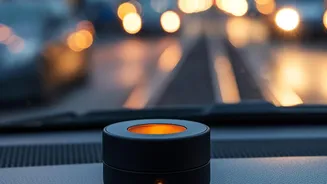
Vehicle-to-Vehicle, or V2V, is a system that allows cars, trucks, and even two-wheelers to wirelessly exchange information. Think of it as a social network for vehicles, but instead of sharing photos, they share critical safety data. Using dedicated short-range
radio signals, vehicles constantly broadcast their speed, position, direction, and braking status to other vehicles nearby. This creates a 360-degree awareness that goes far beyond what a driver or even onboard cameras and sensors can detect. The key is that this communication happens almost instantly, allowing cars to react to dangers before a human driver even perceives them.
India's Official Roadmap
This concept has moved from theory to a concrete plan in India. In early August 2026, the Ministry of Road Transport and Highways (MoRTH) released a draft notification proposing a mandatory rollout of V2V technology. The plan is phased. Starting October 1, 2027, any vehicle voluntarily equipped with V2V must adhere to a new national standard, AIS-230. The bigger step comes one year later: from October 1, 2028, V2V systems will be mandatory for all newly manufactured vehicles, including two-wheelers (Category L), passenger vehicles (Category M), and commercial trucks and buses (Category N).
How It Prevents Accidents
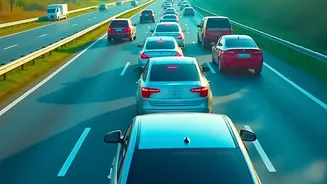
V2V’s primary goal is to prevent crashes. The technology provides alerts for situations where a driver's view is obstructed. For instance, if a car several vehicles ahead slams on its brakes, your car would receive an 'emergency braking' alert instantly, even if a truck is blocking your view. Other life-saving applications include forward collision warnings, alerts if a car is drifting into your blind spot during a lane change, and notifications about vehicles driving the wrong way. It can also warn you of an approaching emergency vehicle, giving you time to clear a path. This system complements existing Advanced Driver-Assistance Systems (ADAS) by providing information that sensors alone cannot gather.
The Technology Behind the Talk
For vehicles to communicate effectively, they must speak the same language. India has chosen a technology called Cellular Vehicle-to-Everything (C-V2X). Unlike the older DSRC standard, C-V2X can leverage existing and future cellular networks like 4G and 5G for more advanced functions. Crucially, the Department of Telecommunications has already de-licensed the specific 5.9 GHz radio frequency band required for V2V communication, removing a major regulatory hurdle and paving the way for manufacturers to integrate the technology. This decision to standardize on one technology is vital for ensuring that a Maruti can talk to a Mahindra, and both can understand a Tata truck.
Challenges on the Road Ahead
While promising, the path to fully connected roads has its bumps. The biggest challenge is achieving 'critical mass'; the safety benefits are limited until a large percentage of vehicles on the road are equipped with V2V. For years, new, connected cars will share the road with millions of older, 'silent' vehicles. Secondly, there is the issue of cost, as the required hardware will add to the price of new vehicles in a price-sensitive market. Finally, cybersecurity is paramount. The system must be secure enough to prevent malicious attacks or false signals that could cause accidents, requiring robust encryption and authentication protocols.