



The Science of a Soggy Veggie
We’ve all been there: you dump a bag of frozen broccoli onto a baking sheet, hoping for roasted perfection, only to end up with a pan of limp, waterlogged florets. The culprit isn’t the vegetable; it’s the science of cooking. Frozen vegetables have a high
water content because the water inside their cells freezes into ice crystals. When you crowd a pan with these frozen items, you drastically lower the surface temperature. Instead of the heat searing the outside of the veggies, it gets used up just trying to thaw them. This releases a significant amount of water into the pan. With nowhere to go, this water turns to steam, and your vegetables end up steaming or boiling in their own liquid instead of roasting or searing. The result is uneven cooking and a mushy texture.
Why Small Batches Are the Solution
The key to avoiding the dreaded steam effect is to cook in small batches. By giving each piece of vegetable its own space, you ensure two crucial things happen. First, you maintain a high, stable temperature across the pan's surface. A hot pan can instantly evaporate the moisture released from the vegetables, allowing them to make direct contact with the hot surface. Second, proper spacing allows for better air circulation. Whether you're roasting in an oven or stir-frying in a wok, hot air needs to move around the food to cook it evenly from all sides. When vegetables are piled on top of each other, they trap moisture and block heat, leading to some pieces being overcooked and mushy while others remain underdone. Cooking in batches might seem like it takes longer, but it actually leads to a much faster and more flavourful result because the pan stays hot and effective.
Mastering the Art of Roasting
For perfectly roasted frozen vegetables, high heat and space are your best friends. Start by preheating your oven—and your baking sheet—to a high temperature, around 425-450°F (220-230°C). Placing the frozen vegetables directly onto a preheated, oiled pan gives them a head start on crisping up. The most important rule is to arrange them in a single, even layer, ensuring they aren’t touching. If your baking sheet looks crowded, it’s better to use two sheets or cook in two separate batches. Toss the vegetables in oil but consider waiting to add salt until halfway through cooking, as salt can draw out moisture prematurely. Roast for 15-25 minutes, flipping them halfway through to ensure even browning and caramelization.
Achieving the Perfect Stir-Fry
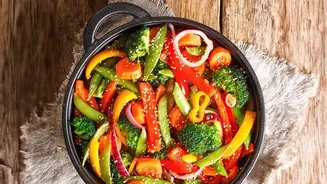
The same principle applies to stir-frying. A successful stir-fry relies on intense, consistent heat to cook ingredients quickly while maintaining a crisp texture. Adding a large volume of frozen vegetables to a hot wok or skillet will immediately drop the temperature, causing them to release water and stew. To prevent this, get your pan very hot before adding anything. Then, add the frozen vegetables in small batches, stirring them constantly. This allows the moisture to evaporate quickly and the vegetables to get a nice char. Once a batch is cooked, you can remove it, reheat the pan, and start the next batch. At the very end, combine all the cooked batches in the pan for a final toss with your sauce. This ensures every piece is perfectly cooked rather than a mix of crisp and soggy.
Air Fryers Need Breathing Room, Too
An air fryer works by circulating extremely hot air around food. Just like in a conventional oven, overcrowding the basket is a major mistake. If you fill the air fryer basket with too many frozen vegetables, you block the airflow. The vegetables on the top and sides might get crispy, but the ones in the middle will simply steam and become soft. For the best results, cook your frozen vegetables in a single layer in the air fryer basket. This might mean working in several small batches, but the payoff is uniformly crispy and delicious vegetables that taste roasted, not steamed. Shake the basket halfway through the cooking process to redistribute the veggies and promote even browning.