

A Trio of Cosmic Pairs
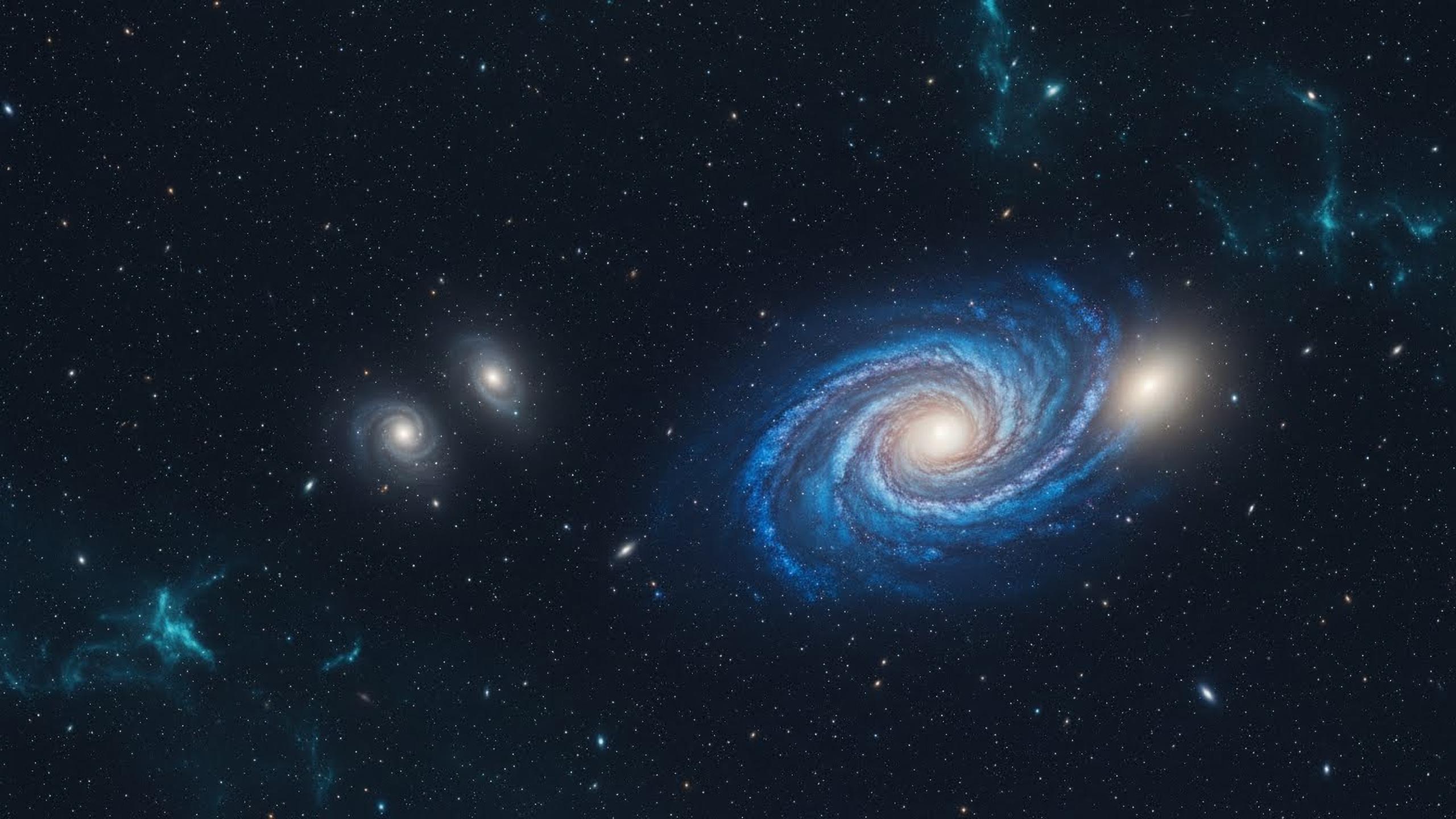
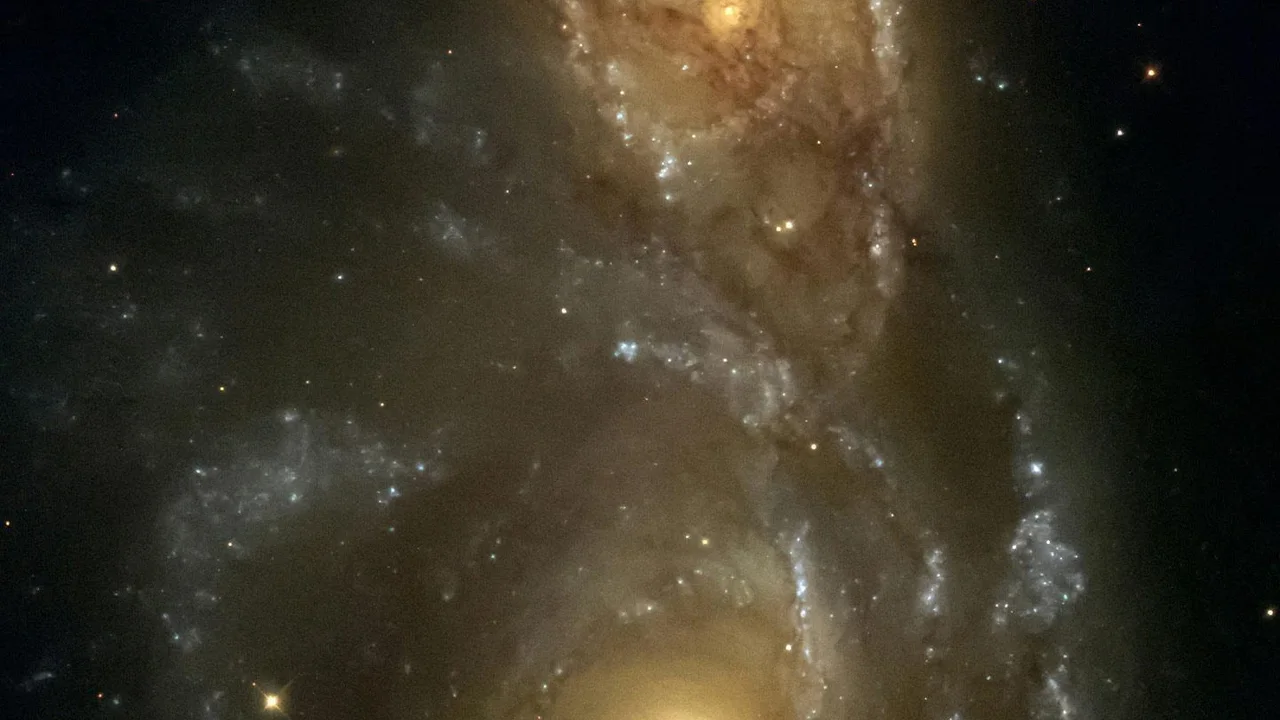
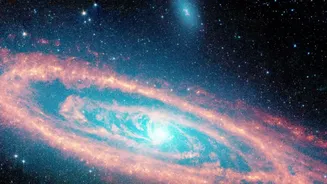
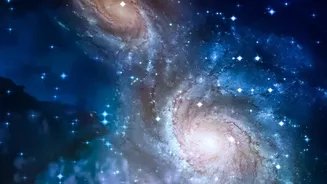
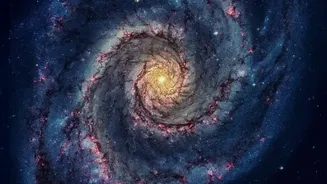
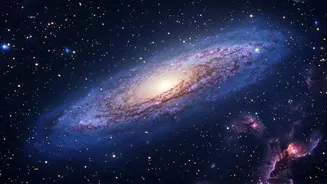
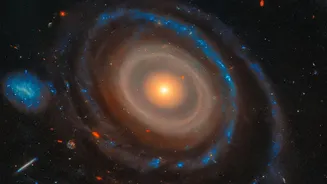
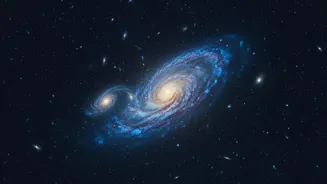
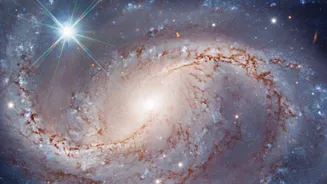
The image, which has captured the imagination of stargazers, displays three distinct pairs of galaxies in a single frame. Captured as part of NASA's Astronomy Picture of the Day, it presents a fascinating puzzle. The top pair features a unique polar ring
galaxy, NGC 4650A, whose ring of gas, dust, and stars orbits over its poles, likely the remnant of a past collision. The middle pair seems to be interacting, but studies of their relative speeds suggest this is unlikely. It's the bottom pair, NGC 4622A and NGC 4622B, that are genuinely in the process of a cosmic merger, a slow-motion collision that will see them become a single, larger galaxy in about a billion years. All of them are members of the vast Centaurus Galaxy Cluster.
An Illusion of Perspective
The key takeaway from the image is the concept of a "chance alignment." Two galaxies can appear right next to each other in the sky, but in reality, they might be separated by tens of millions of light-years. It’s a trick of perspective, similar to how a person standing on a hill can hold up their fingers and appear to be “pinching” the distant sun. Our two-dimensional view of the cosmos flattens the true, three-dimensional depth of space. Astronomers can tell the difference by studying the motion of the galaxies. If they are moving independently and show no signs of gravitational distortion—the tell-tale stretching and warping that happens when two massive bodies interact—then they are likely just ships passing in the night from our point of view.
When Galaxies Truly Collide
In contrast to chance alignments, real galactic interactions are among the most dramatic events in the universe. When two galaxies are truly close, their mutual gravitational forces begin to tear each other apart. This cosmic tug-of-war pulls out long, graceful streamers of stars and gas called tidal tails. The process is incredibly slow, taking hundreds of millions of years from start to finish. Rather than being purely destructive, these collisions are powerful engines of creation. The gravitational disruption compresses vast clouds of gas, triggering a firestorm of new star formation known as a starburst. While the individual stars within the galaxies rarely, if ever, collide due to the immense distances between them, the galaxies themselves eventually merge into one. Many large galaxies, including our own Milky Way, are thought to have grown to their current size through such mergers.
Why These 'Faux' Pairs Matter
Studying chance alignments isn't just about debunking a cool-looking image. These happy accidents provide unique scientific opportunities. When one galaxy is positioned in front of another, its dust lanes can be seen in silhouette, backlit by the stars of the background galaxy. This allows astronomers to study the distribution of dust in the foreground galaxy in great detail. Furthermore, such alignments are perfect laboratories for studying a phenomenon called gravitational microlensing. This occurs when stars in the foreground galaxy act as lenses, their gravity bending and slightly magnifying the light from the more distant galaxy, offering another tool to probe the cosmos. These visual coincidences, therefore, are not just beautiful illusions; they are valuable scientific resources that help us understand the structure and properties of galaxies near and far.