







An Accessible Start to Strength
The traditional push-up is a powerhouse of an exercise, but it can be intimidating or too challenging for many people, especially those new to fitness, recovering from an injury, or dealing with joint pain. This is where the wall push-up shines. It's
a modified version where you stand and push against a wall instead of the floor. By changing your orientation from horizontal to vertical, you reduce the amount of bodyweight you have to lift, making it much easier on your wrists, shoulders, and elbows. This simple adjustment allows you to focus on learning the correct movement pattern and building a solid foundation of strength without the high intensity of a floor push-up.
Mastering the Proper Form
To get the most out of wall push-ups and avoid injury, proper form is crucial. Start by standing about an arm's length away from a sturdy wall. Place your palms flat on the wall at about shoulder height, slightly wider than your shoulders. Step your feet back so your body forms a straight line from your head to your heels. Engage your core muscles to prevent your hips from sagging. Slowly bend your elbows—aiming for a 45-degree angle rather than flaring them out to the sides—and lower your chest toward the wall until your nose is close to touching it. Pause for a moment, then exhale as you push back to the starting position with control.
The Muscles Behind the Movement
Despite being a simpler variation, the wall push-up targets the same key upper-body muscles as a traditional push-up. The primary muscles worked are your chest muscles (pectorals), shoulders (deltoids), and the back of your arms (triceps). In addition to these, your core muscles, including your abdominals, are engaged to keep your body stable and straight throughout the movement. Even muscles in your lower body, like your glutes and quads, play a stabilizing role. Strengthening these groups is not just for show; it translates directly into making everyday tasks like pushing open a heavy door, lifting groceries, or getting up from a chair feel much easier.
Integrating Into Your Daily Routine
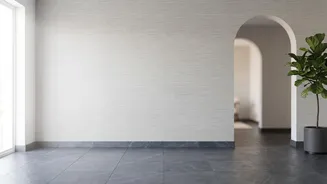
One of the greatest advantages of wall push-ups is their convenience. You don't need any special equipment or a gym membership—just a solid wall. This makes them incredibly easy to fit into your day. You can do a few sets while waiting for your coffee to brew in the morning, as a quick break from sitting at your desk in the office, or while waiting for dinner to cook. Aim for 2-3 sets of 10-15 repetitions. The key is consistency. By incorporating this exercise into your daily or weekly routine, you'll gradually build strength, improve your posture, and enhance your body awareness.
How to Progress and Get Stronger
Once you feel comfortable and can easily perform multiple reps with good form, it's time to increase the challenge. The simplest way to progress is by moving your feet further back from the wall. This increases the angle of your body and forces you to push more of your bodyweight. You can also slow down the movement, taking three to four seconds to lower your body, which increases the time your muscles are under tension. When wall push-ups become too easy, you can advance to incline push-ups by placing your hands on a lower surface, such as a countertop, a sturdy bench, or the arm of a sofa. The lower the surface, the closer you get to a traditional push-up on the floor.