








The Next Frontier in Document AI
BharatGen, an AI company anchored at IIT Bombay, has launched Patram 1.5, a powerful new vision-language model designed specifically for the unique challenges of Indian documents. Unveiled on November 26, 2026, this isn't just another text scanner. It's
a sophisticated tool engineered to read and comprehend the complexities of poorly scanned, handwritten, stamped, and multilingual papers that form the backbone of administration and commerce across the country. This seven-billion-parameter model is an upgrade to its predecessor, Patram 1, and aims to automate the immense task of paperwork in critical sectors like banking, healthcare, and governance. Unlike traditional Optical Character Recognition (OCR) systems that often falter with regional scripts or messy handwriting, Patram 1.5 is built to understand context, layout, and a mix of languages.
Solving the 'Indian Document' Problem
Anyone who has dealt with official paperwork in India understands the problem. Documents are rarely pristine; they come with scribbled notes, official seals, and text in multiple scripts, including English mixed with regional languages. Standard AI models, often trained on clean, English-language text, struggle to make sense of this visual and linguistic complexity. Patram 1.5 tackles this by processing the entire document as an image, allowing it to interpret visual cues like tables, signatures, charts, and even faded text alongside the written words. This 'OCR 3.0' approach, as BharatGen calls it, preserves the context that is often lost when a document is simply converted to plain text. It supports a wide range of Indian languages, including Hindi, Bengali, Tamil, and Telugu, covering over 80% of the country's linguistic diversity.
Smarter, Safer, and More Accurate
One of Patram 1.5's most crucial features is a capability known as 'abstention'. In high-stakes fields like finance and healthcare, a wrong guess by an AI can have serious consequences. Patram 1.5 is trained not to invent answers. If a section of text is illegible or information is missing, the model will flag it for human review rather than providing a potentially inaccurate response. This focus on reliability is critical for its target applications, from processing KYC documents in banks to digitizing patient records in hospitals. BharatGen reports that in extensive testing against other leading models, Patram 1.5 performed exceptionally well, especially on its own benchmark built from thousands of real-world Indian documents.
Unlocking India's Data Hoard
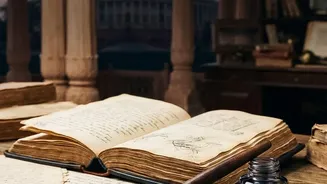
The potential applications are transformative. Government initiatives like the 'Gyan Bharatam' mission aim to digitize over a crore of ancient manuscripts, a task perfectly suited for this kind of technology. Beyond historical preservation, Patram 1.5 can streamline countless modern workflows. Imagine banks instantly processing loan applications filled out by hand, insurance companies verifying claims from scanned receipts, or government agencies creating searchable digital archives of land records. By making the model's weights open and available, BharatGen is also enabling organisations to run the AI on their own servers. This ensures that sensitive data, such as personal financial or health information, doesn't need to leave the institution's secure infrastructure, addressing major privacy and data sovereignty concerns.