




The Core of the New Push
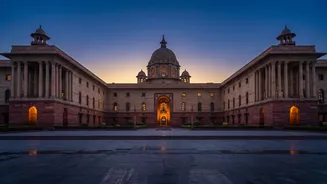
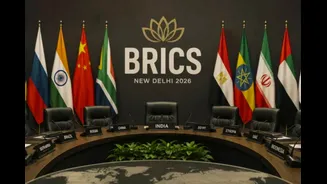
With India chairing the bloc in 2026, the focus has shifted towards tangible, practical cooperation. The agenda for the 18th BRICS Summit in New Delhi is packed with economic initiatives aimed at deepening integration. Key among these is the 'Strategy
for BRICS Economic Partnership 2030', a roadmap covering trade, investment, digital economy, and finance. A central proposal, pushed by India, is a BRICS invoice discounting mechanism to help Micro, Small, and Medium Enterprises (MSMEs) secure crucial trade finance. This is complemented by the 'BRICS Global Value Chains Action Plan 2026-2030', designed to make supply chains more resilient and diversified, reducing dependence on single economic partners. These initiatives show a clear move away from broad political statements towards building the practical plumbing of a new economic system.
The De-Dollarization Question
Talk of a single BRICS currency to challenge the US dollar often grabs headlines, but the reality is more nuanced. The current focus is not on creating a common currency, which is seen as a distant prospect due to diverse monetary policies. Instead, the bloc is aggressively promoting the use of national currencies for trade settlements. This strategy aims to reduce transaction costs, protect member economies from US dollar volatility, and limit exposure to Western sanctions. Russia's Kremlin spokesperson recently stated that around 90% of its transactions with BRICS nations now occur in national currencies. Furthermore, initiatives like BRICS Pay are being developed to link the domestic payment systems of member countries, such as India's UPI and China's CIPS, creating an alternative to the SWIFT messaging system for cross-border transactions.
New Members, New Dynamics
The expansion of BRICS to include Egypt, Ethiopia, Iran, the UAE, and others has significantly increased its economic heft and strategic importance. The bloc now represents a much larger share of the global population and GDP. The inclusion of major energy producers like the UAE and Iran gives the group substantial influence in global energy markets. These new members open up fresh trade corridors and investment opportunities. For instance, the UAE's role as a financial hub can attract capital, while Iran's vast mineral resources present new avenues for investment from BRICS partners. However, the expansion also brings challenges, requiring the bloc to manage the diverse and sometimes conflicting geopolitical interests of its members, particularly in regions like the Middle East.
The Role of the New Development Bank
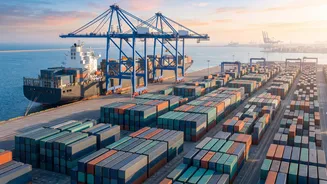
The New Development Bank (NDB), or 'BRICS Bank', is central to the bloc's investment strategy. Established as an alternative to the World Bank and IMF, the NDB funds infrastructure and sustainable development projects in member countries. A key feature of its strategy is to increase lending in local currencies, with a goal of having 30% of its financing in national currencies to shield projects from exchange rate risks tied to the US dollar. The NDB has approved billions in loans for projects ranging from a rapid transit system in India to renewable energy plants and port modernization in other member states. It is also increasingly focused on climate finance, committing a significant portion of its portfolio to green projects.
India’s Strategic Balancing Act
As the 2026 BRICS chair, India is navigating a complex path. New Delhi has championed practical initiatives that benefit its 'Make in India' ambitions and its push to internationalize the rupee. It strongly supports a more inclusive global order and reforms in institutions like the UN and WTO. However, India is also wary of the bloc becoming an overtly anti-Western platform, a narrative it actively seeks to counter. While India promotes trade in local currencies, its foreign minister has clarified that the country does not support a complete de-dollarization agenda. This reflects India's broader foreign policy of maintaining strong partnerships with both BRICS nations and Western powers, using the platform to amplify the voice of the Global South while balancing its own strategic interests.