


The Secret Life of a Raindrop
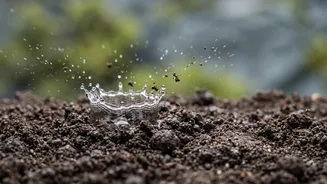
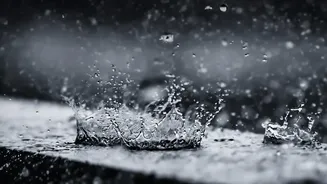
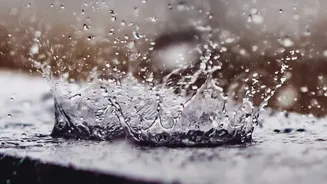
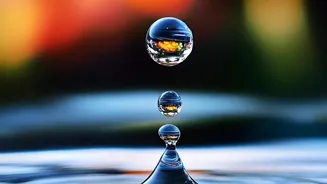
We often think of erosion as a slow, grand process involving rivers carving canyons over millennia. But one of its most fundamental forms starts with something much smaller: a single raindrop. When a drop hits bare soil, it’s not a gentle event. Traveling
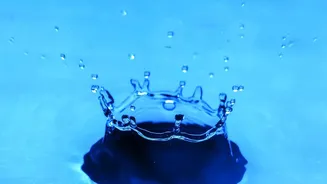
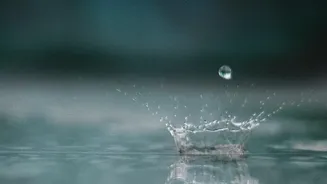
at speeds up to 32 kilometres per hour, it strikes the ground with explosive force. This impact, known as 'splash erosion', blasts soil particles in all directions, sometimes as far as five feet away. This process is the very first stage of water erosion, initiating a chain of events that can have massive consequences. The cumulative effect of billions of these tiny impacts during a heavy downpour can dislodge enormous amounts of soil, fundamentally altering the landscape on a microscopic level before larger-scale erosion even begins.
What New Studies Reveal
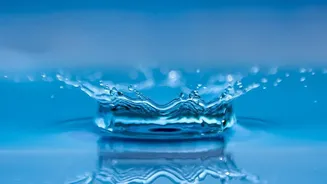
For years, scientists understood the basics of splash erosion, but recent studies have refined this knowledge with startling clarity. Using high-speed cameras and advanced modeling, researchers have been able to measure the hidden forces at play. One groundbreaking study discovered that as a droplet impacts a surface, the speed at which it spreads can exceed the speed of sound for a moment, creating a shock wave. This helps explain why something as soft as water can wear down hard surfaces over time; each drop behaves like a tiny explosion. Other experiments focusing on sloped surfaces have debunked older ideas. It was previously thought that gravity was the main reason more soil moved downhill. However, high-speed imaging shows that the downward momentum of the incoming raindrop itself acts like a bulldozer, preferentially ejecting more soil particles in the downslope direction and at higher velocities.
The Impact on Our Food and Water
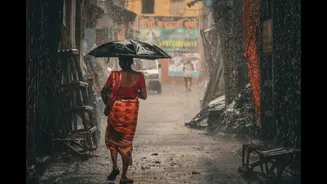
This might seem like abstract physics, but it has profound implications for agriculture, particularly in a country like India where the monsoon is a powerful annual event. The soil dislodged by raindrops is not just any soil; it’s often the nutrient-rich topsoil essential for growing crops. When these fine particles are splashed around, they can clog soil pores. This seals the surface, reducing its ability to absorb water and leading to more surface runoff. Instead of soaking in to nourish plants, the water flows away, carrying precious topsoil and any fertilisers with it into rivers and streams. Over time, this process degrades farmland, reduces crop yields, and contributes to water pollution. With half of the planet's topsoil already lost in the last 150 years, understanding and mitigating even the smallest drivers of erosion is critical for food security.
Shaping Landscapes and Our Future
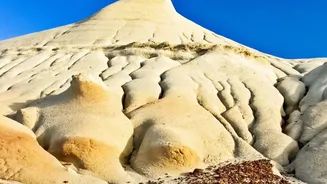
Beyond the farm, the persistent, long-term effects of rain-droplet erosion shape the world around us. Geologically, it’s a key process in sculpting hillsides and other landforms, especially in arid and semi-arid regions. On a human timescale, this slow, steady weathering affects our built environment. The stability of slopes along roads, the foundations of buildings, and the integrity of earthen dams are all subject to the cumulative force of rainfall. Recent research has also highlighted how man-made structures interact with this process. For example, studies on large solar farms show that while panels can protect the ground directly beneath them, they concentrate runoff along their edges, creating new erosion hotspots that must be managed. This demonstrates a crucial point: as we change the landscape, we must account for these fundamental natural forces. Neglecting the small-scale physics of a raindrop can lead to large-scale problems down the line.