





The Challenge of Foreign Varieties
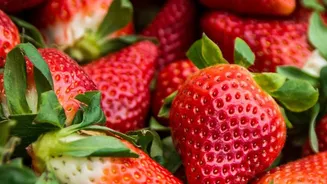
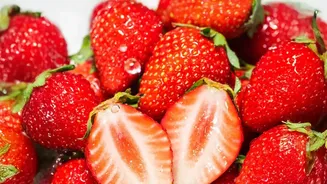
When you buy strawberries in India, you are most likely enjoying a variety developed thousands of kilometres away in California, Florida, or Spain. For decades, Indian farmers, especially in the famous Mahabaleshwar-Panchgani belt which grows around 85%
of the country's crop, have relied on imported cultivars like Chandler, Camarosa, and Sweet Sensation. While these varieties can produce beautiful fruit, the dependence comes at a cost. Farmers must pay for expensive imported mother plants, sometimes spending lakhs of rupees each season for a few acres. These foreign plants are also not always a perfect match for India’s diverse and often harsh agro-climatic conditions. They were bred for temperate climates and can struggle with Indian heatwaves, humidity, and soil types, leading to unpredictable yields and quality. Furthermore, the resulting fruit is often extremely delicate. The beloved Mahabaleshwar strawberry, for instance, has a notoriously short shelf life of just two to three days, creating a frantic race to get the produce to market before it spoils.
A Made-in-India Scientific Solution
In the labs of Maharashtra, a homegrown solution is taking root. Scientists at Mahatma Phule Krishi Vidyapeeth (MPKV), a leading agricultural university, have teamed up with the prestigious Bhabha Atomic Research Centre (BARC) on a pioneering breeding experiment. Their goal is to develop India’s first truly indigenous strawberry cultivar, one that is built for Indian conditions from the ground up. Instead of the conventional and slow cross-breeding process, which can take over a decade to yield a new variety, the researchers are using a cutting-edge technique involving gamma irradiation. In this process, plant tissues are exposed to controlled, low doses of radiation to induce rapid genetic mutations. Think of it as a way to fast-track evolution, creating thousands of genetic variations in a short time. From these variations, scientists can then select plants that naturally exhibit the desirable traits they are looking for.
Building a Better Berry
The scientific wish list for this new Indian strawberry is clear and ambitious. According to Dr. Darshan Shashank Kadam, an assistant professor of Horticulture at MPKV, the primary objective is to create a climate-resilient cultivar. This means a plant that can natively tolerate the country's heatwaves and unpredictable weather patterns, which would be a game-changer for farmers who often face massive losses due to sudden rains or temperature spikes. Beyond resilience, the team is aiming for a fruit that can compete with the best imports on quality. They are looking to match the large size and firm texture of popular foreign varieties, which would make the Indian strawberries more durable for transport and more appealing to consumers. A longer shelf life is another critical target. By developing a berry that stays fresh for longer than the current two-to-three-day window, the financial viability for farmers would improve dramatically, reducing waste and opening up markets further from the farm.
The Path to a 'Strawberry Superpower'
This research is about more than just a single fruit; it represents a strategic shift toward agricultural self-reliance, aligning with the broader 'Atmanirbhar Bharat' vision. Successfully developing local cultivars would free farmers from dependence on costly foreign supply chains and provide them with plants better suited to their land. Over time, this could lower production costs and improve profit margins, particularly for the small and marginal farmers who form the backbone of Indian horticulture. Industry observers suggest this move could help India transform into a 'strawberry superpower'—a nation that not only produces in large quantities but also develops its own unique varieties. A successful homegrown berry could boost domestic consumption and strengthen India's position in the global fruit market, potentially creating new export opportunities. However, the journey is a marathon, not a sprint. Developing, testing, and gaining regulatory approval for a new plant variety is a multi-year process.