




The US presidential veto is one of the most powerful tools in American politics, a constitutional authority allowing the president to single-handedly block legislation. Following the 2026 midterm elections, its use is now more critical than ever.
What Exactly Is a Presidential Veto?
In simple
terms, a veto is the president's power to say 'no' to a bill passed by Congress. The term itself, Latin for 'I forbid', doesn't appear in the US Constitution, but the power is explicitly granted in Article I, Section 7. After both the House of Representatives and the Senate approve a piece of legislation, it is sent to the president. The president then has 10 days (excluding Sundays) to act. If the president signs the bill, it becomes law. If they do nothing while Congress is in session, it also becomes law. But if the president rejects the bill and sends it back to Congress with objections, that is a 'regular veto'. There is also a 'pocket veto', which occurs if Congress adjourns before the 10-day period is over and the president simply doesn't sign the bill; this type of veto cannot be overridden by Congress.
The High Bar of a Congressional Override
A presidential veto is powerful, but not absolute. The Constitution provides a check on this power: the congressional override. To override a veto, both the House and the Senate must vote again on the bill and pass it with a two-thirds majority in each chamber. This is a deliberately high threshold. Getting a simple majority to pass a bill is often difficult enough; securing a two-thirds supermajority requires significant, bipartisan support. As a result, overrides are historically rare. Of the more than 2,500 vetoes in US history, Congress has successfully overridden just over 100. This high bar means that most presidential vetoes effectively kill the legislation, making the veto a formidable weapon in any president's political arsenal.
Trump's Veto Record
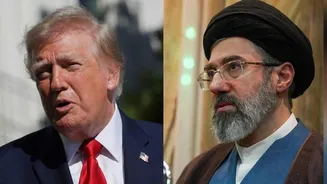
During his first term from 2017 to 2021, Donald Trump used his veto power 10 times. These vetoes covered a range of issues, from disapproving of resolutions to end his declared national emergency at the southern border to rejecting congressional efforts to block arms sales. For the first two years of his presidency, with a Republican-controlled Congress, he issued no vetoes. The veto pen came out only after Democrats took control of the House in 2019, highlighting how the power is often used in times of divided government. Of his 10 vetoes, only one was overridden by Congress: the National Defense Authorization Act for Fiscal Year 2021.
Vetoes in a Divided Government
The results of the 2026 midterm elections have reshaped the political landscape in Washington. Historically, presidential vetoes become far more frequent and strategically important during periods of divided government—when the president's party does not control both chambers of Congress. Since 1981, 98% of presidential vetoes have occurred under a divided government. When facing an oppositionndrolled House or Senate, the president's ability to pass their own agenda is diminished. In this environment, the veto transforms into a powerful defensive tool, allowing the president to block the legislative priorities of the opposing party. The mere threat of a veto can also be a powerful bargaining chip, forcing Congress to negotiate and modify legislation to make it more acceptable to the president.
What to Expect Now
With the new congressional dynamic, the veto is set to become a central feature of Washington politics. For a president like Donald Trump, who has often expressed a preference for wielding executive power, the veto offers a direct way to stymie the agenda of a potentially hostile Congress. This could lead to intense political standoffs and legislative gridlock, where Congress passes bills only to see them vetoed, with little chance of an override. Alternatively, it could force both sides to the negotiating table to find rare areas of bipartisan compromise. How often the veto is used—and on what issues—will be a key barometer of the political climate and the relationship between the White House and Capitol Hill for the next two years.