





A Larger, More Complex Family
The BRICS of today is vastly different from the original grouping of Brazil, Russia, India, China, and South Africa. A major expansion phase saw Egypt, Ethiopia, Iran, and the United Arab Emirates join in 2024, with Indonesia following in 2025. This has transformed
the bloc from a club of large emerging economies into a sprawling coalition of nations from the Global South, accounting for almost half of the world's population and a significant portion of the global economy. The expansion was driven by a desire to create a stronger counterweight to Western-dominated global institutions and to give a bigger voice to developing nations. However, with greater size comes greater complexity. The challenge for India, as the 2026 chair, is to forge consensus among a group with increasingly diverse economic interests and political systems.
India's Agenda: Resilience and Reform
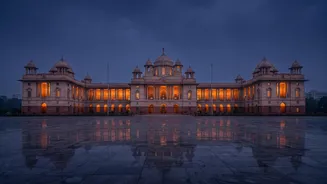
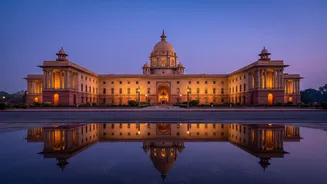
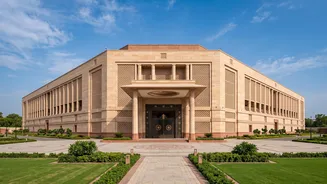
Hosting the summit in New Delhi, India has laid out an ambitious agenda under the theme “Building for Resilience, Innovation, Cooperation and Sustainability.” New Delhi's focus is on practical, people-centric outcomes rather than just broad declarations. Key priorities include strengthening resilience against global shocks in areas like health and supply chains, promoting digital public infrastructure, and accelerating climate action through green finance. A core objective for India is also the push for reforming global governance, including the UN, World Trade Organisation, and other financial institutions, to ensure they are more representative of the developing world. As host, India finds itself in a delicate balancing act, steering a bloc that includes its strategic rival, China, while managing its own strong partnerships with Western countries.
The De-Dollarisation Debate
One of the most talked-about topics surrounding BRICS is de-dollarisation. While the idea of a common BRICS currency to replace the US dollar remains a distant, and perhaps unrealistic, goal, the practical ambition is more nuanced. The real focus is on reducing dependency on the dollar by increasing the use of national currencies in trade and financial transactions between member countries. This is seen as a way to lower transaction costs and insulate their economies from the effects of US financial policy and sanctions. Russia has been a vocal proponent of these measures, and the New Development Bank (NDB), the bloc's financial arm, has already begun financing projects in local currencies. The Delhi summit is expected to advance discussions on creating a BRICS payment system, a potential alternative to the SWIFT network, to further facilitate this shift.
Can Unity Overcome Rivalry?
The biggest question hanging over the Delhi Summit is whether this expanded group can act with a unified purpose. Internal rivalries present a significant challenge. The long-standing border dispute and geopolitical competition between India and China are a major source of tension that could undermine cohesion. Furthermore, new members bring their own regional conflicts, such as the dispute between Egypt and Ethiopia over the Grand Ethiopian Renaissance Dam. Sceptics argue that the diverse and sometimes conflicting interests of the member states could lead to policy incoherence and prevent the bloc from translating its economic weight into meaningful global influence. Some analysts suggest a 'multi-speed' approach, where coalitions of interested members could move forward on specific initiatives without requiring consensus from the entire group, might be a potential solution to this problem.