






What are the Three Key Tests?
The Indian Space Research Organisation (ISRO) has been meticulously testing every component of the Gaganyaan mission, and the latest successes focus on the most critical phase: bringing the astronauts home safely. The three recently cleared qualification
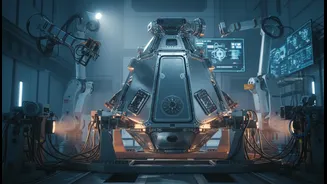
tests were for the Crew Module systems, the capsule where the astronauts will be housed. These weren't just routine checks; they were designed to prove that the systems can handle the extreme conditions of spaceflight and re-entry, ensuring the crew's survival.
Ensuring a Safe Splashdown
The first test was for the Crew Module Uprighting System (CMUS). After its fiery re-entry, the crew module will splash down in the ocean. There's a chance it could land upside down, which would be a dangerous situation for the crew inside. The CMUS is a clever system of flotation bags that inflate using cold gas, automatically flipping the module back into the correct, upright position in the water. The successful test confirmed that this vital safety feature works exactly as planned.
Cutting the Cord and Protecting the Chutes
The second test validated the umbilical separation system. The crew module is connected to a service module that provides power and propulsion during the mission. This umbilical cord must be disconnected cleanly before re-entry. A failed separation could be catastrophic. The test demonstrated a clean break, ensuring the module can proceed with its return journey unhindered. The third test focused on the structural strength of the module during the Apex Cover separation. This cover protects the all-important parachutes during launch and orbit. It needs to jettison at the right moment to deploy the chutes, and ISRO tested this by applying forces 1.75 times stronger than what is expected in flight. The module passed with flying colours, proving its structural integrity.
Why the Gaganyaan Mission Matters
Announced in 2018, the Gaganyaan project is India’s ambitious endeavour to demonstrate human spaceflight capability. The plan is to launch a crew of three astronauts into a Low Earth Orbit of 400 kilometres for a three-day mission and return them safely to Earth. Success will make India only the fourth country in the world—after the United States, Russia, and China—to have an independent human spaceflight programme. This is more than just a technological demonstration; it represents a monumental leap in India's scientific and engineering capabilities, cementing its status as a major space power.
The Road Ahead
While these tests are a significant achievement, ISRO is following a cautious and deliberate path. The mantra is safety above all else. Before any 'Gaganaut' straps in, a series of uncrewed test flights are planned. The first of these, G1, is expected in late 2026 and will carry Vyommitra, a humanoid robot, to simulate a crewed presence and test life support systems. Following at least two more successful uncrewed missions, the first crewed flight, H1, is tentatively scheduled for 2027. Four Indian Air Force pilots have already been selected and are undergoing rigorous training for this historic flight. Each successful test, from parachute drops to these latest module system qualifications, builds the foundation for that ultimate goal.