







A Vision for Regional Skies
The plan to develop four more airports in West Bengal is a cornerstone of a broader strategy to put smaller cities and remote areas on the national aviation map. Driven by a collaboration between the state government and the Airports Authority of India
(AAI), the initiative aligns with the central government's UDAN (Ude Desh ka Aam Nagrik) scheme. The core idea is simple but transformative: make air travel accessible and affordable for everyone, not just residents of metro cities. By developing airports in underserved regions, the government aims to create new economic corridors, reduce travel time drastically, and provide a much-needed alternative to road and rail, which can be time-consuming for reaching the state's far-flung districts.
The Northern Revival: Malda and Balurghat
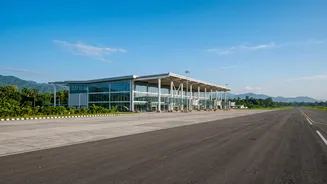
Two of the key locations in this plan are Malda and Balurghat in North Bengal. For years, these airports have remained largely dormant or unequipped for commercial flights. The new push involves a complete overhaul to bring them up to modern standards. In Malda, known for its rich history and mango production, the revival of the airport is expected to be a game-changer for tourism and agri-business. Similarly, Balurghat in Dakshin Dinajpur district stands to gain immensely from air connectivity, which would connect it directly to Kolkata and beyond. The work required is substantial, including extending runways to accommodate larger aircraft, constructing new terminal buildings with passenger amenities, and installing advanced air traffic control and safety equipment. The success of these revivals is critical to the overall vision of an interconnected Bengal.
Cooch Behar and the Southern Push
Unlike Malda and Balurghat, the airport at Cooch Behar is already operational, but its services are limited. The plan here is focused on expansion and enhancement to handle more flights and larger passenger volumes. As a historic city with a royal palace and proximity to wildlife sanctuaries, Cooch Behar has significant untapped tourism potential that regular, reliable flights could unlock. The fourth pillar of this strategy is a proposed new airport in the southern part of the state, likely in the South 24 Parganas district. This new hub would serve a dual purpose: supporting the tourism circuit in the Sundarbans delta and managing the massive influx of pilgrims for the annual Gangasagar Mela. An airport in this region would dramatically cut down travel time and provide crucial infrastructure for an ecologically sensitive and economically vital area.
The Two-Year Challenge
While the vision is clear, the two-year timeline is undeniably ambitious. Infrastructure projects of this scale are complex and often face hurdles that can lead to delays. The most significant challenges include land acquisition for runway expansions, securing all necessary environmental and regulatory clearances, and completing construction on schedule. Furthermore, for these airports to be successful in the long run, they must be commercially viable. Airlines need to be convinced that there is enough passenger demand to sustain regular flight operations on these new routes. The government's UDAN scheme provides subsidies to airlines to mitigate initial risks, but long-term success will depend on organic growth in passenger traffic, which is closely linked to the economic development of the surrounding regions.
Economic Impact and Future Outlook
If successful, the project promises a significant economic ripple effect. Improved connectivity is a catalyst for growth, attracting investment, boosting trade, and creating jobs both directly in aviation and indirectly in hospitality, logistics, and local commerce. For regions like Malda and North and South Dinajpur, it means farmers and artisans can access larger markets more quickly. For tourism hotspots like Cooch Behar and the Sundarbans, it means greater accessibility for domestic and international visitors. While the path to completion may have its share of turbulence, the commitment to expanding Bengal's aviation footprint represents a forward-looking investment in its future.