






A Persistent Eye in the Sky
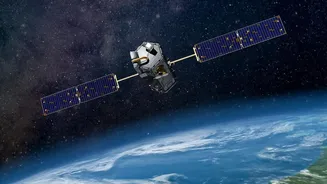
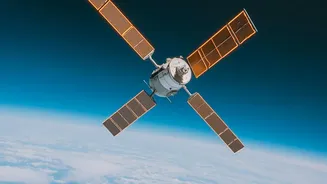
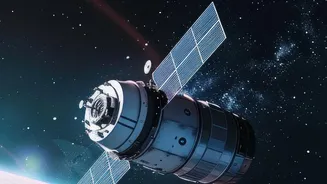
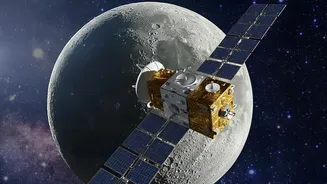
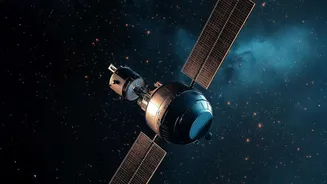
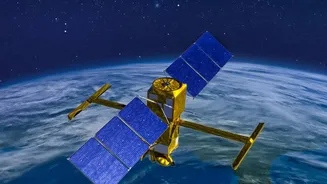
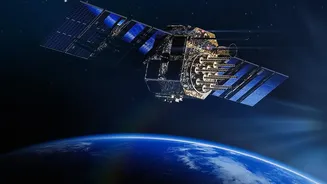
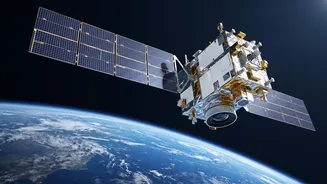
The EOS-05, also known as GISAT-1A, is an advanced Earth observation satellite. Its primary mission is to provide frequent, large-area imaging of the Indian subcontinent from a geosynchronous orbit, approximately 36,000 kilometres above the Earth. Unlike
satellites in low-Earth orbit that pass over a location periodically, a geosynchronous satellite stays over the same general region. This allows for near-real-time monitoring, which is critical for tracking natural disasters like cyclones and floods, as well as for agricultural assessment, forestry, and security surveillance. The satellite is equipped with multispectral and hyperspectral imaging cameras, enabling it to capture a wide range of data for both civilian and strategic applications.
The 2021 Setback
The journey to get this capability in orbit was not smooth. The original satellite in this series was EOS-03 (or GISAT-1), launched on August 12, 2021, aboard a GSLV-F10 rocket. While the initial stages of the launch performed normally, the mission was aborted just over five minutes into its flight. The problem occurred in the rocket's cryogenic upper stage, which failed to ignite due to a technical anomaly. A subsequent investigation by a Failure Analysis Committee pinpointed the cause: a leak in a valve led to insufficient pressure in the liquid hydrogen propellant tank, preventing the engine from firing correctly. This resulted in the loss of the satellite, a significant setback for ISRO.
A Crucial Comeback Mission
The "latest facts" surrounding EOS-05 revolve around its successful launch in September 2026, which served as a replacement for the failed 2021 mission. Launched on September 4, 2026, aboard the GSLV-F17, the mission was a significant moment for ISRO. It came after a nearly eight-month pause in launches following other mission failures, making its success vital for institutional morale and momentum. The launch was described as a textbook success, with the nearly 2,367 kg satellite placed precisely into its intended sub-geosynchronous transfer orbit. Over the next several days, ISRO engineers successfully performed a series of orbit-raising manoeuvres, using the satellite's onboard Liquid Apogee Motor to guide it to its final geosynchronous orbit.
Why This Success Matters
The successful deployment of EOS-05 was more than just a single mission's success; it was a demonstration of ISRO's resilience and corrective capabilities. It proved the agency had understood and rectified the cryogenic stage issue that caused the 2021 failure. The mission's importance was magnified by a series of unrelated setbacks with ISRO's trusted PSLV rocket in 2025 and early 2026, which had created a challenging period for the organisation. The successful flight of the GSLV, a more complex vehicle, restored confidence and put India's space programme back on track for ambitious future missions, including Gaganyaan. It finally delivered a critical national capability that had been delayed for five years, enhancing India's ability to monitor its territory from space.