





A Mission of Historic Firsts
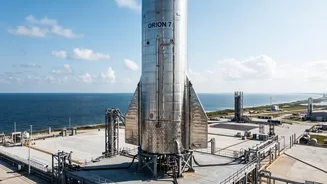
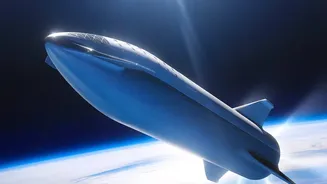
SpaceX's fifteenth test flight of its colossal Starship rocket system was a mixture of triumph and learning. The primary mission goals were audacious: launch the two-stage vehicle, send the Ship 42 upper stage into a stable orbit, and then recover both
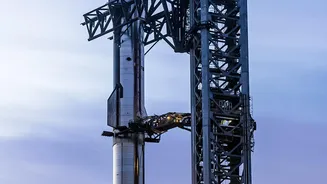
the Super Heavy booster and the Ship by 'catching' them with the launch tower's arms, a system nicknamed 'Mechazilla'. While the booster recovery was aborted, the mission succeeded in its most groundbreaking objective. After spending nearly a full day in space, Ship 42 successfully returned from orbit and was caught by the tower, a feat never before accomplished in the history of rocketry. This moment marks a monumental step toward SpaceX’s goal of a fully and rapidly reusable launch system, the key to unlocking affordable travel to the Moon, Mars, and beyond.
Ship 42's Orbital Journey
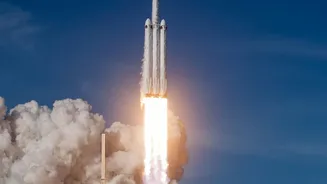
Lifting off from Starbase in Texas on November 13, the giant rocket performed a nominal ascent. Following a clean 'hot-staging' separation, where the Ship's engines ignite before it fully detaches from the booster, Ship 42 continued its journey to space. It achieved a stable orbit at an altitude of approximately 275 kilometers. During its nearly 22-hour flight, it circled the Earth 14 times, deploying 26 next-generation Starlink satellites into low Earth orbit. This deployment demonstrated Starship’s capability as a workhorse for building out SpaceX's own satellite constellation, a key early use case for the vehicle. After its long duration in space, flight controllers gave the final 'go' for the historic landing attempt.
The Nail-Biting Catch
The return of Ship 42 was the mission's main event. Plunging back into the atmosphere from orbital velocity—around 26,000 kilometers per hour—the craft used its body and four large flaps to control a horizontal, 'belly-flop' descent, shedding immense energy as heat. In the final moments, it executed a dramatic flip maneuver, igniting three Raptor engines to transition to a vertical orientation for a powered landing. It then slowed its descent to a near-hover, positioning itself perfectly between Mechazilla's waiting 'chopstick' arms, which closed securely around the vehicle. The successful catch was hailed by SpaceX commentators as 'the holy grail of spaceflight', proving that the most difficult piece of the reusability puzzle is solvable.
What Happened to the Booster?
While the Ship's return was a flawless success, the Super Heavy booster's recovery did not go as planned. After separating from the Ship, the booster performed its flip and boostback burn to reverse course and head back toward the launch site. However, an issue described as a low fuel mass reading triggered an automated abort of the planned tower catch. The booster's guidance system autonomously diverted it to a safe splashdown location in the Gulf of Mexico, where it was intentionally destroyed after performing a landing burn. While SpaceX has successfully caught Super Heavy boosters on previous flights, this particular attempt was unsuccessful, and the root cause is under investigation.
Why Full Reusability Changes Everything
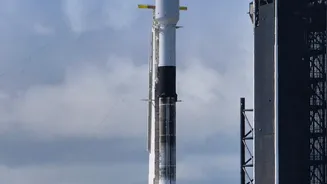
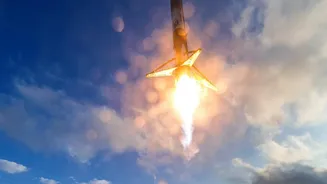
Achieving full reusability is the core of SpaceX's business model for Starship. Traditional rockets are expendable, meaning the entire vehicle is discarded after a single use. Even partially reusable rockets like the Falcon 9 discard their upper stage. A fully reusable system, where both the booster and the spacecraft are recovered and reflown quickly, operates more like a commercial airliner, drastically slashing the cost of launching anything—or anyone—into orbit. This catch proves the viability of recovering the upper stage, which experiences the extreme stresses of orbital reentry. Success brings down the cost-per-kilogram to orbit, enabling the launch of larger satellites, ambitious scientific instruments, and eventually, the infrastructure needed for permanent bases on the Moon and cities on Mars.