


A Return to Wild Flavours
A quiet revolution is taking root in India’s fine-dining kitchens. Chefs, driven by a desire for unique flavours and a deeper connection to their ingredients, are venturing into the wild. This 'wild-to-table' movement sees them incorporating foraged plants,
flowers, and fungi—from Himalayan morels (guchchi) and sea buckthorn to hyperlocal greens like takla—into their menus. This isn't just about novelty; it's a return to food at its most primal level. Chefs like Prateek Sadhu, Vanika Choudhary, and Radhika Khandelwal are championing this shift, exploring India's vast biodiversity to uncover ingredients that have been part of traditional diets for centuries but have rarely appeared in mainstream restaurants. From the coastal stretches of Maharashtra to the forests of Uttarakhand and the mountains of Ladakh, this trend is rediscovering the country's rich, edible landscape.
Honouring Traditional Knowledge
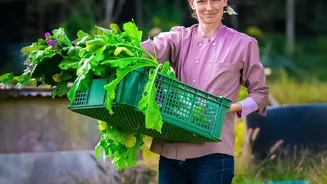
Foraging is not a new concept in India. For generations, indigenous and agrarian communities have relied on their deep knowledge of the local ecosystem for sustenance and medicine. This ancestral wisdom, often passed down orally, is now being recognised by the culinary world. Chefs are collaborating with local communities, learning from them about what is edible, when to harvest it, and how to prepare it. This partnership is vital, as it acknowledges the communities who have been the custodians of this knowledge. Foraging has become a way to keep micro-cuisines and their stories alive, celebrating ingredients like Ladakhi wild garlic chives (skotse) or ferns from the North East that are deeply woven into the local culture.
The Responsibility on the Plate
The romance of foraging comes with a serious responsibility: sustainability. As wild ingredients become trendier, the risk of over-harvesting increases, which could decimate plant populations and disrupt ecosystems. Responsible chefs and foragers emphasise the importance of ethical practices. This includes harvesting selectively, taking only a small percentage (some suggest less than 5%) of a population, leaving enough for regeneration, and avoiding plants at risk. The principle is to work in harmony with nature's cycles, not against them. Many chefs build direct relationships with local foragers, ensuring that the practice benefits the communities and that harvesting is done sustainably, sometimes focusing only on abundant species. This conscious sourcing prevents the commercialisation of foraging from harming the very ecosystems it depends on.
Delicious or Deadly: The Need for Caution
The forest is a place of bounty, but also potential danger. For every delicious wild edible, there is often a toxic look-alike, and a mistake can have dire consequences. Misidentification is the greatest risk in foraging. For example, the highly poisonous death camas plant can easily be confused with edible wild onions, as they often grow in the same area. Similarly, toxic false morels can resemble prized true morels, but contain a substance that can cause severe illness or death. This is why absolute certainty is non-negotiable. Foragers stress that you should never eat a wild plant unless you are 100% sure of its identity, ideally learning from an expert. Some plants are only edible in certain parts or after specific preparation; morels, for instance, are toxic when raw and must be cooked thoroughly.