







An Unprecedented Acceleration
Mahindra & Mahindra recently announced a staggering milestone at its Chakan manufacturing facility near Pune: the production of its three-millionth vehicle. While the number itself is impressive, the story lies in the timeline. The plant took 107 months
to produce its first million vehicles after starting in 2009. The most recent one million, however, rolled off the line in just 27 months. This dramatic compression of production time—nearly four times faster—isn't just a result of increased demand. It's the outcome of a deliberate, high-tech strategy to build the factory of the future, today.
The Rise of the 'Smart Factory'
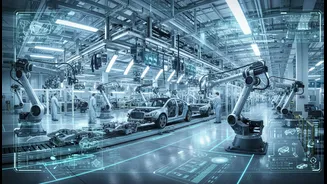
The Chakan plant, spread across 657 acres, is a showcase of what is known as Industry 4.0. This isn't just about adding more robots; it's about creating a connected, intelligent, and autonomous manufacturing ecosystem. At the heart of this transformation is a suite of advanced technologies working in unison. The facility integrates Artificial Intelligence (AI), the Internet of Things (IoT), 5G connectivity, and digital traceability into nearly every aspect of its operations. This digital nervous system allows for real-time monitoring, predictive analysis, and seamless communication between machines and humans.
Robots, AI, and Digital Twins at Work
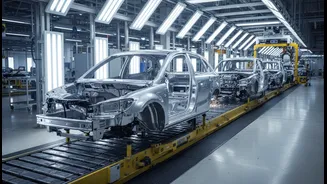
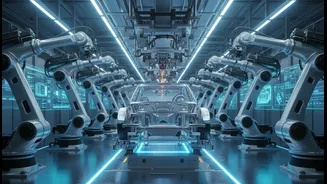
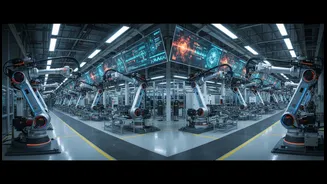
A walk through the Chakan facility would reveal this technological symphony in action. The body shop boasts an automation level exceeding 98%, with approximately 1,500 robots performing tasks with precision and speed. AI-powered computer vision systems inspect paint quality and monitor shop-floor safety, while autonomous mobile robots ferry materials across the vast plant floor. One of the most powerful tools in Mahindra's arsenal is the use of digital twins—highly detailed virtual replicas of the physical factory and its processes. Before a single physical change is made, engineers can run simulations to optimize production lines, test new workflows, or train staff in a virtual environment, saving immense time and resources.
Flexibility and Quality as Core Principles
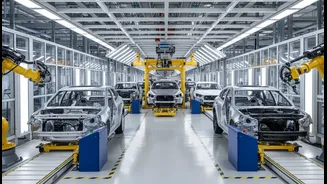
This technological leap enables unprecedented flexibility. The plant operates seven multi-model assembly lines, capable of producing 19 different models and over 450 variants—from traditional internal combustion engine (ICE) vehicles to the latest electric SUVs—on the same platform. This allows Mahindra to quickly adapt to shifting market demands. Quality control is also enhanced through technology, with systems like 3D component scanning and real-time weld monitoring ensuring that high standards are met at every stage. The guiding principle is "No Fault Forward," where interlocked quality gateways prevent defects from moving down the production line.
Sustainable Growth and Future Outlook
Mahindra's vision for its flagship plant extends beyond just speed and efficiency. Sustainability is a core pillar of its operations. The facility is 'water positive,' returning more water to nature than it consumes. It is also certified as a Zero Waste to Landfill site, and over 50% of its energy needs are met through renewable sources, with the EV manufacturing unit running entirely on green energy. The Chakan plant is not just a factory; it’s a blueprint for the future of Indian manufacturing. By integrating smart technology with sustainable practices, Mahindra is demonstrating how to achieve rapid, responsible growth, positioning itself as a leader in the global automotive landscape.