





The Myth: NASA's Clean Air Study
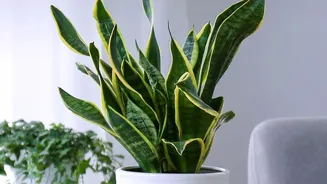
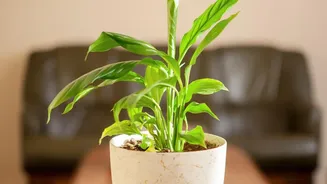
The belief that houseplants are tiny, natural air purifiers can be traced back to a landmark 1989 study from NASA. Researchers were looking for ways to clean the air in sealed environments like space stations. In the study, they placed common houseplants,
such as peace lilies, spider plants, and English ivy, into small, sealed chambers. They then pumped in high concentrations of volatile organic compounds (VOCs) like formaldehyde, benzene, and trichloroethylene — chemicals often found in synthetic fabrics, paints, and cleaning products. The results were impressive: over a 24-hour period, some plants removed up to 90% of certain chemicals from the chamber. This groundbreaking discovery launched an entire industry, with plant shops and blogs touting the air-scrubbing benefits of specific plants.
The Catch: A Sealed Chamber Isn't a Living Room
The problem with applying these findings directly to our homes lies in the study's design. The NASA experiments were conducted in small, airtight Plexiglas boxes, typically about one cubic meter in size. This setup does not reflect a real-world living space, which is much larger and has constant air movement. Building scientists point to a critical factor called the 'air exchange rate' — the natural process of indoor air being replaced by outdoor air through open doors, windows, ventilation systems, and even tiny cracks. In a typical home, this constant airflow dilutes pollutants far more effectively and rapidly than a few potted plants can absorb them. The chamber studies created an artificial environment with no air exchange and an unusually high concentration of pollutants, allowing the plants' effects to appear much more powerful than they would be in a normal room.
The Reality: You'd Need a Jungle
When subsequent researchers re-analyzed the data and applied it to realistic scenarios, the air-purifying effect of houseplants diminished dramatically. A pivotal 2019 review concluded that to achieve the same air-cleaning rate as a building's standard ventilation, you would need to place between 10 and 1,000 plants per square meter of floor space. That means a small 14-square-meter room would require hundreds, if not thousands, of plants to make a meaningful difference in air quality. In reality, the tiny amount of VOCs that a single plant can remove is dwarfed by the volume of air circulating in a room. While plants do absorb gases, their capacity is so slow that they cannot compete with simply opening a window or using a mechanical air purifier, which can be hundreds of times more effective.
The Real, Proven Benefits of Houseplants
This doesn't mean you should give up on your green friends. While they may not be the air-purifying powerhouses we once thought, their benefits for our well being are significant and scientifically supported. Numerous studies have shown that the presence of indoor plants can reduce stress, lower anxiety, and improve mood. Interacting with plants, even just by being in a room with them, has been shown to induce physiological and psychological relaxation. In office environments, employees in 'green' spaces with plants were found to be 15% more productive than those in plant free settings. They also contribute to a sense of satisfaction and can help improve focus. The aesthetic value is undeniable; healthy, lush plants make a space feel more attractive, comfortable, and connected to nature, which has a positive impact on our mental health.