






A New Generation of Cosmic Explorer
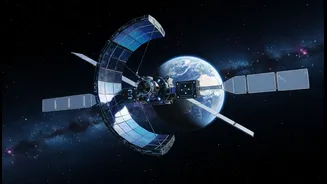
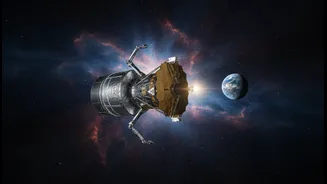
Following in the footsteps of giants like the Hubble and James Webb Space Telescopes (JWST), the Habitable Worlds Observatory (HWO) is NASA's next great astrophysics mission. Planned for launch in the 2040s, its primary goal is breathtakingly ambitious:
to be the first telescope designed specifically to find and study Earth-like planets around other stars, looking for signs of life. HWO will observe the universe in ultraviolet, optical, and infrared light, providing a powerful tool for all fields of astrophysics. But its central purpose is to directly image at least 25 potentially habitable worlds and scan their atmospheres for chemical "biosignatures" like oxygen and methane that could indicate the presence of life.
The Billion-Dollar Lesson from Hubble
The design philosophy behind HWO is a direct result of lessons learned from its predecessors. The Hubble Space Telescope, launched into low-Earth orbit, was famously designed to be serviced by astronauts. Over several Space Shuttle missions, crews repaired and upgraded Hubble, replacing gyroscopes, computers, and installing more advanced scientific instruments. This serviceability dramatically extended its life and scientific output, keeping it at the forefront of astronomy for decades. By contrast, the James Webb Space Telescope, located 1.5 million kilometers from Earth at a stable gravitational point known as L2, was not designed for repairs. While a triumph of engineering, any major failure or degradation, such as from micrometeoroid impacts, cannot be fixed. NASA realized that for a mission as critical and expensive as HWO, building a disposable observatory was no longer a viable strategy.
Designing for a Robotic Handshake
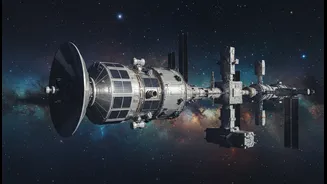
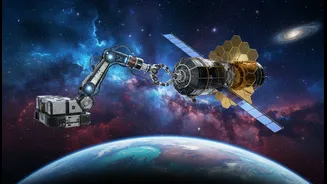
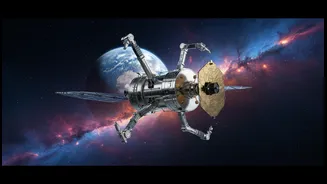
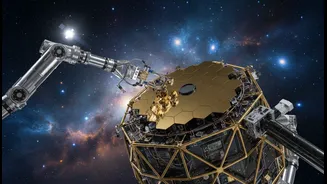
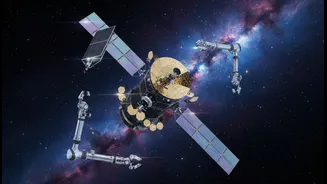
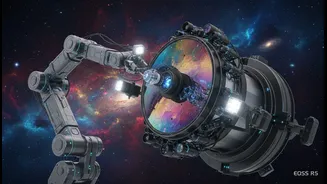
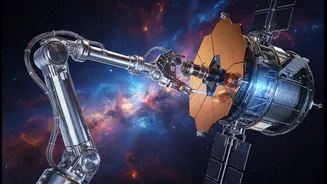
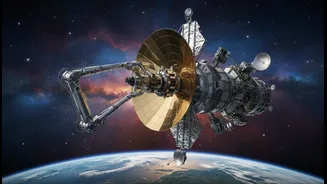
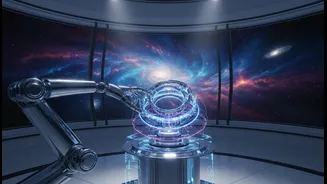
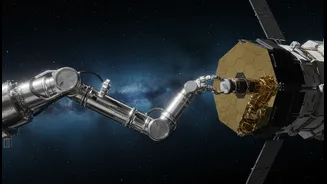
HWO will also operate at the distant L2 point, which makes astronaut servicing missions with current technology nearly impossible. The solution is a fundamental shift in design: HWO will be built from the ground up to be repaired and upgraded by robots. This concept, known as in-space servicing, assembly, and maintenance (ISAM), is now a core requirement of the mission. The observatory will feature modular components, accessible parts, and standardized fittings compatible with robotic servicers. These autonomous or remote-controlled spacecraft could one day dock with HWO to swap out aging science instruments for next-generation technology, replace failing components, or even perform in-space assembly if the telescope is too large to launch in one piece. This makes HWO less like a satellite and more like a permanent, upgradable platform in deep space.
A Telescope That Gets Better With Age
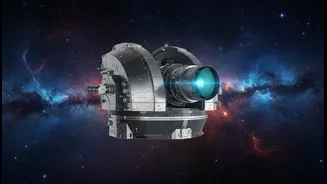
The emphasis on robotic servicing is about more than just longevity; it's about future-proofing the mission's scientific potential. The technology to find and analyze Earth-like planets is incredibly demanding. HWO will need a coronagraph—an instrument that blocks the blinding light of a host star—that is billions of times more effective than what currently exists. The telescope itself must be incredibly stable, with vibrations controlled to the picometer level, a fraction of the diameter of a single hydrogen atom. By planning for upgrades, NASA ensures that HWO can benefit from technological advancements made over its multi-decade lifespan. As better sensors and more powerful analysis tools are developed back on Earth, robotic missions can deliver and install them, allowing the observatory to evolve and tackle scientific questions we haven't even thought to ask yet.
The Ultimate Search for Neighbors
At its heart, HWO's revolutionary design serves a single, profound purpose: the search for life. After blocking a star's glare, the telescope will collect the faint light from orbiting planets and split it into a spectrum of colors. Within this spectrum, scientists will look for the tell-tale absorption lines of gases like water, oxygen, and methane. Finding these signatures in the atmosphere of a rocky planet located in its star's habitable zone—where liquid water could exist—would be the most compelling evidence for extraterrestrial life in human history. While the HWO will also contribute to countless other areas of astrophysics, from galaxy formation to the evolution of the cosmos, its ability to answer the question 'Are we alone?' is what makes it a true generational mission.