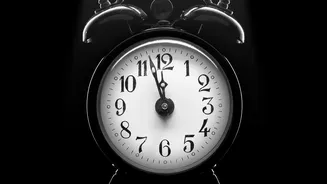









Your Body's Internal Clock
Deep inside your brain is a master clock, technically known as the suprachiasmatic nucleus, that runs on a roughly 24-hour cycle. This is your circadian rhythm, the internal conductor that orchestrates countless bodily functions, from hormone release
to body temperature and, most noticeably, your sleep-wake cycle. This clock is designed to sync with the world around you, but modern life, with its artificial lights and irregular schedules, can easily throw it out of tune. When your internal clock is misaligned, you might find yourself feeling groggy in the morning or wide awake at midnight. The good news is that this clock isn't fixed; it responds to external cues, which means you have the power to reset it.
The Power of Morning Light
The single most powerful signal for your internal clock is light. When bright light, especially natural sunlight, hits your eyes in the morning, it sends a strong “wake up” message to your brain. This exposure helps suppress the sleep-promoting hormone melatonin and reinforces the start of your active day. To anchor your wake-up time, aim for at least 15 minutes of sunlight within the first hour of waking. This doesn't have to be a major undertaking; simply drinking your coffee by a window or taking a short walk outside will do. Even on a cloudy day, the natural light is potent enough to send the right signals. Conversely, limiting bright and blue light from screens in the hours before bed is just as crucial, as evening light can delay your clock and make it harder to fall asleep.
Are You a Lark or an Owl?
Genetics also play a role in your natural sleep tendencies. Your 'chronotype' determines whether you are a 'lark' (a morning person who thrives early) or an 'owl' (an evening person who peaks later in the day). Larks naturally find it easy to wake up early, while owls often struggle with standard 9-to-5 schedules. While you can't completely change your chronotype, you can work with it. Understanding your natural tendency can help you set realistic goals. About 40% of the population are larks and 30% are owls, with the rest falling somewhere in between. For owls, creating a very consistent routine with strong morning light cues is especially important to help align their internal clock with societal demands.
Consistency is Everything
Your body loves predictability. Going to bed and, more importantly, waking up at the same time every day is fundamental to a stable circadian rhythm. Sleeping in on the weekends, while tempting, can create a form of social jetlag that confuses your internal clock, making it harder to wake up on Monday morning. Try to keep your wake-up time within a 60-minute window, even on your days off. This consistency reinforces the rhythm you’re trying to establish, making your desired wake-up time feel more natural and less dependent on an alarm. If your schedule is currently far from your ideal, adjust it gradually by shifting your bedtime and wake-up time by 15-30 minutes every few days.
Eat and Exercise on Schedule
Light isn't the only external cue, or 'zeitgeber,' that your body pays attention to. The timing of your meals and physical activity also helps to set your internal clock. Eating your meals at roughly the same time each day can help regulate your metabolism and reinforce your sleep-wake cycle. Similarly, regular exercise can promote better sleep, but the timing matters. A workout in the morning or early afternoon can advance your body clock, helping you feel more alert earlier in the day. However, intense exercise too close to bedtime can have the opposite effect for some, delaying sleep.