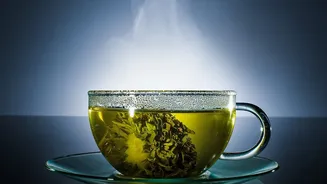




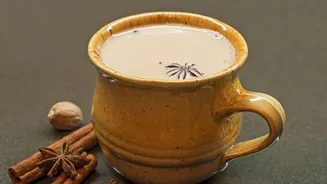

The Culture of ‘Garam Chai’
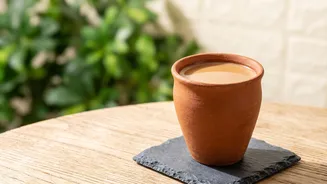
From the 'cutting chai' at a street-side stall in Mumbai to the kulhad served at a railway station, chai is more than just a drink; it's an experience. The phrase 'garam chai' (hot tea) is an invitation to pause, connect, and recharge. This tradition
of drinking chai boiling hot is deeply ingrained, seen as the 'right' way to enjoy its spiced, milky goodness. Many believe a hot beverage helps cool the body down, and for others, the scalding temperature is simply part of the satisfaction. It's a habit passed down through generations and a daily staple for people from all walks of life. This cultural preference for very hot tea, however, is now coming under scientific scrutiny for its potential health implications.
The Science of Temperature, Not Tea
The key thing to understand is that the concern is not about chai itself. The spices, tea leaves, and milk are not the issue. The focus is purely on the temperature at which the beverage is consumed. The International Agency for Research on Cancer (IARC), a part of the World Health Organization (WHO), has classified drinking beverages hotter than 65° Celsius (149° Fahrenheit) as “probably carcinogenic to humans”. This conclusion was based on multiple epidemiological studies, particularly from regions where drinking extremely hot beverages is common. The IARC’s findings suggest that it is the thermal injury—the damage caused by heat—that poses a risk, rather than the chemical composition of the drink itself. This applies to any beverage, be it tea, coffee, or even just hot water.
How Heat Can Harm the Oesophagus
The oesophagus, the muscular tube that carries food and liquid from your throat to your stomach, is lined with delicate cells. When you repeatedly consume liquids hot enough to cause thermal injury, you are essentially causing low-grade burns to this lining. This repeated damage can trigger a cycle of chronic inflammation. Your body constantly works to repair the scalded tissue, which involves a rapid turnover of cells. Over a long period, this process of constant injury and repair can increase the chances of cellular errors, potentially leading to the development of mutated cells and increasing the risk for a specific type of cancer called oesophageal squamous cell carcinoma.
Are You Drinking Your Chai Too Hot?
So, what does 65°C feel like? For context, water boils at 100°C, and a freshly brewed chai poured straight from the pot can be anywhere from 70°C to 85°C or higher. A comfortable drinking temperature, where you can take a proper sip without wincing or scalding your tongue, is generally below 60°C. If you have to take tiny, careful sips because the cup is too hot to hold comfortably or the liquid burns your mouth, it’s a clear sign that your beverage is likely above the 65°C threshold. While an occasional very hot drink is not a major cause for alarm, the risk is associated with a long-term, regular habit of consuming scalding beverages.
Simple Adjustments for Safer Sipping
The good news is that reducing this risk doesn't require giving up your beloved chai. It only requires a small behavioural change: patience. The simplest solution is to let your tea cool down for a few minutes before you start drinking. Instead of sipping it immediately after it’s served, give it three to five minutes. This short wait can bring the temperature down to a safer level. You could also develop the habit of adding a small splash of room-temperature water or milk to cool it down more quickly. The goal isn’t to drink it lukewarm, but to bring it from ‘scalding hot’ to just ‘hot’. This mindful adjustment allows you to continue enjoying your daily ritual without the associated long-term risk.