




The Great Identity Crisis
In the culinary world, the lines are often blurred. We call tomatoes vegetables, even though they are technically fruits. We treat avocados similarly. Corn finds itself in this confusing territory, but its case is even more complex. Depending on how it's
used, it's called a vegetable (when eaten fresh on the cob), a grain (when dried and milled into cornmeal), and, to a botanist, a fruit. So what’s the real story? The answer lies in the fundamental difference between how chefs and scientists classify our food. Culinarily, 'vegetable' is a broad term for savoury plant parts. Botanically, however, the definitions are much stricter and are based on the plant's anatomy and reproductive cycle.
A Kernel of Botanical Truth
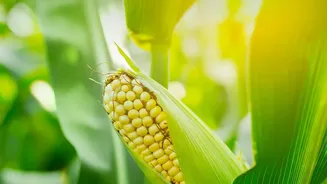
To understand why a corn kernel is a fruit, we have to look at the botanical definition. A fruit, in scientific terms, is the mature, seed-bearing structure that develops from the ovary of a flowering plant. Each single kernel of corn grows from its own flower on the cob. It contains the plant's genetic material—the embryo—and a food source—the endosperm—all wrapped up in a protective layer. Because each kernel develops from the flower's ovary and contains a seed within it, it fits the botanical description of a fruit perfectly. The entire ear of corn is technically an infructescence, a collection of individual fruits clustered together.
Meet the Caryopsis
Diving deeper, the corn kernel isn't just any fruit; it's a specific type called a caryopsis. A caryopsis is a simple, dry fruit where the fruit wall, called the pericarp, is fused directly to the thin outer coat of the single seed inside. This fusion is so complete that it's difficult to distinguish between the fruit wall and the seed coat, which is why we often mistake the entire kernel for just a seed. This unique structure is the hallmark of the grass family (Poaceae). That means other staple foods we call 'grains', like wheat, rice, barley, and oats, are also botanically classified as caryopses—and therefore, fruits.
The Anatomy of a Fruit-Kernel
When you look closely at a single kernel, you're looking at a self-contained package designed for reproduction. It's composed of four main parts. The outermost layer is the pericarp, which serves as a tough, protective skin. Inside this is the endosperm, which makes up about 82% of the kernel's weight and is packed with starch, providing the energy for the seed to grow. The most important part for the plant's future is the germ, or embryo, which is the only living part of the kernel and contains all the genetic information needed to sprout a new corn plant. Finally, the tip cap is where the kernel was attached to the cob, acting as the entry point for nutrients and water.
So Why Do We Call It a Vegetable?
Despite the science, you won't find corn in the fruit aisle. The way we classify food in the kitchen and in dietary guidelines is based on usage, taste, and nutrition. Sweet corn, which is harvested when the kernels are soft and tender, is treated as a vegetable because of its savoury role in meals and its starchy nutritional profile. The US Department of Agriculture classifies corn based on when it's harvested; fresh corn is a vegetable, while corn that is allowed to mature and dry on the stalk is considered a grain. This dried form is what's used for popcorn, cornmeal, and polenta, which are nutritionally categorised as whole grains. So, while botanically a fruit, corn's identity in our kitchens remains deliciously flexible.