






The quest for better balance is universal, whether it's for sports performance or simply navigating daily life with more confidence. Cycling and skating are two fantastic, low-impact ways to improve it, but they don't work in the same way.
The Science of Staying Upright
At its core,
balance is your body's ability to sense its position in space and make constant, tiny adjustments to avoid falling. This involves two key systems. First is the vestibular system in your inner ear, which manages your sense of motion and gravity. Second is proprioception: a network of sensors in your muscles and joints that tells your brain where your limbs are without you having to look. Both cycling and skating challenge these systems, but the nature of that challenge is where they differ significantly.
Cycling: The Foundation of Forward Stability
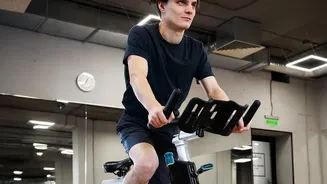
When you ride a bike, your primary goal is to keep your center of mass over a very narrow base of support—the line between your two wheels. This is achieved through a combination of steering and subtle body leans. The movement is largely linear and repetitive. Cycling is excellent for engaging and strengthening your core muscles, as your abdominals and back work to keep you stable while you pedal. This builds foundational, forward-moving balance. However, because the bike supports your weight and the motion is so predictable, it provides less of a proprioceptive challenge compared to other activities. Your body is locked into a relatively fixed plane, which is great for endurance but less so for training reactive, multi-directional stability.
Skating: The Masterclass in Dynamic Balance
Skating, whether on inline or quad skates, is a masterclass in what's known as dynamic balance—maintaining stability while in motion. Unlike cycling, where propulsion is linear, skating generates forward motion through lateral, or side-to-side, pushes. This constantly shifts your weight from one leg to the other, forcing your body to make rapid adjustments to stay upright. This process heavily recruits the smaller stabilizing muscles in your hips, ankles, and feet. Each push and glide activates your core to counterbalance the shifting weight, significantly improving coordination and agility. This makes skating exceptionally effective at training proprioception, as your body must constantly sense and react to a less stable surface and a constantly changing center of gravity.
Different Movements, Different Muscles
The different movements of cycling and skating naturally target different muscle groups. Cycling is a powerhouse for the major muscles of the lower body: the quadriceps, hamstrings, and glutes get a fantastic workout during the pedal stroke. Skating also works these muscles but places a greater emphasis on the hip abductors and adductors (the muscles on the outside and inside of your thighs) due to the side-to-side pushing motion. Furthermore, skating requires constant micro-adjustments from the muscles in your feet and ankles to control the edges of your wheels or blades, building a type of stability that cycling doesn't demand in the same way.
Which One Is Right for Your Goals?
Choosing between cycling and skating depends entirely on your fitness objectives. If your goal is to build cardiovascular endurance with a strong focus on leg power and forward stability, cycling is an excellent choice. It’s a fantastic, low-impact workout that can be sustained for long distances. If you are looking to improve your agility, coordination, and reactive balance, skating offers a more comprehensive challenge. The need to constantly adjust to lateral movements makes it superior for developing the kind of balance that translates to other sports and helps prevent falls in unpredictable situations. Both activities are great for your health, but they build your body's stability in uniquely complementary ways.