






A Dual-Purpose Solution
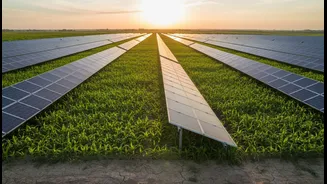
Agrivoltaics is a term for the simultaneous use of land for both agriculture and solar photovoltaic power generation. Instead of seeing farming and solar farms as competitors for precious land, this approach integrates them. Solar panels are typically
mounted on structures high enough to allow crops to grow underneath or for animals to graze freely. This simple but powerful idea addresses one of the key challenges of the green energy transition: land-use conflict. By making land twice as productive, agrivoltaics offers a pathway to expand renewable energy capacity without sacrificing food production, a critical consideration in densely populated countries and those with large agricultural sectors.
Poznan's Blueprint for Scale
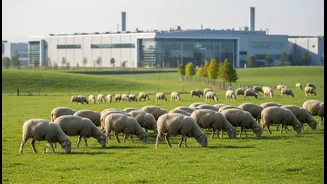
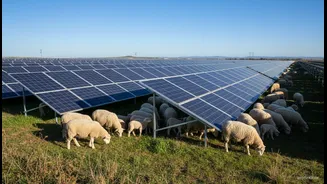
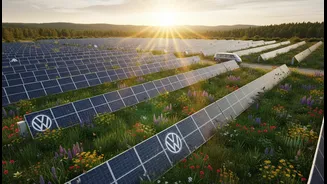
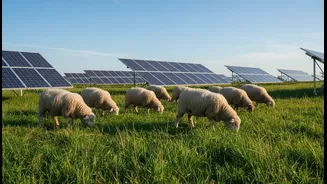
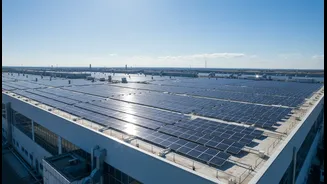
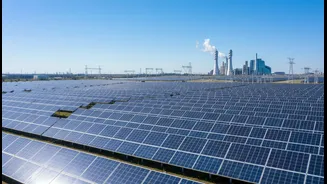
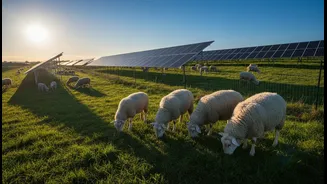
The project making headlines is located at a Volkswagen manufacturing plant near Poznan, Poland. Here, a vast solar farm with over 31,000 panels, managed by Quanta Energy, does more than just power the factory. On sunny days, the 18.3-megawatt installation can meet the plant's entire electricity demand, supplying about 25% of its total annual energy needs. But instead of using traditional lawnmowers to manage the vegetation, the company has introduced a flock of 100 sheep. This initiative is more than just a clever maintenance solution; it's one of Europe's most advanced industrial agrivoltaics projects because it includes a major scientific research component with Poznan University of Life Sciences. Researchers are studying everything from animal welfare and biodiversity to soil quality and the microclimate created by the panels.
More Than Just Power and Grazing
The benefits of agrivoltaics go far beyond mowing services. The partial shade from solar panels can be a significant advantage for both crops and livestock. It protects them from extreme heat, which reduces water evaporation from the soil and can lead to better crop resilience and quality. In some cases, crop yields have increased, and water use efficiency has improved dramatically. For farmers, agrivoltaics offers a diversified income stream, combining agricultural sales with revenue from electricity generation, which can provide a crucial buffer against market volatility and unpredictable weather. The panels themselves can also act as a protective shield against hail or heavy rain. This creates a more stable and controlled growing environment, enhancing both financial and agricultural resilience.
Overcoming the Hurdles
Despite its promise, scaling agrivoltaics is not without challenges. The primary obstacle is often the high initial cost of the specialized mounting structures needed to elevate panels above crops or pastures. Finding the right balance between optimizing energy generation and ensuring crops receive enough sunlight requires careful design and often crop-specific knowledge. Too much shade can harm yields, making the choice of crop and system design critical. Furthermore, integrating these large-scale projects into rural areas requires careful planning to manage grid connections and gain community acceptance. Regulatory frameworks in many countries are still catching up to this innovative land-use model, creating uncertainty for developers and farmers.
The Indian Opportunity
For India, with its ambitious renewable energy targets and a vast agricultural sector that employs nearly half the workforce, agrivoltaics presents a massive opportunity. The country faces intense competition for land, making dual-use solutions particularly attractive. Studies suggest India has a staggering agrivoltaic potential, estimated to be between 1,192 GW and 2,129 GW, with horticultural crops like fruits and vegetables being highly compatible. States like Maharashtra, Rajasthan, Andhra Pradesh, and Uttar Pradesh have been identified as having significant potential due to favourable climates and extensive cropland. While India already has dozens of small pilot projects, the success of large-scale models like the one in Poznan provides a compelling case for accelerating adoption and developing a national strategy to turn this potential into a powerful engine for both food and energy security.