





The Artist Behind the Reckoning
To understand this radical reimagining, you first have to understand its creator, Ash Koosha. The Iranian-British artist is not your typical filmmaker. A musician, composer, and director, Koosha has a history of clashing with authority and embracing technology.
His early musical career in Iran ended with his arrest, leading him to seek asylum in the UK. Since then, his work has been a fusion of sound, visuals, and code, often exploring themes of virtual reality and synesthesia. Recently, he has turned to artificial intelligence as his primary tool, creating feature films with his AI production company, Fountain 0. His first AI film, “Dreams of Violets,” a docudrama about the Iranian protests, premiered at the Tribeca Festival, establishing him as a provocative pioneer in this new cinematic landscape. This is an artist who doesn’t just tell stories; he questions the very tools used to tell them.
A Homecoming Written in Blood
To grasp the significance of Koosha’s new ending, it’s essential to remember the old one. In Homer’s epic poem, Odysseus returns to Ithaca after 20 years, disguised as a beggar. He finds his home overrun by 108 arrogant suitors consuming his estate and pressuring his wife, Penelope, to remarry. The climax is not a negotiation; it's a massacre. Odysseus, with his son Telemachus, strings his mythic bow and slaughters every last suitor in a brutal display of divine right and violent retribution. Peace is only restored when the goddess Athena intervenes to stop the victims' families from seeking their own revenge. It’s a story that champions righteous violence as the path to restoring order, an ending that has echoed through Western culture for millennia.
A New Verdict in 'Odysseus: The Fall'
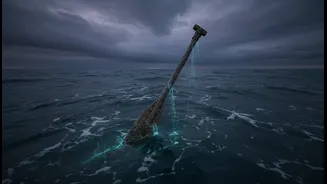
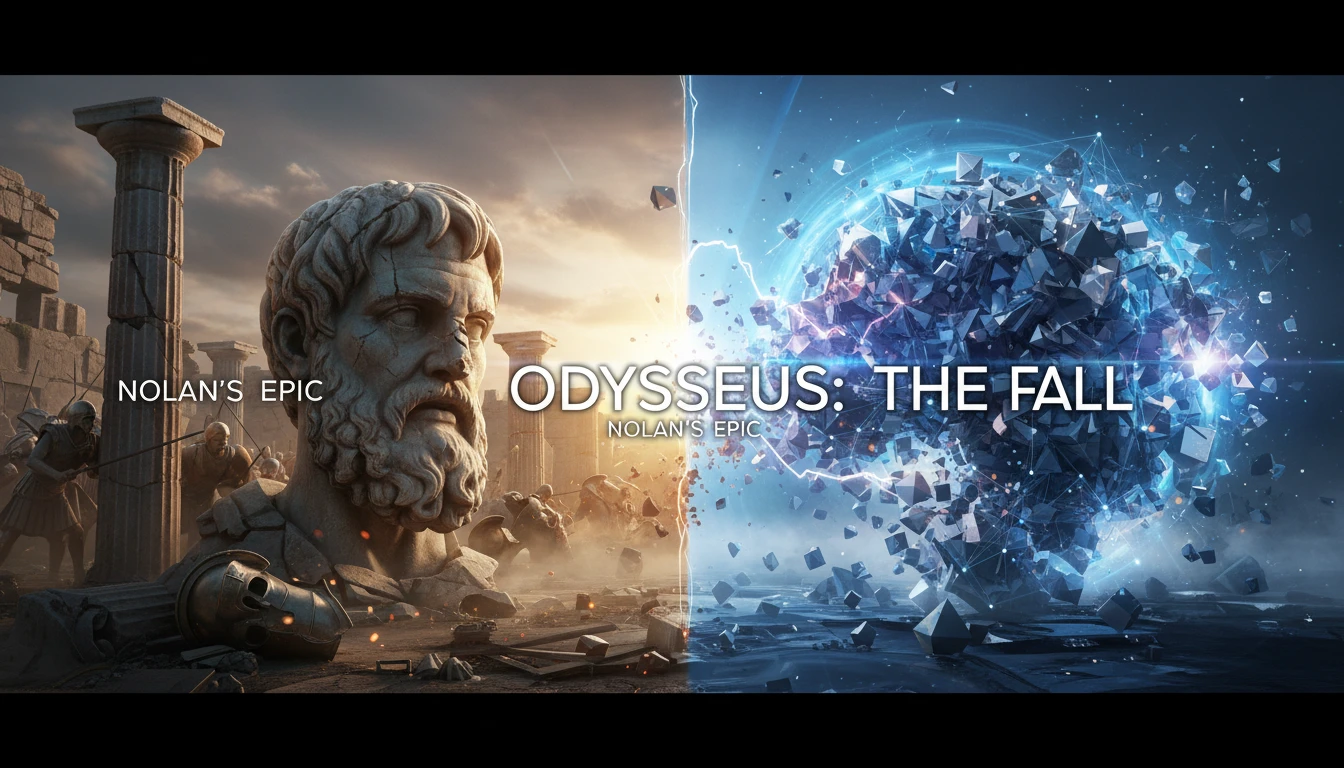
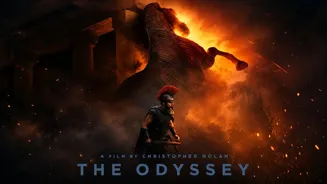
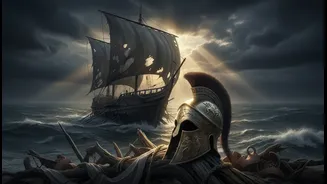
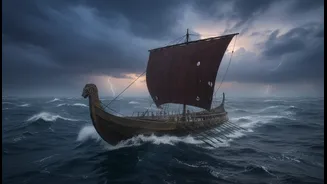
Ash Koosha’s AI-generated film, titled “Odysseus: The Fall,” throws that entire conclusion into question. The film’s official synopsis reframes the epic journey as the “fractured memory of a drowning man in his final minutes — a voyage that is really a trial, where every monster wears his own handwriting.” This is no longer a hero’s triumphant return. Instead, it’s a psychological deep-dive, a man forced to confront the true cost of his journey home. The film deliberately goes “where the songs never go,” swapping the hero’s welcome and bloody vengeance for a far more complex resolution: “forgiveness offered by the one person who knows exactly what he is.” Koosha strips away the mythology to ask a modern question: after all the violence and deceit, does the hero deserve a crown or a reckoning?
The Ghost in the Machine
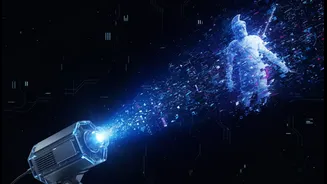
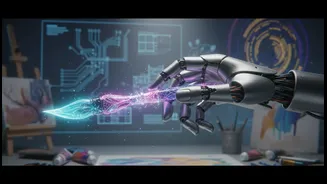
Koosha brought this vision to life not with cameras and sets, but with algorithms and prompts. “Odysseus: The Fall” is a 135-minute feature created almost entirely with generative AI. This method allows him to create what he calls “impossible movies” on a tiny budget, challenging the Hollywood production model. For Koosha, AI is not an autopilot for creativity. He emphasizes that the process requires intense human skill and artistry to guide the technology and shape the narrative. The script was not written in a traditional sense but evolved through notes, allowing Koosha to change direction and interpret ideas on the fly, a freedom impossible in conventional filmmaking. He sees AI not as a replacement for human beings, but as a tool to explore ambitious stories that would otherwise be financially out of reach for independent creators.