







When a tension headache wraps its familiar, dull band of pain around your head, it’s natural to seek simple, soothing relief. Among the many home remedies, the peppermint tea compress is often mentioned. But does this folk remedy actually work?
The Familiar Ache of a Tension Headache
Before
exploring the remedy, it’s important to understand the problem. A tension-type headache is the most common kind of headache. It’s often described as a constant, dull ache or pressure on both sides of the head, like a tight band is wrapped around it. Unlike migraines, tension headaches aren't usually accompanied by nausea or sensitivity to light, but they can certainly disrupt your day. They are often triggered by stress, muscle strain in the neck and shoulders, poor posture, or fatigue. Because they are so frequently linked to muscle tension, remedies that promote relaxation are often sought after.
Why Peppermint? The Power of Menthol
The key to peppermint’s reputation as a headache fighter lies in its main active compound: menthol. Menthol is what gives mint its characteristic cooling sensation and potent aroma. When applied to the skin, menthol works as a 'counterirritant'. It activates specific cold-sensing receptors in your skin, creating a cooling sensation that distracts your brain from the underlying pain signals. Think of it as creating a competing sensation that essentially turns down the volume on the pain. Some research also suggests that menthol can help relax muscles and may influence blood flow, both of which are relevant for tackling tension headaches.
The Science: From Potent Oil to Gentle Tea
Here is where we need to be clear and avoid 'miracle language'. Most of the compelling scientific research on peppermint for headaches involves concentrated peppermint oil, not brewed tea. Several studies have shown that applying a solution of peppermint oil to the temples and forehead can be surprisingly effective for tension headaches, with some research finding it comparable to common painkillers like paracetamol (acetaminophen). One German study found a 10% peppermint oil solution applied topically was as effective as 1,000 mg of acetaminophen. The evidence for peppermint oil is strong enough that it's considered a viable option by many headache specialists.
So, Does a Tea Compress Work?
Direct scientific evidence for using a peppermint tea compress for headaches is virtually non-existent. The concentration of menthol in brewed tea is significantly lower than in the essential oil used in studies. However, that doesn’t mean it's useless. The underlying principle remains the same, even if the effect is much milder. A warm or cool compress made from peppermint tea still delivers a small amount of menthol topically to the skin. The cooling or warming sensation of the compress itself can provide relief; applying a cold pack to the forehead is a standard self-care tip for headaches. Furthermore, the simple act of preparing the tea and resting with a compress can be a relaxing ritual, helping to ease the stress that may have triggered the headache in the first place.
How to Try It Safely at Home
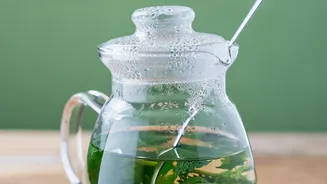
If you want to try a peppermint tea compress, it's a very low-risk approach. Simply brew a strong cup of peppermint tea using one or two tea bags. Let it cool down to your desired temperature—some people prefer a warm compress to relax muscles, while others prefer cool to numb the area. Dip a clean washcloth into the tea, wring it out so it’s damp but not dripping, and lay it across your forehead and temples. Lie down and relax for 10 to 20 minutes. The aromatic steam may also have a calming effect. While generally safe, you should always test on a small patch of skin first to ensure no irritation occurs. This method should be seen as a supportive comfort measure, not a primary medical treatment.