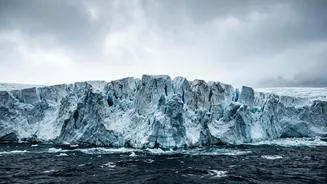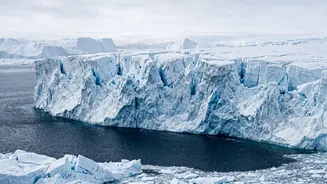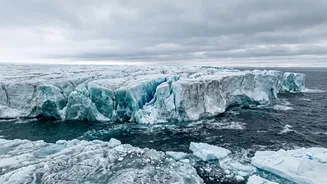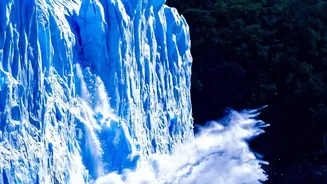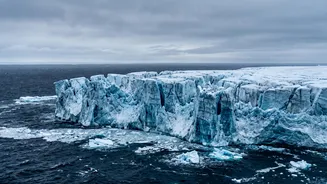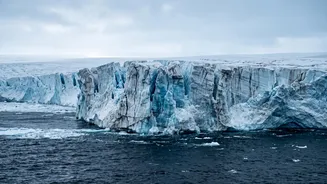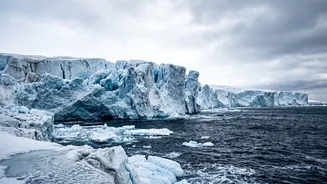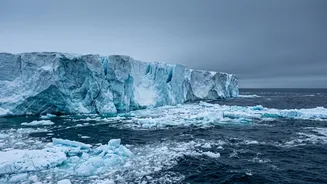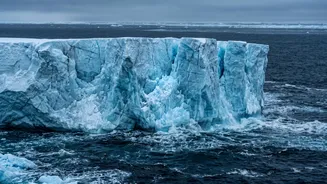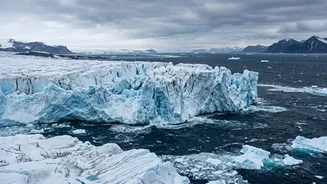





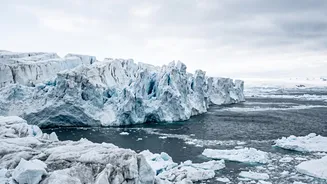
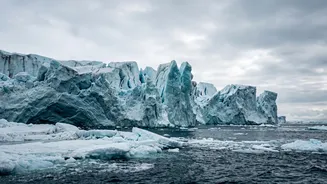
Known as the 'Doomsday Glacier' for its critical role in global sea levels, Antarctica's Thwaites Glacier is back in the spotlight. Recent scientific findings are raising new, urgent questions about just how quickly this giant is melting.
The Glacier at the End of the World
Thwaites Glacier
is one of the largest and fastest-melting glaciers on Earth. Roughly the size of Britain or the state of Gujarat, it sits in West Antarctica, acting like a colossal cork. It plays a crucial role in holding back the entire West Antarctic Ice Sheet, which contains enough ice to raise global sea levels by a catastrophic 10 feet if it were to collapse entirely. For decades, scientists have watched with concern as Thwaites loses hundreds of billions of tonnes of ice, already contributing to about 4% of annual global sea-level rise. Its sheer size and potential impact earned it the ominous nickname, the 'Doomsday Glacier'.
What the New Research Reveals
The latest alarm bells come from new computer models developed by scientists at the University of California, Irvine, and NASA. Their research, published in late 2026, focuses on the glacier’s 'grounding zone'—the area where the ice leaves the bedrock and begins to float on the ocean. Previously, models treated this as a simple, narrow line. However, new satellite data shows a different reality: warm, salty ocean water is pushing several kilometres under the glacier’s base. This creates a much wider zone of 'vigorous melting' from below, a process that earlier projections had significantly underestimated.
A Doubled Threat
The implications of this discovery are profound. By incorporating this new understanding of underwater melting, the updated models project that Thwaites could contribute up to 30 millimeters (about 1.2 inches) to global sea level rise by the year 2100. This figure is double the previous estimates, even if no further climate warming occurs. The new research provides a grim explanation for why the glacier's real-world retreat has been outpacing older scientific models. Furthermore, a separate study by the British Antarctic Survey found that due to past melting, Thwaites is now in a state of 'committed ice loss' for at least the next 150 years, regardless of what we do now.
Losing Its Grip
Another critical concern is the glacier's stability. Thwaites is currently held in place, or 'pinned', by an underwater mountain range called the Mouginot Ridge, which helps to slow its slide into the ocean. The new research warns that the intensified melting at the grounding zone is weakening this crucial anchor point. The models show a worrying 60% chance that the glacier could become permanently unpinned from this ridge by the end of the century. If that happens, its retreat down the downwardwardwardwardwardwardwardwardwardwardwardwardwardwardwardwardwardwardwardwardwardwardwardwardwardwardwardwardwardword would likely accelerate dramatically, further increasing the rate of sea level rise.
What This Means for India’s Coastline
While Antarctica may seem a world away, the fate of Thwaites has direct consequences for India. A sea level rise of 65 centimetres from Thwaites total collapse, let alone the potential 10 feet from the entire ice sheet, would be devastating for the countrys 7,500 kilometer coastline. Major coastal cities like Mumbai, Kolkata, Chennai, and Kochi, which are already grappling with flooding and erosion, would face existential threats. Low lying agricultural lands could be inundated with saltwater, impacting food security and livelihoods for millions. The increased sea level would also magnify the destructive power of storm surges during cyclones, putting more communities at risk.