




More Than Just a Novelty
While it might seem like a new fitness trend, reverse walking—also known as retro walking—has been used in physical therapy and rehabilitation for years. It’s a technique recommended for everyone from athletes to seniors looking to improve strength and prevent
falls. The core idea is simple: by moving in a way that is unfamiliar, you force your body to adapt, engaging your muscles and brain differently than during your usual forward stroll. This break from routine is what makes it such an effective and surprisingly powerful exercise.
Activating a New Set of Muscles
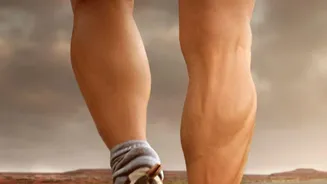
When you walk forward, your body is on autopilot, efficiently using your hamstrings and calves to propel you. Walking backward changes the entire mechanical load. The movement shifts from a heel-first strike to a toe-first landing. This simple change fires up different muscles and works others in new ways. Your quadriceps, the large muscles at the front of your thighs, have to work much harder to straighten your leg and push you backward. Studies show that reverse walking enhances quadriceps strength more effectively than forward walking. Additionally, your glutes, hip flexors, and even your core muscles are more engaged to help you maintain balance and stability.
The Brain-Balance Connection
One of the most significant benefits of reverse walking is its impact on balance. Our sense of stability relies on three systems working together: vision, the inner ear's vestibular system, and proprioception (your body's awareness of its position in space). When you walk backward, you can't see where you're going, which forces the other two systems to work harder to compensate. This novel task challenges your brain, improving coordination, spatial awareness, and reaction time. This is why physical therapists often use it to help patients recovering from strokes or injuries, as it helps improve gait and reduce the risk of falls.
A Kinder Workout for Your Knees
For those with knee pain, particularly from conditions like osteoarthritis, walking backward can be a game-changer. Forward walking involves a heel-strike motion that can send significant impact through the knee joint. In contrast, the toe-to-heel motion of reverse walking softens this landing, placing less compressive stress on the kneecap. By strengthening the quadriceps, the exercise also helps build better support for the knee joint itself. This can lead to reduced pain and improved physical function over time.
How to Start Walking Backward Safely
Ready to give it a try? Safety is the top priority. Start in a clear, obstacle-free environment, like an empty hallway or an open field. A treadmill can be a great option because you can use the handrails for support and control the speed. Begin slowly, at a pace of around 1-2 miles per hour, taking small, deliberate steps. Focus on rolling from your toe to your heel. You can start with just five minutes at a time, perhaps alternating between one minute of backward walking and a few minutes of forward walking. As you become more comfortable, you can gradually increase the duration, speed, or even the incline on a treadmill to keep challenging yourself.