






The Drive for Energy Independence
At the heart of this major policy shift is a single, critical vulnerability: India's staggering dependence on imported energy. The country currently imports nearly 90% of its crude oil and about half of its natural gas. This reliance not only exposes
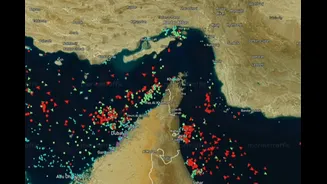
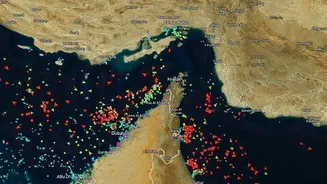
the economy to volatile global price swings but also to geopolitical shocks. A recent disruption in the Strait of Hormuz, a key shipping lane for energy supplies, highlighted how quickly global events can impact Indian households, leading to shortages of essential fuels like cooking gas. With domestic production declining for two consecutive years and energy demand projected to see the highest growth in the world, the government views boosting domestic output as a matter of national security. This new push is designed to curb the ever-increasing import bill, which stands at roughly $144 billion annually, and shield the economy from external pressures.
Unpacking the 'Samudra Manthan' Mission
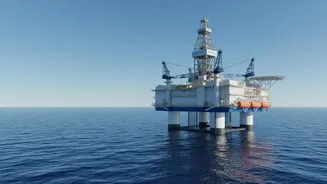
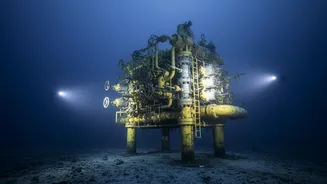
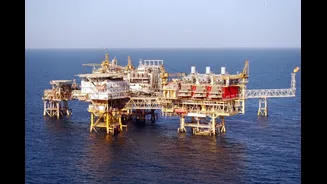
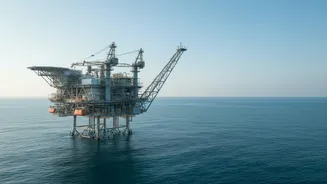
The government has approved a five-year, ₹84,084 crore ($8.8 billion) programme named 'Samudra Manthan' to make this ambition a reality. This National Offshore Exploration Scheme aims to dramatically scale up exploration activities, particularly in deepwater and ultra-deepwater areas. The plan is not just to drill more wells but to do so more intelligently, backed by extensive seismic surveys to identify promising hydrocarbon reserves. The headline target of 100 wells per year is a huge leap from historical levels and will require a significant expansion of drilling rigs, trained personnel, and supply chain capacity. To de-risk the massive financial undertaking for companies, the government will provide financial support covering up to 50% of deepwater exploration drilling costs. The goal is to add over 600 million metric tons of oil equivalent to India's reserves over the next several years, with a focus on basins like the Krishna-Godavari, Mahanadi, and Andaman.
Potential Economic Rewards
The economic implications of a successful drilling expansion are substantial. Petroleum Minister Hardeep Singh Puri has stated that the scheme could save India around ₹1 lakh crore annually by reducing energy imports. Beyond the savings, the initiative is expected to stimulate billions of dollars in investment across the entire exploration and production value chain. This includes everything from the manufacturing of equipment to the creation of an integrated oil and gas services zone. State-run explorers like ONGC and Oil India are already launching massive tenders to hire drillships and rigs for multi-year contracts, signaling a long-term commitment. Success would translate into significant job creation, increased revenue for the government, and a more stable domestic energy market, with benefits ultimately flowing to consumers and the broader economy.
The Inescapable Environmental Questions
However, this aggressive push into offshore drilling comes with serious environmental baggage. The risk of oil spills, blowouts, and chronic leakage from operations poses a grave threat to marine ecosystems. India's western coast already contends with tarballs washing ashore, a persistent sign of pollution from existing offshore activities that harms local fishing communities and coastal ecology. Scaling up drilling intensity dramatically increases these risks. Environmental advocates point out that while major spills are rare, even routine operations involve the discharge of drilling fluids and production water that can harm marine life. Furthermore, doubling down on fossil fuel exploration appears to conflict with India's long-term climate goals, including its commitment to achieve net-zero emissions. While the government is also investing in renewable energy, this parallel push for hydrocarbons highlights the complex trade-offs the country is making to power its growth.