




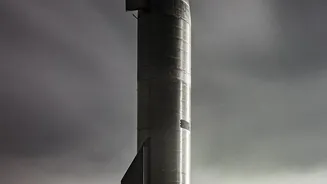
A Catch for the History Books
On Saturday, November 14, 2026, the skies above Starbase, Texas, became the stage for an unprecedented feat of engineering. After spending nearly 22 hours in orbit, deploying 26 Starlink satellites, and circling the Earth 14 times, the Starship upper
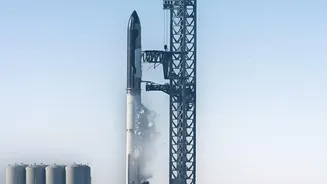
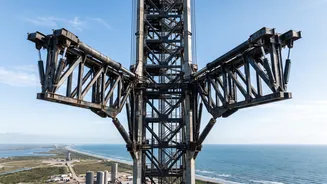
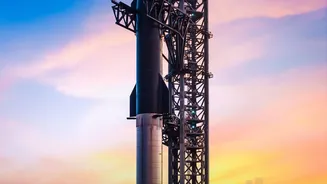
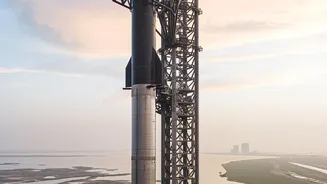
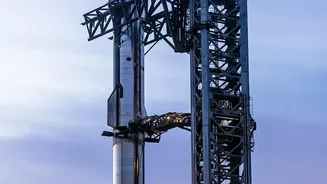
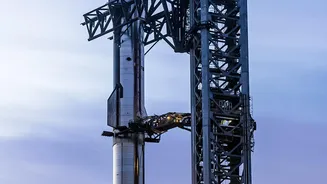
stage descended back through the atmosphere. Plunging belly-first to brake against the air, the vehicle then executed a dramatic flip maneuver, ignited three of its Raptor engines to slow its final descent, and positioned itself perfectly between two giant 'chopstick' arms on the launch tower. With remarkable precision, the arms, collectively known as 'Mechazilla', closed around the 50-meter-tall spacecraft, securing it in mid-air. "We caught a Starship, and now everything changes," declared SpaceX commentator Dan Huot during the live broadcast, capturing the historic weight of the moment.
The 'Mechazilla' Method
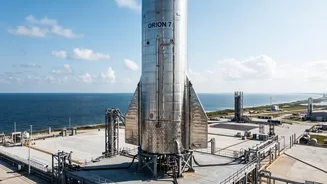
The idea of catching a rocket with its own launch tower sounds like science fiction, but it's a core component of SpaceX's strategy for full and rapid reusability. The primary reason for this daring approach is weight. Adding heavy landing legs to the Starship vehicle, which are only used for the final moments of flight, would reduce its payload capacity. By moving the landing hardware to the ground, the rocket can be lighter and more efficient. The launch and catch tower stands about 146 meters tall. The 'chopstick' arms are hydraulically actuated and can move up and down the tower, allowing them to not only catch returning vehicles but also to stack the Starship and its Super Heavy booster before launch. The process requires incredible precision, with the returning rocket navigating to a specific point in space where the arms can safely secure it by its reinforced catch points just below the forward flaps.
A Partial, But Monumental, Success
While the successful catch of the Starship upper stage was a massive victory, the mission did not achieve its full objective of recovering both stages. The Super Heavy booster, which propelled the vehicle on the first leg of its journey, encountered an issue during its boostback burn. Low fuel mass triggered an automated abort, causing the booster to divert for a splashdown in the Gulf of Mexico, where it was intentionally terminated. This was a setback, especially as SpaceX had previously managed to catch the Super Heavy booster on three other flights. However, the primary achievement of catching the upper stage—a far more difficult task involving a return from orbital velocity and surviving the intense heat of reentry—overshadowed the booster's loss.
Why This Changes Everything
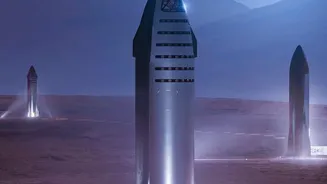
Catching the Starship is considered the 'holy grail' because it proves the entire concept of a fully reusable two-stage rocket system is viable. Until now, orbital-class upper stages were disposable. This achievement paves the way for a paradigm shift in space logistics. By catching the vehicle right at the launch mount, SpaceX aims to dramatically reduce the turnaround time between flights. The goal is to refuel and relaunch a Starship in a matter of hours or days, rather than weeks or months, making spaceflight more akin to airline operations. This high flight rate is essential for reducing costs and realizing ambitious projects, such as deploying next-generation satellite constellations, returning humans to the Moon for NASA's Artemis program, and ultimately, building a self-sustaining city on Mars.