





A Historic Challenge Meets Modern Tech
The railway line between Bengaluru and Mangaluru is more than just a track; it's a vital economic and social link. However, the 55-kilometre stretch between Sakleshpur and Subrahmanya Road has long been an operational bottleneck. This section, which cuts
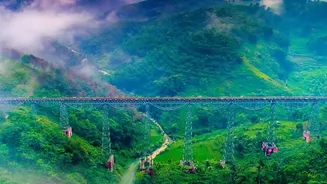
through the scenic but formidable Western Ghats, is famous for its steep gradients and sharp curves. For years, this has meant slower travel times and operational complexities, limiting the number of trains that can safely navigate the route. But now, Indian Railways is testing a solution that could finally tame this wild terrain: the Vande Bharat Express. Recent trials, which began in mid-August 2026, are a crucial step toward launching a high-speed service that could revolutionize travel between the state capital and the coast.
The Engineering Puzzle of the Ghats
To understand why this is such a big deal, you need to appreciate the unique challenges of the Shiradi Ghat. The section has a ruling gradient of 1 in 50, meaning the track rises or drops one metre for every 50 metres of length. To manage this, conventional trains require the help of additional 'banker' locomotives attached at the rear to push the train up the incline and control its speed on the way down. This process of attaching and detaching engines adds significant time and complexity to the journey. Furthermore, the route features 57 tunnels and over 200 bridges, all packed into a tight, winding corridor where speeds are restricted to a maximum of 30 km/h for safety.
How Vande Bharat Changes the Game
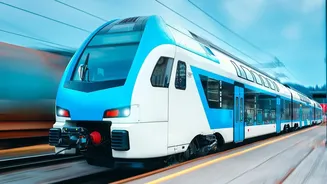
The Vande Bharat trainset is fundamentally different from conventional locomotive-hauled trains. Instead of a single engine pulling all the coaches, it uses a distributed power system, with traction motors housed under multiple coaches. This provides superior adhesion and power distribution across the entire length of the train, making it better suited for steep gradients without the need for external banking engines. However, the standard Vande Bharat braking system wasn't enough for the ghats. The key innovation being tested is a specially modified rake, built by the Integral Coach Factory, equipped with an Automatic Emergency Braking (AEB) system. This system is designed to automatically apply the brakes if the train exceeds the 30 km/h speed limit, providing an essential layer of safety that was a prerequisite for operating on this route.
From Trials to a Timetable
The trials, conducted by the Mysuru division of South Western Railway and overseen by the Research Designs and Standards Organisation (RDSO), began on August 12, 2026. A 20-car Vande Bharat rake successfully navigated the route from Sakleshpur to Subrahmanya Road, with tests scheduled to continue until August 20. While the introduction of the service was previously delayed from a planned June 2026 launch due to the lack of an AEB-equipped rake, these successful trials address the primary technical hurdle. Officials have confirmed that once the trials are complete and safety certifications are obtained from the Commissioner of Railway Safety, a decision on the final timetable and commercial launch will be made.
The Impact for Passengers and the Region
For the thousands who travel between Bengaluru’s tech hub and the coastal districts for work, education, and tourism, a Vande Bharat service would be a game-changer. It promises not only a significant reduction in travel time but also a more comfortable and modern travel experience. The current road journey through the ghats can be long and arduous, particularly during monsoons. A faster, more reliable train service would offer a compelling alternative. This improved connectivity is expected to boost the regional economy, making business travel more efficient and opening up new opportunities for tourism along Karnataka's beautiful coastline. The successful deployment of the Vande Bharat here would also serve as a powerful proof of concept for using modern trainsets to upgrade other challenging, legacy railway lines across the country.