





A New Eye on the Universe
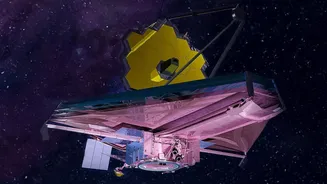
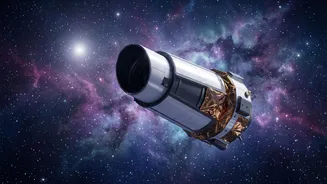
Set to join its celestial siblings in orbit, the Nancy Grace Roman Space Telescope is a flagship NASA mission with a very specific, and grand, ambition. Named after Nancy Grace Roman, NASA’s first chief of astronomy and the visionary “mother of Hubble,”
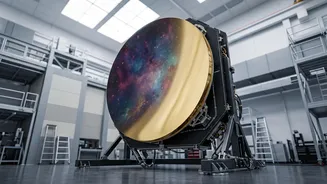
this telescope is built not just for deep stares but for sweeping vistas. Its primary mirror is the same 2.4-meter size as Hubble's, giving it comparable image sharpness. However, its revolutionary instrument, the Wide Field Instrument (WFI), is where the magic happens. This 300.8-megapixel camera gives Roman a field of view at least 100 times larger than Hubble’s infrared camera, and some estimates suggest it could be over 200 times greater. This means that in a single snapshot, Roman can capture a patch of sky that would take Hubble hundreds of individual images to cover.
The Power of a Panoramic View
Imagine trying to understand an entire forest by looking through a drinking straw. That’s been the challenge for telescopes like Hubble and Webb; they excel at examining individual trees in exquisite detail but can't easily map the whole forest. Roman, on the other hand, is like taking that same high-resolution view and applying it to a panoramic camera. Where Hubble might spend days studying a single galaxy, Roman can capture millions in one go. This incredible survey speed—estimated to be about 1,000 times faster than Hubble's—is the telescope’s superpower. Instead of just finding cosmic curiosities, Roman will create vast maps of the universe, providing the statistical power needed to tackle some of astronomy's biggest and most persistent questions.
A Cosmic Scout, Not a Replacement
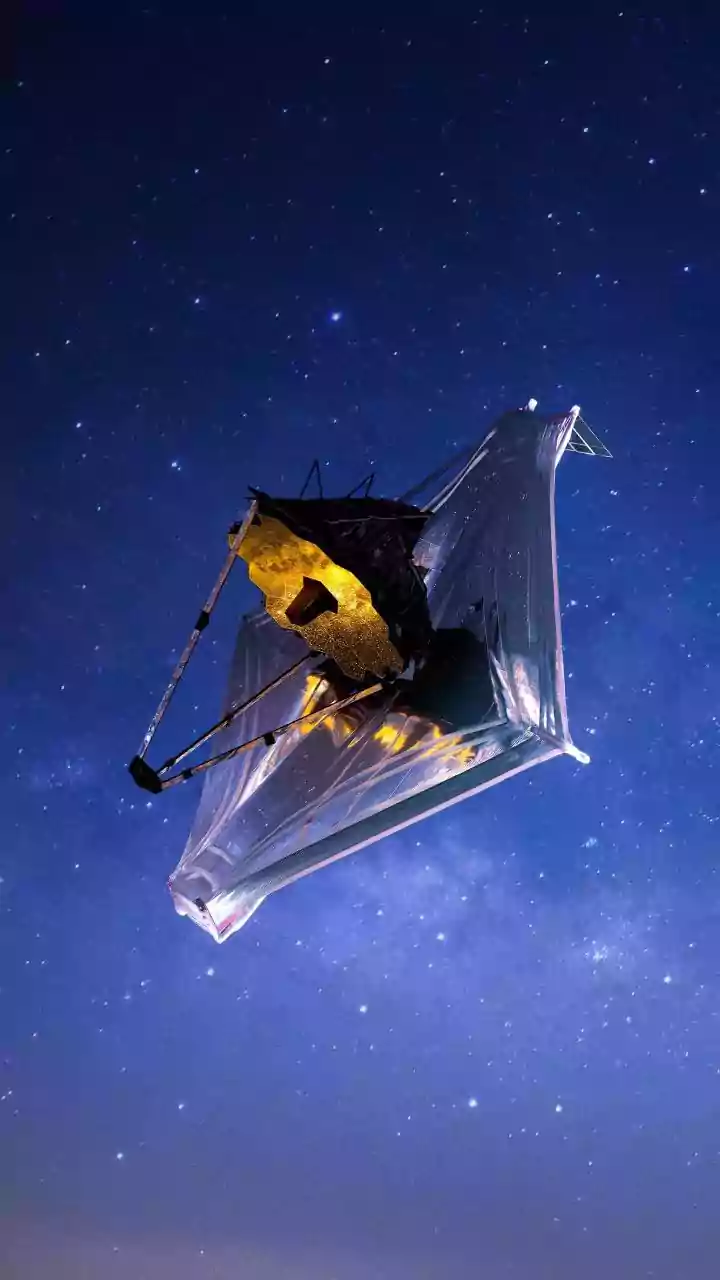
Roman is not designed to make Hubble or the James Webb Space Telescope obsolete. Instead, it will be their ultimate partner. Think of Roman as a cosmic scout, rapidly surveying huge swaths of the sky to identify the most interesting targets. Once Roman pinpoints an unusual galaxy, a potential Earth-like planet, or a distant supernova, the more specialized Hubble and Webb can perform deep, focused follow-up observations. Each telescope has a unique role: Roman for breadth, Webb and Hubble for depth. This collaborative approach allows astronomers to use their powerful tools more efficiently, generating a more complete picture of the cosmos by combining wide-angle surveys with detailed analyses.
Hunting for Dark Energy and New Worlds
Roman’s expansive view is tailor-made for two primary scientific goals: understanding dark energy and discovering exoplanets. To investigate dark energy—the mysterious force thought to be accelerating the expansion of the universe—Roman will measure the light from a billion galaxies and observe distant supernovae. By mapping their distribution and movement on a massive scale, scientists hope to track the history of cosmic expansion. The telescope will also conduct a huge census of exoplanets using a technique called gravitational microlensing. By monitoring hundreds of millions of stars toward the dense center of our galaxy, it can detect the tiny, temporary brightening that occurs when a planet passes in front of a background star, a method sensitive enough to find planets down to the mass of Mars. In addition, a technology-demonstrating Coronagraph Instrument will test techniques for directly imaging giant exoplanets by blocking the glare of their host stars.
A Deluge of Data for a New Era
The sheer efficiency of the Roman Space Telescope will create a new challenge: data. The observatory is expected to send back a torrent of information, potentially generating more data in its first five years than all of NASA’s previous astrophysics missions combined. Some estimates suggest it will downlink about 1.4 terabytes of data every single day—an amount comparable to the entire hard drive of a modern gaming console. This massive volume requires a new approach to astronomy, pushing the field into the era of 'big data' and cloud computing to make the discoveries accessible to scientists and the public around the globe. This wealth of information will fuel astronomical research for decades, providing a vast and detailed atlas of the infrared universe for all to explore.