





The Brains of the Operation
The nerve centre for any crewed spaceflight is its mission control. For Gaganyaan, the Indian Space Research Organisation (ISRO) has left nothing to chance, establishing a dual-control architecture to ensure 100% redundancy. The primary Mission Operations
Complex (MOX) at ISRO's Telemetry, Tracking and Command Network (ISTRAC) in Bengaluru will handle the critical orbital phase of the flight, from navigation to monitoring life support systems. A second, fully capable control facility at Satish Dhawan Space Centre (SDSC) in Sriharikota will manage the pre-launch and ascent phases and act as a hot-standby, ready to take over seamlessly in case of any disruption. This dual setup, similar to those used by NASA and Roscosmos, guarantees an unbroken line of communication and control with the astronauts, a non-negotiable for human spaceflight. A single-voice liaison, known as the Capsule Communicator or CAPCOM, will be the sole point of direct radio contact, ensuring clarity and calm during high-stakes moments.
The Splashdown Specialists
The Gaganyaan mission will conclude with the crew module splashing down in the Arabian Sea. Safely recovering the astronauts from the ocean is one of the most critical and complex ground operations. This responsibility falls to a highly specialised joint task force from the Indian Navy and ISRO. Extensive recovery trials have been conducted off the coast of Visakhapatnam and at the Navy's Water Survival Training Facility in Kochi. Using a mass and shape-simulated mockup of the crew module, teams have perfected the Standard Operating Procedures (SOPs). These drills involve divers, MARCOs (maritime commandos), medical specialists, and naval aviators. The process includes attaching a buoy to the capsule, towing it into the flooded well-deck of a naval ship, and then safely extracting the crew. The entire operation is designed to be completed in the shortest possible time with minimal discomfort for the returning astronauts.
Training the Trainers and the Crew
Behind every astronaut is a dedicated ground crew, and both must train in perfect synchrony. ISRO has established a state-of-the-art Astronaut Training Facility in Bengaluru, where the 'Gaganyatris' are undergoing mission-specific training. This follows their initial generic training in Russia. The Bengaluru facility features advanced simulators, mockups, and virtual reality tools to familiarise the crew with every aspect of the flight. But the training extends to the ground teams as well. ISRO has conducted integrated simulations to prepare for every eventuality. In a unique exercise called Mission MITRA, teams were placed in the high-altitude, low-oxygen environment of Leh to simulate the stressful conditions of space, allowing researchers to study team behaviour and refine ground support protocols. This ensures that the teams on Earth are just as prepared for the mission's challenges as the astronauts in space.
A Nationwide Support Infrastructure
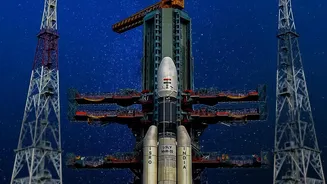
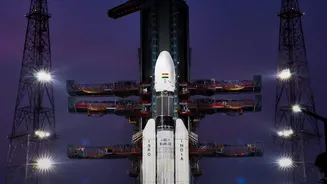
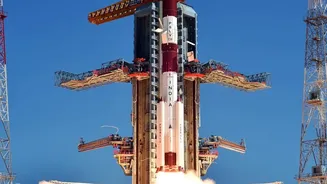
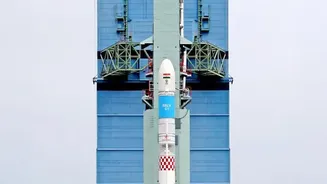
Supporting a human spaceflight mission is a nationwide endeavour. Beyond mission control and recovery teams, a vast network of facilities and personnel are crucial. The launch pad itself at SDSC SHAR has been extensively modified with a new Crew Access Arm and a zip-line emergency escape system. A dedicated Human Space Flight Centre (HSFC) in Bengaluru now manages the entire programme. Looking ahead, ISRO is already planning for a sustained presence in space. The 'Gaganyaan Nivas' is a proposed facility that will house and train future batches of astronauts, moving away from reliance on international partners. This includes medical professionals and scientists, not just test pilots, who will conduct experiments aboard the planned Bharatiya Antariksh Station (BAS). This comprehensive infrastructure ensures that Gaganyaan is not just a one-off mission but the foundation for India's long-term space exploration ambitions.