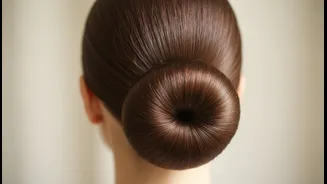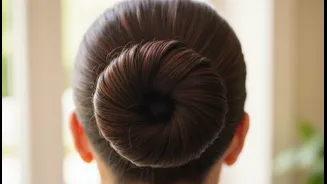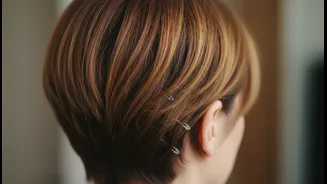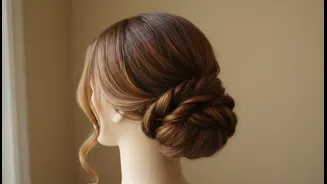






Understanding the Cause of Bumps
Before fixing the problem, it helps to know why it happens. Those annoying lumps and bumps in your updo are typically caused by a few key factors. The primary culprit is uneven tension when gathering your hair. If some strands are pulled tighter than
others, the looser ones will buckle and create a bump. This often happens when you try to gather all your hair at once. Another reason is not brushing the hair in the exact direction it needs to go. Hair that is brushed straight back when you intend to pull it up will naturally fall and create slack. Hair texture, layers, and the tiny, delicate baby hairs at the nape also contribute to a less-than-smooth finish.
Preparation is Everything
A smooth style starts before you even pick up a hair tie. For best results, work with dry, thoroughly detangled hair. Using a wide-toothed comb to gently remove knots from the ends upwards will prevent breakage and create a clean canvas. Some stylists recommend working with second-day hair, as the natural oils provide more grip. If your hair is too clean and silky, it can be slippery, making it harder to manage. In this case, a light mist of texturizing spray or even a dry shampoo can add the necessary grit. For a very sleek, almost wet look, you can start with slightly damp hair and apply a styling gel or cream.
The Right Tools for a Smooth Finish
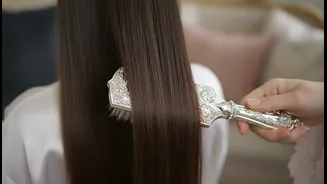
Using the right tools is non-negotiable for a bump-free nape. A boar bristle brush is highly recommended by stylists because its densely packed bristles excel at smoothing hair and taming flyaways for a sleek finish. A brush with mixed boar and nylon bristles also works well. For final touch-ups, a fine-tooth comb or a dedicated edge brush is perfect for targeting small, stubborn areas. When it comes to securing your style, opt for seamless, fabric-covered hair ties that won't snag or cause breakage. For an even tighter, more controlled hold, some professionals use an elastic cord which allows for adjustable tension.
The Sectioning and Gathering Technique
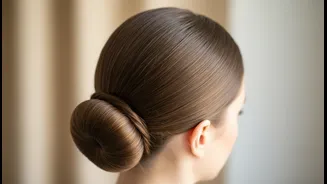
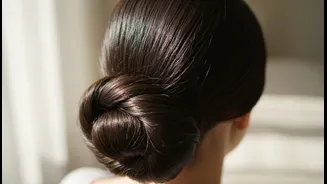
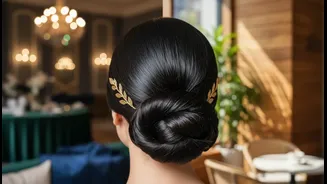
The most critical step is how you gather your hair. Instead of trying to sweep all of your hair back at once, do it in sections. One effective method is to first create a ponytail with the top half of your hair, from the ears up. Secure it loosely. Then, tilt your head back slightly to keep the hair at the nape taut. With your boar bristle brush, brush the bottom section of your hair upwards, ensuring the brush stays in contact with your scalp all the way to the base of the first ponytail. This ensures every strand is guided in the right direction. Once the bottom half is smooth, combine it with the top section and secure everything together with your final hair tie. This two-step process provides far more control, especially for those with thick hair.
Product and Finishing Touches
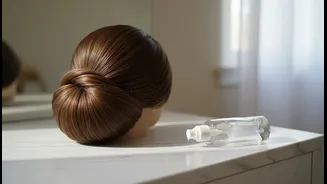
Products are your best friends in the fight against frizz and flyaways. A styling wax stick is excellent for gliding over any areas that need extra hold, particularly the short hairs at the nape and around the hairline. After applying, brush over the area one more time to seamlessly blend the product. For a strong, all-day hold, a firm-hold gel or pomade can be applied before you start brushing. Once your ponytail or bun is secured, you can tame any final stray hairs by spraying a strong-hold hairspray onto a clean toothbrush or an edge brush and gently combing them into place. This gives you precision control without making your hair feel stiff or sticky.