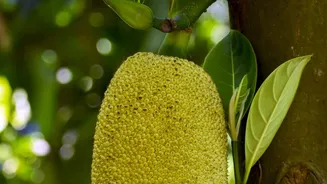






It's the world's largest tree-borne fruit, a spiky giant that can weigh over 40 kgs and grows in a bizarrely fascinating way. But the jackfruit, or 'kathal', is much more than a botanical curiosity; it's a culinary superstar in India.
A True Giant of the Plant Kingdom
Native to the Western
Ghats of India, the jackfruit ('Artocarpus heterophyllus') holds the undisputed title of the largest fruit that grows on a tree. A single fruit can reach up to 90 cm in length and weigh anywhere from a few kilograms to a staggering 50 kgs. This makes harvesting a dramatic affair. The exterior is a thick, spiky green shell that slowly turns yellowish-brown as it matures, emitting a strong, distinct aroma. But the real magic, and the reason for its unusual growth, lies in how it hangs from the tree.
The Science of Hanging On
Unlike mangoes or apples that hang from delicate twigs, jackfruit grows directly from the main trunk and the thickest branches of the tree—a phenomenon known as cauliflory. This is nature's clever solution to a weighty problem. The sturdy trunk provides the necessary support to hold these massive fruits as they develop. The tree itself is a large evergreen that can grow up to 30 metres tall, and a healthy one can produce between 100 to 200 fruits annually, making it an incredibly productive resource.
The Tale of Two Tastes: Raw vs. Ripe
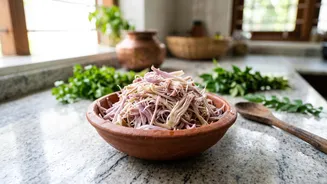
In the Indian kitchen, jackfruit has a fascinating dual personality. When unripe and green, its flesh is pale, firm, and has a neutral taste. This 'raw' jackfruit, known as 'kathal' or 'chakka', is used as a vegetable. Its fibrous texture is remarkably similar to shredded meat, allowing it to absorb spices beautifully in savoury dishes. As the fruit ripens, it transforms completely. The inner bulbs turn a golden yellow, becoming soft, sweet, and fragrant, with a flavour often described as a mix of pineapple and banana. This ripe fruit is enjoyed fresh or used in a variety of desserts.
A Culinary Staple Across India
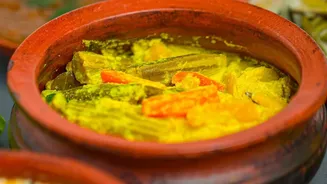
From north to south, jackfruit is a celebrated ingredient. In North India, 'kathal ki sabzi', a dry curry made with raw jackfruit and a blend of aromatic spices, is a vegetarian favourite. You can also find it starring in rich 'kathal biryani'. In Maharashtra, it's used in 'phanas bhaji', while Bengal has its 'echorer dalna'. Down south in Kerala, where it is the state fruit, it's used in dishes like 'chakka puzhukku' (a mashed jackfruit dish) and crispy 'chakka vattal' (chips). The seeds are also edible and nutritious when boiled or roasted.
A Nutritional Powerhouse
Beyond its versatility, jackfruit packs a significant nutritional punch. It's a good source of dietary fibre, vitamins A and C, and essential minerals like potassium and magnesium. Its potassium content is beneficial for maintaining healthy blood pressure. The fruit is also rich in antioxidants, which help protect the body's cells from damage. While the unripe fruit is a low-sugar, high-fibre vegetable, the ripe fruit provides a natural source of energy. The seeds themselves are a good source of protein.
From Backyard Staple to Global Star
For centuries, jackfruit has been a food security crop in India, sometimes called the 'poor man's food'. Today, its reputation is getting a global upgrade. Thanks to its meat-like texture when cooked, unripe jackfruit has been embraced worldwide as a popular plant-based substitute for pulled pork and chicken in tacos, sandwiches, and burgers. This newfound fame is shining a spotlight on a fruit that has been a sustainable and versatile part of Indian life for millennia, proving that this backyard giant is a superfood in every sense of the word.