





What Hair Oil Actually Does
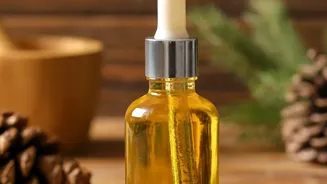
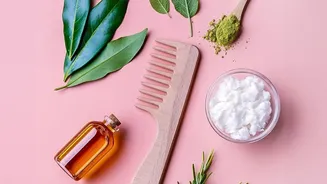
Think of hair oil as a conditioner and protective sealant. The visible part of your hair, the shaft, is not living. It’s susceptible to damage from styling, washing, and environmental factors. Oils, especially those with certain fatty acids, can penetrate
the hair shaft to replace lost lipids, which are essential for shine and flexibility. By coating the hair, oils form a protective barrier. This layer smooths the outer cuticle, which reduces frizz, enhances shine, and makes hair feel softer. This lubrication also reduces friction between strands, which helps in detangling and can prevent the hair from snapping. This is key: oiling helps reduce breakage of the hair shaft, which is very different from hair loss at the root.
Breakage vs. Loss: A Tale of Two Problems
It's easy to see hair in your brush and assume the worst, but it’s important to know where it came from. Hair breakage is when a damaged, brittle strand snaps somewhere along its length. You'll find shorter, uneven pieces of hair. This is a problem with the hair shaft's integrity. Hair loss, on the other hand, happens at the scalp level. A full strand, often with a tiny white bulb at the end, falls out from the follicle. While everyone normally sheds 50-100 hairs a day as part of the natural growth cycle, a significant increase in this shedding signifies true hair loss, or alopecia. This is a medical issue related to the hair follicle, not the hair strand itself.
The Science of Medical Hair Loss
Medical hair loss isn't caused by a lack of oil on your strands. The most common cause, androgenetic alopecia (pattern baldness), is driven by genetics and hormones. A hormone called dihydrotestosterone (DHT) shrinks hair follicles in genetically susceptible individuals, causing them to produce progressively finer, shorter hairs until they eventually stop producing hair altogether. Other causes of hair loss can include stress (telogen effluvium), autoimmune conditions, nutritional deficiencies, thyroid problems, and other medical issues. These conditions disrupt the hair growth cycle at the follicle, a place that a topical oil application simply cannot functionally alter. In fact, some experts warn that improper or excessive oiling of the scalp can clog follicles and potentially worsen some scalp conditions.
How Real Hair Loss Treatments Work
Effective treatments for hair loss target the follicle and scalp, not just the hair shaft. For androgenetic alopecia, the most proven treatments are medications like Finasteride and Minoxidil. Finasteride is an oral medication for men that works by blocking the production of DHT, thereby tackling the hormonal root cause of follicle miniaturization. Minoxidil, available as a topical solution for both men and women, is a vasodilator that increases blood flow to the follicles, which can help prolong the hair's growth phase and enlarge the follicles. Other medical options include hormone therapy for women, low-level laser therapy, and platelet-rich plasma (PRP) injections, all of which are designed to stimulate activity and health at the follicular level.