









The Economic Tipping Point for Solar
The primary driver behind this green shift is simple economics. For decades, reliable power has been a major operational cost for India's industrial sector. With grid tariffs on the rise, solar power has transformed from a niche environmental choice into
a mainstream financial tool. Companies report reducing their electricity costs by a staggering 40-60% by switching to captive solar plants. This isn't just about trimming expenses; it's about long-term cost control. Solar offers a fixed electricity price for over 25 years, providing a powerful hedge against inflation and volatile energy markets. The return on investment is equally compelling. Because industrial facilities consume the most power during the daytime when the sun is shining, they are perfectly positioned to maximise solar generation. Most industrial solar projects achieve a full return on their investment in just 2.5 to 4 years, after which they generate electricity at a near-zero cost.
Putting Idle Roofs and Land to Work
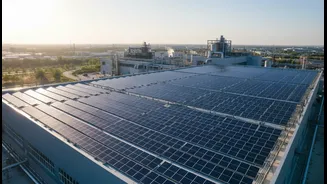
Factories are implementing this strategy in two main ways: rooftop solar and ground-mounted solar farms. For businesses in dense industrial parks or urban areas, rooftops offer a golden opportunity. Turning a vast, unused factory roof into a power plant eliminates the need for expensive land acquisition. Companies like Shankar Glass in Ghaziabad and automakers such as Maruti Suzuki and Mahindra & Mahindra are covering their facility roofs with panels, generating megawatts of clean power right at the source. For those with more space, a dedicated ground-mounted solar farm offers even greater scale and efficiency, as panels can be positioned at the optimal angle for maximum energy generation. Some are even getting creative. In Bengaluru, Dell partnered with Tata Power Solar to build India's largest vertical solar farm on the side of its building, a solution that both generates power and helps insulate the building, reducing cooling costs.
Solving the Challenge of a Cloudy Day
The phrase "on sunny days" highlights the obvious challenge of solar power: intermittency. What happens when it's cloudy, or more importantly, at night when many factories operate 24/7? For most, the answer is a hybrid approach. The solar plant is connected to the conventional electricity grid, which acts as a giant battery. During the day, the factory runs on solar power and can sometimes even sell excess power back to the grid, a process known as net metering. At night or during bad weather, the factory seamlessly draws power from the grid. However, to achieve true energy independence and unlock solar's full potential, the focus is increasingly shifting towards energy storage. The Indian government has started requiring new large solar farms to include battery storage capacity. This allows solar energy generated during the day to be stored and used after sunset, providing reliable, round-the-clock clean power and reducing reliance on the grid entirely.
A Competitive Edge in a Global Market
The benefits of going solar extend far beyond the factory gates. As global supply chains prioritise sustainability, a company's carbon footprint is becoming a critical business metric. Adopting solar power helps Indian manufacturers meet the stringent environmental, social, and governance (ESG) standards required by international clients, particularly in Europe and North America. It strengthens a company's brand, attracting eco-conscious customers, talent, and investors. This green transition is also central to India's national goal of achieving net-zero emissions by 2070. Each megawatt of installed solar capacity can offset between 1,200 to 1,500 tons of CO2 emissions annually. By decarbonising their operations, Indian factories are not just cutting costs; they are future-proofing their business and enhancing their global competitiveness.