


The Evening Star: Dazzling Venus
Venus is the undeniable star of the early evening show this month. It shines brilliantly in the western sky shortly after sunset. You won't need any special equipment to spot it; its brightness makes it unmistakable. However, you'll need a clear, unobstructed
view of the western horizon as it sits low in the twilight glow. Early in the month is your best bet for viewing. A particularly beautiful sight occurs on September 14, when the crescent Moon will appear very close to Venus, creating a stunning pair in the fading light.
The Ringed Planet: Saturn All Night
Saturn is another major player in September's sky. It rises in the east shortly after sunset and remains visible for most of the night. At the start of the month, you can find it rising in the southeastern sky around 9:30 or 10 p.m. local time. It will be the only bright point of light in that direction at that time, making it easy to identify. While visible to the naked eye as a steady, yellowish point, binoculars will reveal its slightly elongated shape. For a true glimpse of its famous rings, however, you will need a small telescope. Saturn's brilliance will increase throughout the month as it heads towards its opposition in early October.
The Morning Giants: Jupiter and Mars
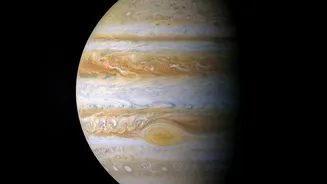
For the early risers, the pre-dawn sky holds its own rewards. The giant planet Jupiter dominates the eastern sky before sunrise. A beautiful waning crescent Moon passes near Jupiter on the morning of September 8, creating an attractive pairing. Throughout the month, Jupiter improves its position, rising earlier and climbing higher before the morning twilight washes it away. Not far away, you can also spot Mars. The Red Planet is also a morning object, getting progressively brighter as the weeks go by. Look for the crescent Moon near Mars on the mornings of September 6 and 7.
A Challenge for Enthusiasts: Neptune at Opposition
For those with binoculars or a telescope, September offers a unique challenge: spotting Neptune. The most distant planet in our solar system reaches opposition on September 26, meaning it will be directly opposite the Sun in the sky, rising at sunset and staying up all night. At this point, it will be at its closest and brightest for the year. Even so, you will need optical aid to see it. Binoculars can reveal it as a faint star-like point, while a telescope is needed to discern its tiny blue disk. It can be found in the constellation Pisces.
Tips for Your Stargazing Night
To make the most of your celestial viewing, find a location away from bright city lights. Give your eyes at least 15-20 minutes to fully adjust to the darkness; this will help you see fainter objects. While the main planets are bright enough to be seen without aid, a good pair of binoculars can enhance the view dramatically. The darkest nights for stargazing will be around the New Moon on September 11. Using a stargazing app on your phone can also be a great help in identifying constellations and confirming which bright point is which planet.