




When Will the First Trial Run Happen?
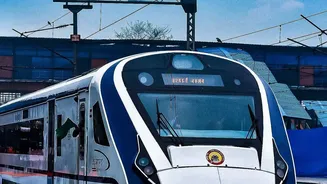
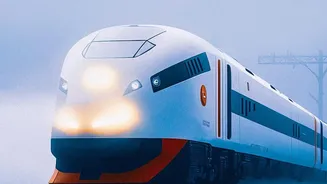
According to Union Railway Minister Ashwini Vaishnaw, India’s first bullet train is set to hit the tracks for testing by May or June 2027. This crucial trial phase is expected to last between two and four months, allowing engineers to conduct extensive
checks on the train and the newly laid infrastructure. Following the successful completion of these tests, the service will be inaugurated. The announcement signals a concrete step forward for a project that began with a foundation stone ceremony in 2017. Earlier reports had mentioned a trial on August 15, 2026, but recent statements from the Railway Minister have clarified the 2027 timeline.
A Project of National Significance
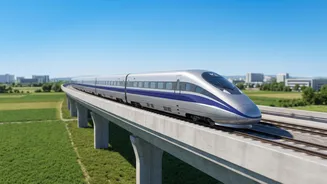
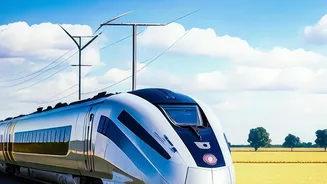
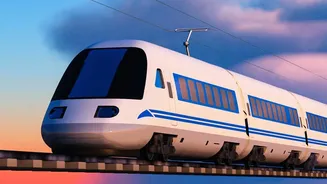
The Mumbai-Ahmedabad High-Speed Rail (MAHSR) corridor is more than just a fast train; it represents a leap in India's technological and manufacturing capabilities. Spanning a distance of 508 kilometres, the project is being developed by the National High Speed Rail Corporation Limited (NHSRCL) with technical cooperation from Japan, utilizing its renowned Shinkansen technology. Minister Vaishnaw has emphasized that the project is a cornerstone of the government's 'Atmanirbhar Bharat' vision, as the trains themselves are being produced indigenously. State-owned manufacturer BEML has been tasked with building the prototypes, which are designed to reach operating speeds of 280-320 km/h.
The Journey of Construction
Building a high-speed corridor of this magnitude has been a monumental undertaking. The project has faced its share of challenges, including initial delays in land acquisition, particularly in Maharashtra, and disruptions caused by the COVID-19 pandemic. However, construction has gained significant momentum. As of mid-2026, substantial progress has been made, with hundreds of kilometres of viaducts and piers completed. Work on stations in key cities like Surat and Vadodara is advancing, and complex tasks like building bridges over rivers and constructing tunnels are well underway. The project is using a Japanese-based J-Slab ballastless track system for the first time in India, a technology crucial for high-speed stability.
What This Means for Travellers
The ultimate goal of the bullet train is to revolutionize travel between two of India's major economic hubs. The current journey between Mumbai and Ahmedabad can take seven to eight hours by conventional rail. The high-speed service is expected to slash this travel time dramatically. Minister Vaishnaw highlighted that a trip from Vadodara to Mumbai, for example, could take just an hour and a half. This drastic reduction in travel time promises to boost business, tourism, and regional connectivity. The trains are being designed not just for speed but also for safety and comfort, adhering to the high standards of Japan's Shinkansen system.
What to Expect Next
The rollout of the bullet train service will be phased. The first section expected to become operational is the Surat-Bilimora stretch in Gujarat, targeted for August 2027. This will be followed by other sections within Gujarat, like Vapi-Surat. The full 508-km corridor connecting Mumbai to Ahmedabad is expected to be completed by 2029. As construction progresses in Maharashtra, the final link will be established, completing one of the most ambitious infrastructure projects in modern Indian history. The upcoming trial runs in 2027 will be the most significant milestone yet, moving the project from the construction site to the railway tracks.