









The Mountain Gauntlet
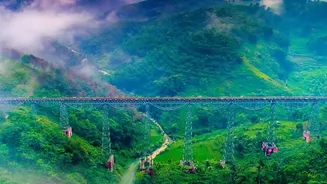
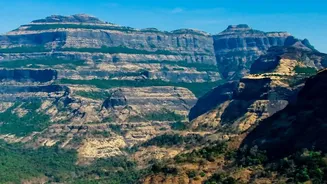
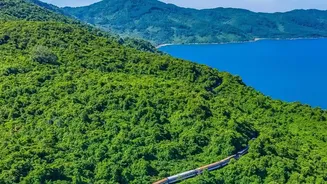
The focus of this intense scrutiny is the 55-kilometre stretch of railway between Sakleshpur and Subrahmanya Road in Karnataka. This is not just any scenic route through the Western Ghats; it is one of the most technically demanding railway sections in the country.
The primary challenge is its steep gradient, rated at 1 in 50. In simple terms, for every 50 metres the train travels forward, the track rises by one metre. This relentless incline, combined with 108 sharp curves, 57 tunnels, and 226 bridges, creates a formidable obstacle course for any locomotive. The region is also prone to landslides, especially during monsoons, adding another layer of operational complexity. For these reasons, the Commissioner of Railway Safety has capped the maximum speed on this stretch at a cautious 30 kmph.
A Different Kind of Train
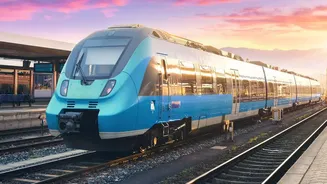
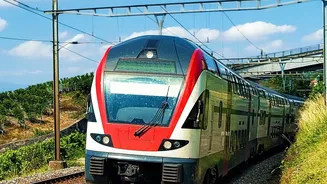
Conventional trains have long navigated this section, but they require the help of 'banker' locomotives. These are additional engines attached at the rear to provide the extra pushing power needed to ascend the steep inclines safely. However, the Vande Bharat is a different breed. It is a self-propelled trainset, which means power is distributed across its coaches rather than being concentrated in a single locomotive at the front. This design provides superior traction and acceleration, which is ideal for hilly terrain. Yet, attaching and detaching banker locos to a Vande Bharat train is not practical due to its aerodynamic design. Therefore, the train must prove it can handle the ghat section on its own, a feat that requires both power for the ascent and, crucially, exceptional control for the descent.
The Braking System on Trial
This is where the real test begins. While the Vande Bharat's standard electro-pneumatic and regenerative braking systems are highly advanced, this specific route demanded an extra layer of safety. To meet this need, the Integral Coach Factory (ICF) in Chennai has manufactured a specially modified 20-coach Vande Bharat rake equipped with an Automatic Emergency Braking (AEB) system. This system is the centrepiece of the ongoing trials, which are being supervised by the Research Designs and Standards Organisation (RDSO). The AEB is designed to automatically apply the brakes if the train starts to exceed the pre-set speed limit of 30 kmph, preventing any uncontrolled movement on the downward slopes. The trials, which began on August 12, 2026, are meticulously assessing the train's stability, acceleration, and braking performance under these unique and challenging conditions.
A National Proving Ground
The successful outcome of these trials on the Bengaluru-Mangaluru route has implications far beyond Karnataka. It will serve as a critical validation of the Vande Bharat platform's capabilities to operate in the many other hilly and mountainous regions across India. If the train can conquer the Western Ghats, it opens up possibilities for expanding the network into other challenging terrains, connecting remote areas with high-speed, modern rail services. The tests are a crucial step before the South Western Railway can receive the final safety clearances to launch a commercial service connecting the state capital, Bengaluru, with the coastal hub of Mangaluru. This proposed service is highly anticipated, promising to significantly reduce travel time and enhance connectivity between the two major Karnataka cities.