





A Surprising Discovery in Nyoma
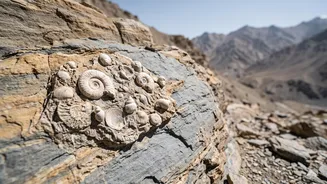
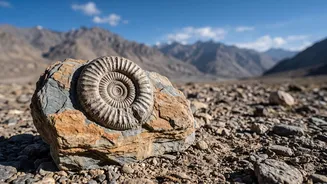
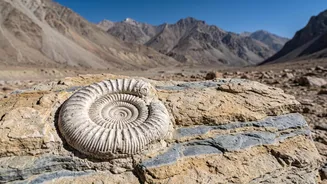
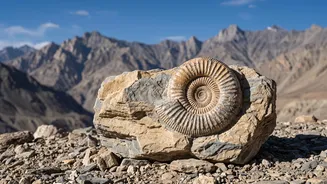
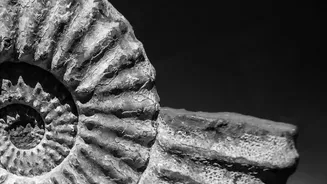
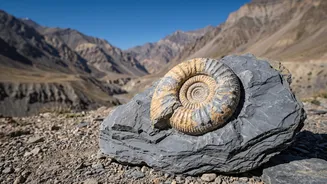
In the cold, arid landscape of Nyoma in eastern Ladakh's Changthang region, a geologist has uncovered a trove of marine fossils. Dr. Ritesh Arya, founder of the Tethys Fossil Museum, found a significant collection of spiral-shaped gastropods (snails),
bivalves, and oyster-like forms. A preliminary assessment suggests these creatures lived and died between 34 and 38 million years ago, during a geological period known as the Eocene epoch. The fossils bear a striking resemblance to those found in the Subathu Formation, a well-known fossil-bearing layer in other parts of the Himalayas, but finding them this far east in Ladakh was a genuine surprise for the research team.
Ladakh's Ancient Past: A Warm, Subtropical Sea
The existence of these fossils paints a picture of Ladakh that is unrecognisable today. Around 40 million years ago, this region was not a high-altitude desert but a warm, shallow sea. This was the Tethys Ocean, an ancient body of water that once separated the Indian subcontinent from the larger Eurasian landmass. The collection of marine shells, combined with earlier discoveries of fossilised palms and wood in the region, suggests a near-coastal environment, closer to a subtropical shoreline than the 'roof of the world'. These fossils are the physical evidence of that long-vanished ocean, preserved in stone for millennia.
The Great Collision That Built the Himalayas
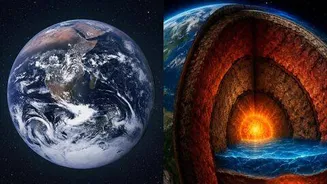
So, how did a seabed become one of the highest places on Earth? The answer lies in the theory of plate tectonics. The Indian plate, once part of the supercontinent Gondwana, broke away and began drifting northwards at a rapid pace. Around 50 million years ago, it began colliding with the Eurasian plate. This monumental, slow-motion crash caused the closure of the Tethys Ocean. As the two continental plates pushed against each other, the immense pressure forced the land, including the sediments at the bottom of the Tethys Sea, to buckle and rise upwards. This process, known as orogeny, was the birth of the Himalayan mountain range.
Why This Fossil Find Is Significant
While it's long been known that the Himalayas rose from the sea, each new fossil discovery helps refine the story. This find in Nyoma is important because it could extend the known eastern reach of the Eocene-era Subathu marine system much further into Ladakh than previously confirmed. It provides a crucial data point for understanding the precise timeline of the Indian plate's collision with Asia and the subsequent environmental changes. The fossils are not just relics; they are clues that help scientists reconstruct ancient geography, understand past climate shifts, and piece together the complex geological evolution of our subcontinent. Detailed studies are now underway to confirm the exact age and species of the fossils, which will add another chapter to the incredible story of the Himalayas.