



A New Eye on the Universe
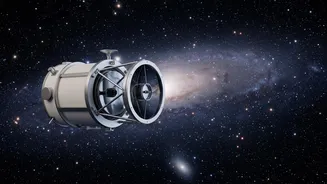
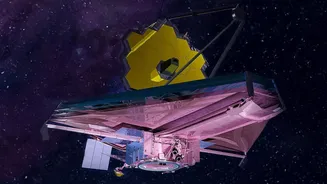
The Nancy Grace Roman Space Telescope is not just another powerful instrument; it's a cosmic surveyor designed for breathtaking scale. Named after NASA's first chief of astronomy, Nancy Grace Roman, the observatory is a flagship mission on par with Hubble
and the James Webb Space Telescope (JWST). Its primary goals are ambitious: to unravel the mysteries of dark energy and dark matter, and to conduct a massive census of exoplanets, discovering thousands of new worlds. While Hubble and Webb excel at zooming in on specific cosmic targets, Roman is built to zoom out, capturing vast swathes of the sky in single snapshots. After its successful launch, it is now on a three-month journey to its operational orbit, about 1.5 million kilometers from Earth.
The Power of a Panoramic View
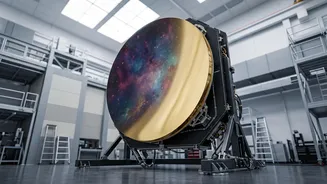
The telescope's defining feature is its extraordinary wide field of view. While Roman’s primary mirror is the same 2.4-meter size as Hubble's, its Wide Field Instrument (WFI) can see an area of the sky 100 to 200 times larger in a single observation. Think of Hubble as a telephoto lens, providing exquisitely detailed but narrow views, while Roman acts as a wide-angle lens, capturing the grand cosmic landscape. This capability will allow it to create the largest panoramic surveys ever made from space, mapping over two billion galaxies during its five-year primary mission. In the time it would take Hubble to capture a handful of images, Roman will have surveyed a massive portion of the sky, identifying countless new targets for other telescopes to study in more detail.
Technology That Changes the Game
At the heart of Roman's survey power is its Wide Field Instrument, a 300.8-megapixel camera that delivers images with the same sharp resolution as Hubble but across a much larger canvas. This instrument, combined with the telescope's ability to pivot quickly, makes it an incredibly efficient survey machine, estimated to be up to 1,000 times faster at mapping the sky than Hubble. In addition to the WFI, Roman carries a technology demonstrator called the Coronagraph Instrument. This device is designed to block the overwhelming glare of a star, allowing the telescope to directly image the faint planets orbiting it—a crucial step toward characterizing Earth-like worlds in the future.
What Roman Will Discover
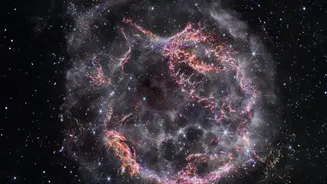
Roman's science objectives are set to address some of the biggest questions in modern astronomy. By observing distant supernovae and the distribution of galaxies, it will trace the expansion history of the universe, providing key insights into the nature of the dark energy that is causing it to accelerate. Its vast surveys will also map the scaffolding of dark matter throughout the cosmos. Perhaps most exciting for the public is its role as an exoplanet hunter. Using a technique called gravitational microlensing, Roman is expected to discover thousands of exoplanets, from gas giants to rocky worlds, creating a statistical census of planets in our galaxy. It will find planets in regions where other methods struggle, including worlds that roam the galaxy freely without a host star.
The Latest Picture: Now in Cruise Phase
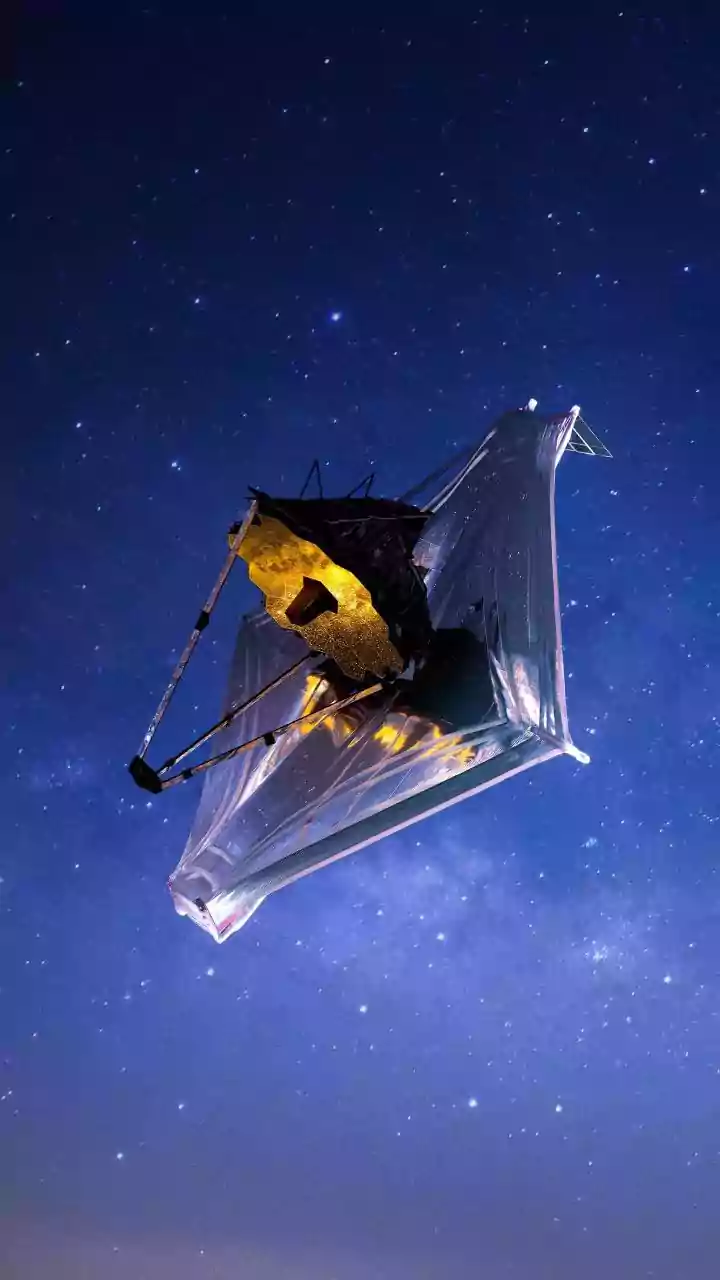
Following its launch aboard a SpaceX Falcon Heavy rocket, the Roman Space Telescope successfully deployed its solar arrays and established communications. As of early September 2026, the spacecraft is in its cruise phase, traveling toward its final destination at the second Lagrange point (L2). Mission operators have already performed a mid-course correction burn and successfully deployed key components like its antenna and sunshade. The telescope will now undergo a 90-day commissioning phase to check its systems and instruments. If all goes according to plan, the first scientific images from Roman are expected to be released to the world in early 2027, opening a new, wider window onto the universe.