



The Power Problem in Deep Space
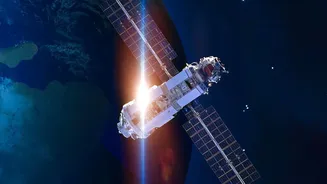
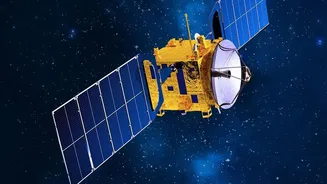
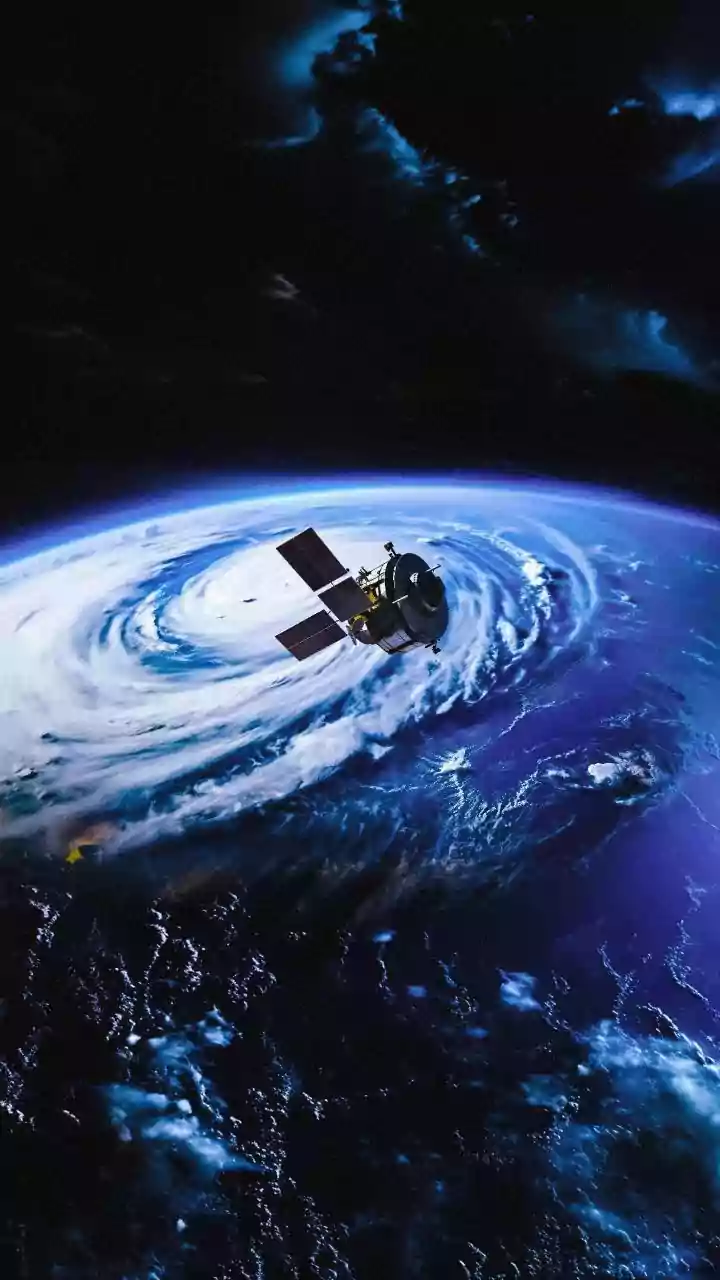
For decades, solar panels have been the go-to power source for space missions. They are reliable and effective, but they have a significant limitation: they need sunlight. On the Moon, which experiences roughly 14 Earth days of darkness at a time, relying
solely on solar power is not feasible for a permanent base. This poses a massive challenge for the Artemis campaign's goal of long-term lunar exploration and eventual Mars missions. To power habitats, life support, rovers, and scientific experiments continuously, astronauts need a constant, robust energy supply, which is precisely where nuclear fission comes into play.
Solution 1: A Reactor on the Moon
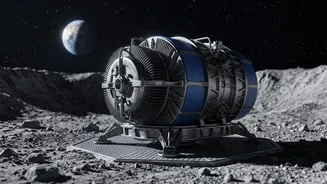
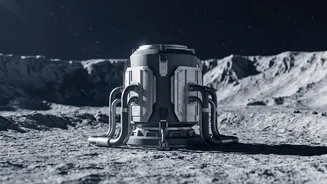
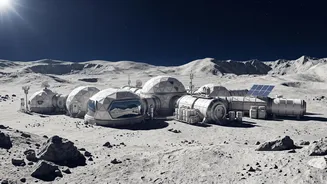
The primary solution for lunar surface operations is a concept called Fission Surface Power (FSP). In simple terms, NASA and the Department of Energy (DOE) are working with commercial partners to build a small, portable nuclear reactor. The goal is to deploy a 40-kilowatt system, capable of powering about 30 households on Earth, that can operate continuously for at least a decade on the Moon. This reactor would be launched cold — completely inactive — and only turned on once safely positioned on the lunar surface. It would provide the steady, reliable power needed to survive the long, frigid lunar nights and run the infrastructure essential for a permanent base, a key step before attempting similar missions on Mars. Current plans aim to have a lunar surface reactor ready for launch by 2030.
Solution 2: The Nuclear Highway to Mars
Beyond powering a moonbase, nuclear technology is seen as a game-changer for interplanetary travel. Nuclear Thermal Propulsion (NTP) is a rocket engine concept that uses a fission reactor to heat a propellant like hydrogen, creating thrust. An NTP system can be more than twice as efficient as the best chemical rockets used today. This increased efficiency means spacecraft can be lighter or carry more cargo. Most importantly, it could cut the travel time to Mars by up to 25%, significantly reducing the crew's exposure to dangerous deep-space radiation. The technology itself isn't new; it was researched extensively during the Apollo era but is now being revived and updated to make human missions to Mars a tangible reality.
A Partnership of Experts
This ambitious leap into space nuclear technology is driven by a formal partnership between NASA and the U.S. Department of Energy (DOE), solidified through a recent Memorandum of Understanding. The collaboration leverages the unique strengths of each agency. NASA, with its expertise in space exploration and mission architecture, defines the requirements and integrates the technology into its missions. The DOE, which oversees the nation's nuclear programs, brings its unparalleled experience in reactor design, nuclear fuel, and safety protocols. This joint effort spans the entire lifecycle, from research and development at national labs to producing fuel and ensuring rigorous safety standards are met for both ground testing and space operations.
The Road Ahead for Nuclear in Space
The path forward includes several key milestones. NASA is targeting 2028 for the launch of a demonstration mission called Space Reactor-1 Freedom (SR-1), which will test a nuclear electric propulsion system in deep space. This mission is a crucial pathfinder, intended to prove the technology works in practice and pave the way for future systems. Following that, the Fission Surface Power project aims to have the Lunar Reactor-1 (LR-1) ready by 2030 to support a sustained human presence on the Moon. These projects are not just about building hardware; they are about creating the foundation for a new era of exploration where humanity's reach is no longer limited by the length of a solar day or the efficiency of chemical rockets.