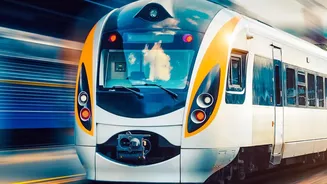






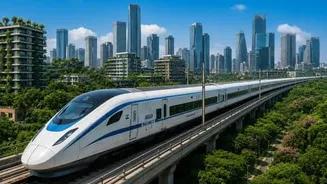
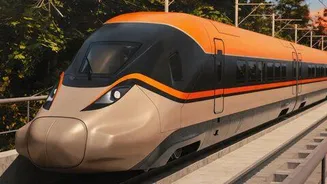
From a Prestige Project to a National Network
For years, the 'bullet train' in India was synonymous with one project: the Mumbai-Ahmedabad High-Speed Rail (MAHSR) corridor. Developed with Japanese Shinkansen technology, it was set to be a standalone marvel of engineering. However, the government's
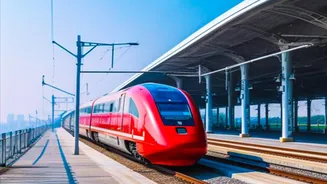
vision has now expanded dramatically. Recent policy announcements indicate a fundamental shift towards creating a unified high-speed rail system. Instead of building isolated corridors with unique technologies, the plan is to develop a standardised framework for all future projects, allowing them to function as a single, shared network. This means a train could potentially travel seamlessly across different high-speed routes, much like on the existing Indian Railways network.
Why the Change in Strategy?
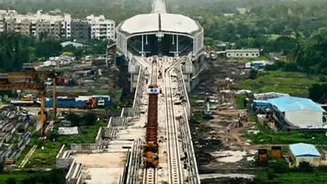
The experience with the Mumbai-Ahmedabad corridor, while invaluable, has highlighted the challenges of a closed-system approach. The Japanese Shinkansen technology is world-class but also proprietary, which can lead to vendor lock-in and limited scope for domestic manufacturing. The new strategy aims to avoid this by creating a common design template. According to Railway Minister Ashwini Vaishnaw, this standardisation is crucial for safety, quality, cost efficiency, and faster project execution. By having ready-made, proven designs for infrastructure like viaducts, bridges, and stations, the time and cost for building new lines can be significantly reduced. This also lays the groundwork for developing indigenous high-speed rail standards under the 'Make in India' initiative, boosting domestic engineering capabilities.
Introducing the 'Bharat High Speed Rail Programme'
The National High Speed Rail Corporation Limited (NHSRCL) is now creating a 'design library' under the new Bharat High Speed Rail Programme. This library will contain all the standardised technical specifications and designs for future corridors. To ensure the highest quality, NHSRCL is collaborating with leading technical institutes like the IITs. This initiative isn't just about civil infrastructure; it extends to the complex signalling and control systems. India is developing its own homegrown system, the Bharat Train Control System (BTCS), which is being designed for speeds up to 350 kmph and tailored for Indian conditions. This move towards an open-source, indigenous system is a clear step away from reliance on foreign technology.
The Seven New Corridors
The scale of this new vision is immense. The government has announced seven new bullet train corridors that will benefit from this standardised approach. These routes will connect major commercial and industrial hubs across the country, creating a web of high-speed connectivity. The proposed corridors are: Mumbai-Pune, Pune-Hyderabad, Hyderabad-Bengaluru, Hyderabad-Chennai, Chennai-Bengaluru, Delhi-Varanasi, and Varanasi-Siliguri. These seven corridors will span approximately 4,000 kilometres, representing a massive leap in India's infrastructure ambitions. Work has already begun on preparing Detailed Project Reports (DPRs) and finalising alignments for these routes.
Challenges and the Road Ahead
While the vision for an integrated network is compelling, the path is not without challenges. The Mumbai-Ahmedabad project will proceed with its Japanese technology, including the advanced J-Slab ballastless track system and Shinkansen-based electrification. This means India's first bullet train corridor will operate on a different technical standard than the network that follows. Integrating this legacy corridor with the new, standardised system will be a complex technical puzzle for engineers to solve in the future. Furthermore, developing an entirely indigenous high-speed rail ecosystem, from train sets to signalling, is a monumental task. However, the government sees this as a necessary step to ensure the long-term sustainability, affordability, and strategic autonomy of India's high-speed rail future. The first priority section of the Mumbai-Ahmedabad line is targeted for operation in August 2027.