



A New Prime Suspect for Habitability
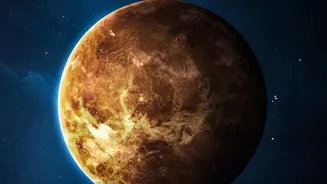
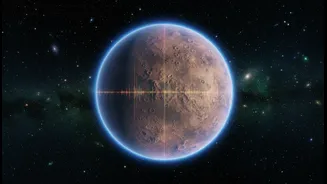
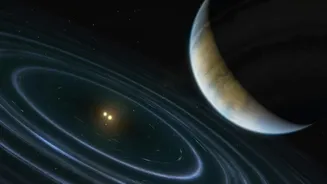
Meet LHS 1140 b, a planet that is quickly becoming one of the most exciting targets in the search for extraterrestrial life. Discovered in 2017, this 'super-Earth' is about 1.7 times the size of our own planet and over five times as massive. It orbits
a red dwarf star, which is smaller and cooler than our sun, placing the planet squarely within its star's habitable zone. This so-called "Goldilocks zone" is the region where temperatures are just right for liquid water to potentially exist on a planet's surface — a non-negotiable for life as we know it. Until now, finding a rocky planet in this zone that has also managed to retain an atmosphere has been a huge challenge. Many worlds are stripped of their atmospheric blankets by their parent stars, leaving them barren and exposed. This new discovery changes the game.
What Did Scientists Actually Find?
For the first time, scientists have detected strong evidence of an atmosphere on a rocky, Earth-like planet in the habitable zone. Recent studies, including some using the powerful Magellan Clay Telescope in Chile, detected helium escaping from the planet's upper atmosphere. This might sound like a bad sign, but it's actually the opposite. The fact that gas is slowly leaking out implies there is a substantial reservoir of it to begin with — an atmosphere. The star, LHS 1140, is estimated to be at least 3 billion years old. For the planet to still have an atmosphere after all this time suggests it has been remarkably stable, a crucial factor for the long, slow process of life's evolution.
The Telltale Signs in the Starlight
Astronomers didn't see the atmosphere directly. Instead, they used a clever technique called transit spectroscopy. As LHS 1140 b passes in front of its star from our perspective, a tiny amount of starlight filters through the very top of its atmosphere. By analyzing this light with a spectrograph, scientists can look for the chemical fingerprints of different gases. The clear signal of helium was the breakthrough, confirming what theoretical models had predicted. While earlier observations with the Hubble Space Telescope gave hints of water vapor, it was this detection of escaping helium that provided the firmest evidence to date. It's a bit like seeing smoke on the horizon; you may not see the fire itself, but you know it's there.
An Atmosphere Richer Than Helium?
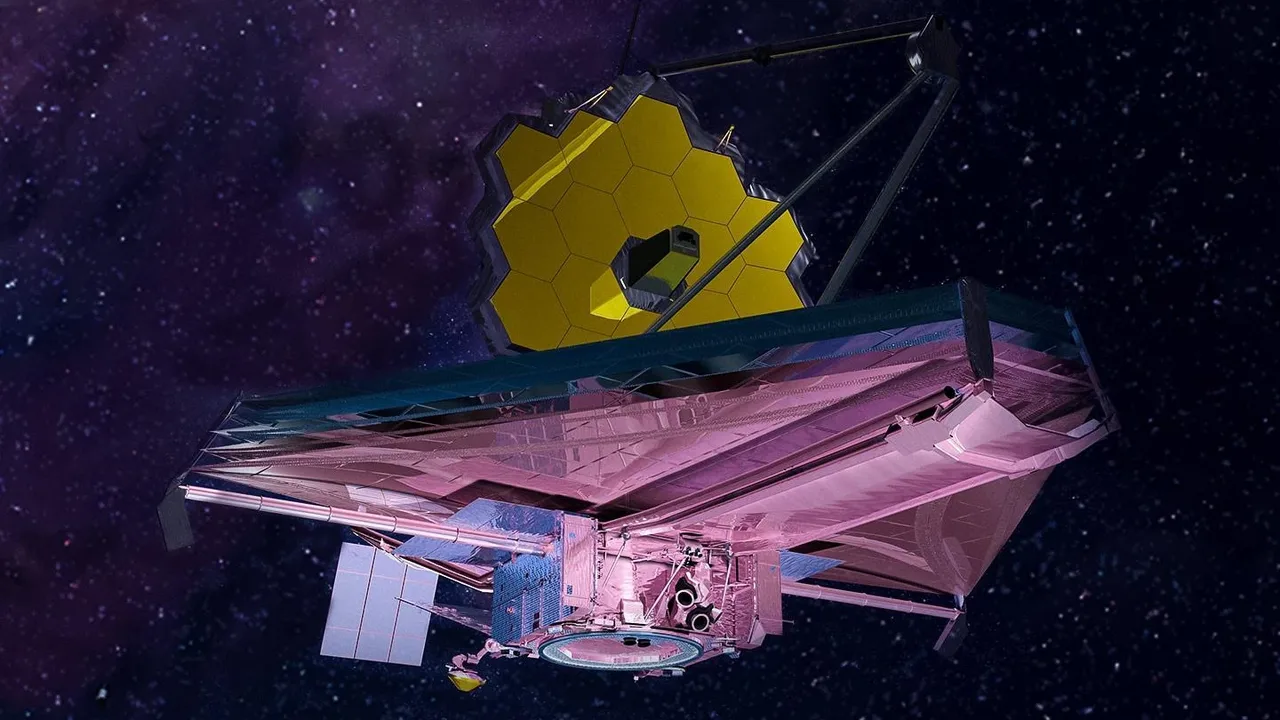
While helium confirmed the atmosphere's existence, it's not the main component scientists are excited about. The planet is too massive to have held onto a primordial, hydrogen-and-helium-dominated atmosphere for billions of years. This suggests the current atmosphere is a 'secondary' one, created over time by geological processes like volcanic outgassing, much like Earth's. Observations from the James Webb Space Telescope (JWST) have supported this, ruling out a light, hydrogen-rich atmosphere and pointing towards a denser one. Initial JWST data hints at a mixture of nitrogen, water vapor, and carbon dioxide, which would make it fascinatingly similar to Earth. If these findings are confirmed, it would be a monumental discovery.
The Big Questions: Water and Life
So, does an atmosphere mean there's life? Not yet. This discovery is a critical piece of the puzzle, but many questions remain. The planet's density suggests it could be an 'ocean world' with a significant amount of water making up its mass. Its equilibrium temperature is cold, but a thick atmosphere could create a greenhouse effect, warming the surface enough for liquid water. Scientists are clear that we have no direct evidence of life on LHS 1140 b. What we have is one of the most promising candidates for a habitable world ever found, a place with a rocky composition, the right temperature, and a protective atmosphere.
What Happens Next?
LHS 1140 b is now a top-priority target for the James Webb Space Telescope. Astronomers will use the telescope's powerful instruments to conduct more detailed spectroscopic observations. The goal is to move beyond just detecting the atmosphere and start characterizing it in detail. They will be searching for key biosignatures — gases like oxygen, methane, and carbon dioxide in proportions that could hint at biological processes. It will take several more years of patient observation to confirm the atmospheric composition and truly understand the conditions on this intriguing world. But for now, LHS 1140 b represents a new chapter in our search for our place in the cosmos.