





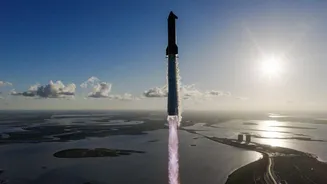
A Landmark Orbital Success
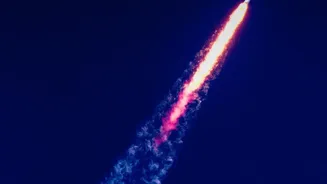
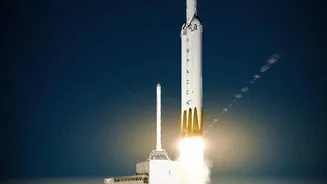
On Monday, September 28, the world's most powerful rocket, SpaceX's Starship, successfully launched from its Starbase facility in Texas, achieving orbit for the first time on its 14th test flight. The mission's primary operational goal was to deploy a batch
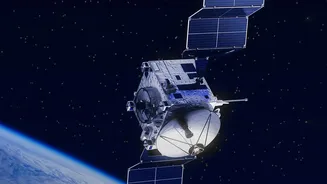
of 26 next-generation Starlink V3 satellites into low-Earth orbit, a task it completed flawlessly. This marks a significant moment for SpaceX, transitioning Starship from a pure test vehicle into a revenue-generating launch platform. Despite a minor issue with one of the upper stage's six Raptor engines shutting down early, the vehicle compensated and reached its intended trajectory. After completing its main tasks, the mission was intentionally shortened, with the Starship spacecraft performing a controlled deorbit and splashing down in the Pacific Ocean.
Expanding the Starlink Constellation
The 26 satellites deployed are not just any cargo; they are the latest V3 models for SpaceX's Starlink internet service. These new satellites represent a massive leap in capability, with each one offering roughly ten times the bandwidth of previous versions. Starship is essential to this upgrade, as the V3 satellites are too large and heavy to be launched on SpaceX's workhorse Falcon 9 rockets. For India and other regions with underserved communities, the expansion of the Starlink constellation promises a future with more robust and widespread high-speed internet access, capable of reaching even the most remote areas. This successful deployment is a critical step in building out a network designed to handle surging global demand and connect the unconnected.
The Greater Ambition: Full Reusability
While deploying satellites is a significant achievement, it is merely a stepping stone toward SpaceX's true objective: making both stages of Starship fully and rapidly reusable. The system consists of the Super Heavy booster (the first stage) and the Starship spacecraft (the upper stage). The ultimate goal is for both to fly back to the launch pad and be caught by giant mechanical arms on the launch tower, ready for refueling and another flight in a matter of hours, much like a commercial airliner. This capability would slash the cost of accessing space, making ambitious projects like lunar bases and Martian colonies economically viable. Every test flight, including this one, gathers crucial data to make this vision a reality.
Progress and Persistent Hurdles
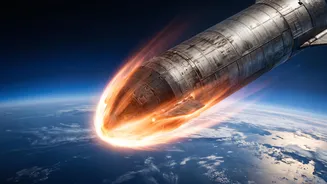
Achieving full reusability is an immense engineering challenge. On this flight, the Super Heavy booster performed its boostback burn but was directed to a controlled splashdown in the Gulf of Mexico rather than attempting a tower catch. The Starship spacecraft also completed its mission with a splashdown. While SpaceX has previously demonstrated successful catches of the Super Heavy booster, perfecting the process for both stages and ensuring they can be reused with minimal refurbishment remains a work in progress. Key challenges include perfecting the heat shield on the Starship spacecraft to withstand the intense heat of atmospheric reentry on numerous flights and mastering the complex automated landing and catching maneuver every single time.