






The Latest Progress Report
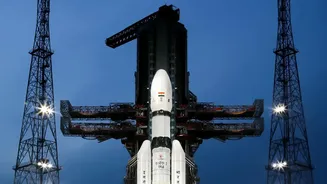
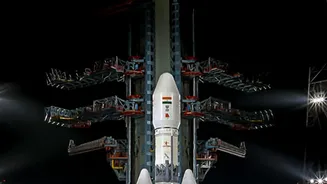
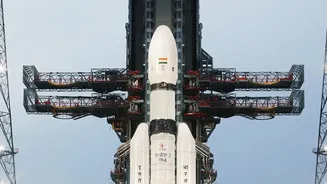
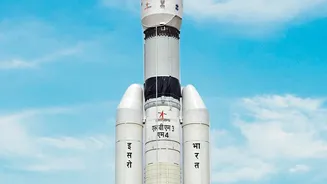
The Indian Space Research Organisation (ISRO) is methodically ticking boxes ahead of the first uncrewed Gaganyaan flight. According to recent updates provided to Parliament, significant progress has been made on nearly every front. Key systems for the Human
Rated Launch Vehicle (HLVM3), the powerful rocket that will carry the crew, have completed development and ground testing. The Orbital Module, which consists of the Crew Module where astronauts will live and the Service Module that houses support systems, has also seen its propulsion systems fully tested and qualified. This steady progress signals that the foundational hardware for the mission is reaching a state of readiness.
Why These Tests Are Crucial
Sending humans to space is exponentially more complex than launching a satellite. Every component must be 'human-rated', meaning it needs to be exceptionally reliable to ensure astronaut safety. The recent tests validate critical life-support systems, including the Environmental Control and Life Support System (ECLSS). Think of this as the spacecraft's personal atmosphere creator, managing everything from air pressure to temperature. Another key component is the Crew Escape System (CES), which is designed to jettison the crew to safety in case of a launch anomaly. Successful static tests of its motors mean we are one step closer to having a reliable emergency exit for our astronauts. These are not just procedural checks; they are fundamental to proving the mission can be done safely.
Meet Vyommitra, The Robotic Pioneer
Before any Indian astronaut flies, a humanoid robot named Vyommitra will pave the way. Meaning 'space friend' in Sanskrit, Vyommitra will be the sole occupant of the first uncrewed Gaganyaan-1 (G1) mission. This 'half-humanoid' robot can mimic crew activity, operate switches, and monitor the crew module's environment. Her mission is to test that all systems function perfectly in the harsh environment of space. Vyommitra's flight will provide invaluable data on how the spacecraft performs, ensuring that when humans do fly, the capsule is a proven, safe environment. Her presence allows ISRO to test the entire mission sequence, from launch to re-entry and recovery, under real-world conditions without risking human life.
What's Next on the Timeline?
The Gaganyaan program is progressing in a phased manner. The first major orbital flight, the uncrewed G1 mission featuring Vyommitra, is targeted for the end of 2026. However, ISRO officials have stressed that safety is paramount, and timelines remain flexible to ensure all systems are perfectly ready. Following the G1 flight, at least two more uncrewed missions are planned to further validate the systems. The first crewed flight, which will carry three Indian astronauts into a low Earth orbit for about three days, is now targeted for 2027. The four astronaut-designates, all Indian Air Force pilots, are continuing their mission-specific training in Bengaluru for this historic flight.
The Bigger Picture for India
Successfully launching Gaganyaan will make India only the fourth country in the world—after the Soviet Union (Russia), the United States, and China—to have an independent human spaceflight capability. This isn't just about planting a flag in orbit. It represents a massive leap in India's technological and industrial capacity. The mission is a national effort, driving innovation across private industry, academia, and national agencies. Beyond the immediate goal, Gaganyaan is a stepping stone. It lays the groundwork for more ambitious projects, including sustained human presence in space and the potential development of an Indian space station, the Bharatiya Antariksh Station, by 2035. It inspires a new generation to pursue science and technology and solidifies India's position as a major power in the space domain.