







More Than Just a Conference
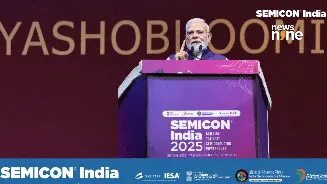
SEMICON India 2026, scheduled for September 17-19, is shaping up to be the largest and most significant gathering of the semiconductor industry ever held in the country. Jointly organized by the India Semiconductor Mission (ISM) and the global industry association
SEMI, the event will be inaugurated by Prime Minister Narendra Modi. This gathering is not merely an industry meetup; it's the focal point of India's ambitious national strategy to become a major player in the global semiconductor landscape. The theme, "Silicon to Systems: Building the Ecosystem," signals a crucial shift in focus from simply attracting investment to creating a comprehensive, self-sustaining value chain on Indian soil. It's a platform designed to connect global CEOs, government leaders, investors, and researchers to accelerate partnerships and solidify India's position as a trusted hub for chip design, manufacturing, and packaging.
The Yashobhoomi Advantage
The choice of venue, Yashobhoomi in Dwarka, is symbolic of the scale of India's ambitions. As India’s largest convention and exhibition center, its sheer size and cutting-edge facilities are designed to host world-class international events. With a total capacity for 11,000 delegates in its first phase, including a 6,000-seat main auditorium, multiple meeting rooms, and a grand ballroom, Yashobhoomi offers the infrastructure needed for an event of this magnitude. The exhibition will span over 15,000 square meters, providing a massive canvas for companies to showcase their technology. Its strategic location between Delhi and Gurgaon, with direct metro connectivity to the airport, ensures seamless access for thousands of international and domestic attendees, making it the perfect stage to welcome the world.
A Global Guest List
The attendee list for SEMICON India 2026 underscores its global importance. Prime Minister Modi is expected to hold a roundtable with the CEOs of major global semiconductor firms, a direct line of communication to the leaders of the companies India is courting for investment. The event is projected to attract over 500 exhibitors, including more than 240 international companies, and delegations from over 40 countries. With more than 150 internationally renowned speakers, the conference will feature discussions on everything from advanced manufacturing and AI to supply chain resilience and talent development. Pavilions for six different countries and 10 Indian state governments will highlight the global collaboration and domestic competition driving the sector's growth. This convergence of global industry leaders, policymakers, and innovators is precisely what the India Semiconductor Mission aims to foster.
The Mission Behind the Meeting
This mega-conference is a critical component of the government's India Semiconductor Mission (ISM). Facing a global chip market projected to reach $1 trillion and a domestic demand expected to hit $100 billion, India is aggressively moving to reduce its reliance on imports and build a resilient domestic industry. The government has already approved 12 projects under its initial incentive schemes (Semicon 1.0) and has launched a second phase (Semicon 2.0) to further boost development. These programs are not just about building massive fabrication plants; they also support the ecosystem through initiatives like the Design-Linked Incentive (DLI) scheme, which has already approved 24 startups and provided advanced design tools to over 330 academic institutions. SEMICON India serves as the annual progress report and a catalyst for this mission, showcasing successes and outlining the path forward.
What Success Looks Like
For India, the success of SEMICON India 2026 will be measured in tangible outcomes. The primary goal is to accelerate investment into the country, translating discussions and memoranda of understanding into concrete projects and ground-breaking ceremonies. The event aims to strengthen global partnerships, not just for manufacturing but across the entire value chain, including raw materials, chemicals, gases, and equipment. Another key objective is to foster innovation and knowledge exchange, connecting Indian startups and academic researchers with global experts. By highlighting the progress of approved projects and the government's unwavering policy support, the gathering aims to build confidence among global investors. Ultimately, the event is a crucial step toward embedding India as an indispensable part of the global semiconductor supply chain, moving from a consumer to a creator of critical technology.