
Iceland: Where Fire Meets Ice
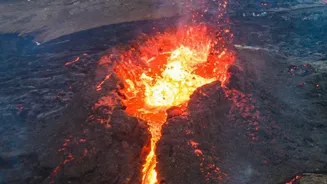
Iceland is a land forged by volcanic activity, sitting atop the Mid-Atlantic Ridge where tectonic plates pull apart. This makes it a living laboratory for geology. Recent eruptions, like those in the Reykjanes peninsula, have offered accessible views
of new land being born. But the change here is twofold. As Iceland's vast glaciers melt due to rising global temperatures, the immense weight they exert on the land is reduced. Scientists believe this process, called glacial isostatic adjustment, can increase the frequency and intensity of volcanic eruptions by reducing pressure on the magma chambers below. Visiting Iceland offers a direct look at this dramatic interplay between ice and magma—a powerful illustration of how climate change can have profound geological consequences.
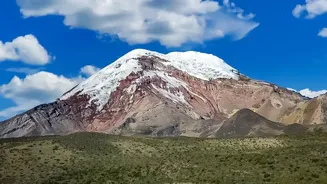
Mount Kilimanjaro, Tanzania: The Disappearing Snows
Africa's tallest peak, Mount Kilimanjaro, is a dormant volcano, but it tells one of the most visible stories of climate change. Its iconic, snow-capped peak is vanishing. For centuries, the glaciers at its summit have endured, but scientific studies show they have shrunk by over 85% in the last century. Some projections warn they could disappear completely within the next few decades. While the volcano itself isn't changing, its appearance is a stark and poignant symbol of a warming world. The melting ice of Kilimanjaro is a silent, slow-motion catastrophe that offers travelers a powerful, visual reminder of the planet's fragility and the far-reaching impacts of a changing climate.
Kīlauea, Hawaii: Witnessing Creation and Destruction
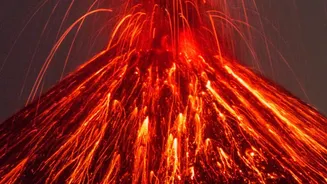
Kīlauea is one of the world's most active volcanoes and a prime example of how the planet constantly reshapes itself. Located in Hawai'i Volcanoes National Park, a UNESCO World Heritage Site, Kīlauea has been a source of both creation and destruction. Major eruptions, like the one in 2018, covered large areas in lava but also created hundreds of acres of new land, literally adding to the island before visitors' eyes. These events provide a rare opportunity to see geological processes in real-time, watching as molten rock cools to form fresh earth. It's a raw display of the planet's power to build and rebuild, offering a humbling perspective on timescales far greater than our own.
Stromboli, Italy: The Lighthouse of the Mediterranean
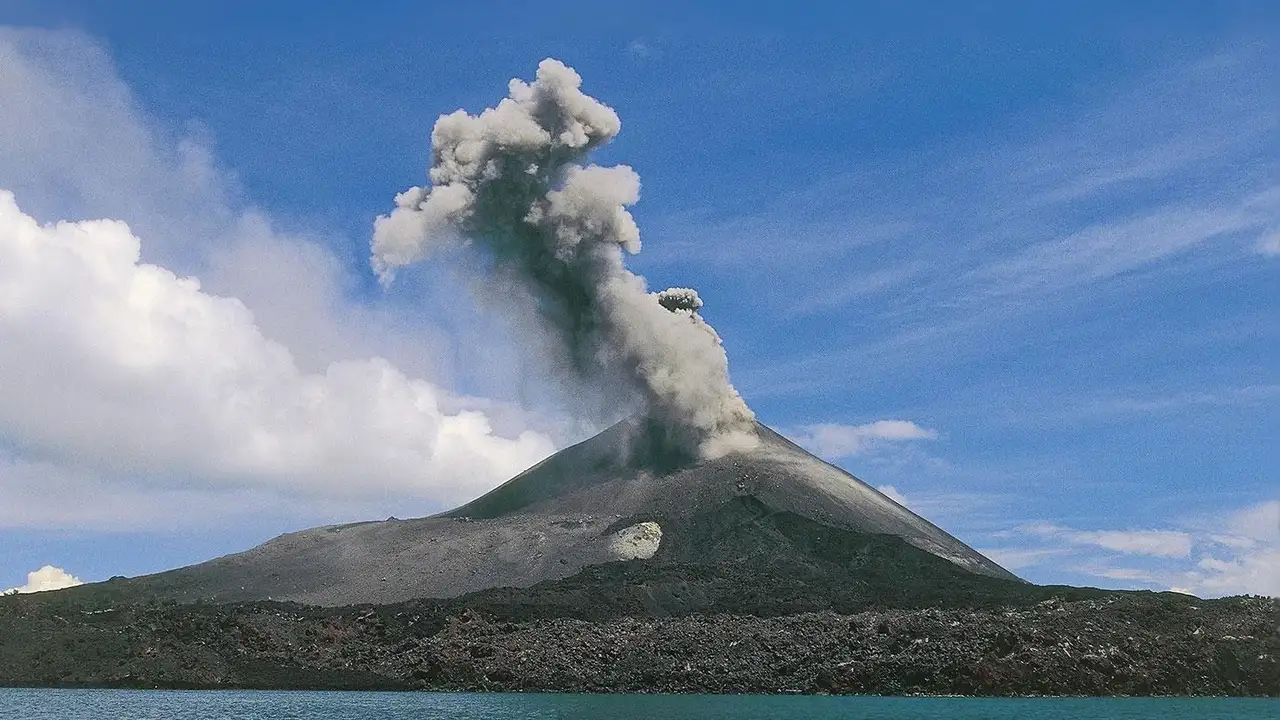
For over 2,000 years, the island volcano of Stromboli has been in a state of near-constant eruption, earning it the nickname the "Lighthouse of the Mediterranean." Small, regular explosions of gas and lava light up the night sky, making it one of the most reliably spectacular volcanic shows on Earth. While this activity is its normal state, it serves as a constant reminder of the dynamic forces bubbling just beneath the Earth's crust. Boat tours at night allow visitors to safely watch the fiery spectacle as lava cascades down the Sciara del Fuoco, or "Stream of Fire," into the sea. Stromboli offers a mesmerizing, rhythmic glimpse into the planet's unceasing geological heartbeat.
Pacaya, Guatemala: The Accessible Active Giant
For those seeking a more hands-on volcanic experience, Guatemala's Pacaya is one of the most accessible active volcanoes in the world. After a relatively short hike, visitors can walk across fields of petrified lava from past eruptions. Depending on recent activity, you may see glowing lava flows or use geothermal hot spots to roast marshmallows—a quirky but effective way to appreciate the heat still radiating from the earth. Pacaya's constant low-level activity provides a tangible connection to the forces that sculpt our landscapes, making the abstract concept of vulcanism a real, and warm, experience.
Mount Fuji, Japan: A Cultural Icon's Subtle Shifts
Mount Fuji, an active but dormant volcano, is a symbol of Japan itself. While it hasn't erupted since 1707, it still offers a view of a changing planet, albeit a more subtle one. The change here is not in its volcanic activity but in its environment. The mountain's iconic snow cap, which has inspired artists for centuries, is being affected by rising temperatures, with the duration and extent of its snow cover changing. The surrounding ecosystems, from the Five Lakes at its base to the forests on its slopes, are also under pressure from climate shifts. Visiting Fuji is a reminder that even the most stable-seeming natural wonders are not immune to the pervasive effects of global climate change.