



SMOPS-2026: A Confluence of Ideas
The International Conference on Spacecraft Mission Operations, or SMOPS-2026, recently brought together the global space community in Bengaluru. Jointly organised by the Indian Space Research Organisation (ISRO), the Astronautical Society of India (ASI),
and the International Academy of Astronautics (IAA), the event focused on the next generation of space mission management. A key theme was the pivotal role of AI and automation in handling the complexities of modern space operations, from managing large satellite constellations to enabling human spaceflight and deep-space exploration. The conference underscored a crucial reality: as space becomes more crowded and competitive, relying solely on human ground control for every decision is no longer sustainable.
The New Autopilot in the Sky
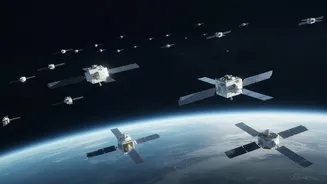
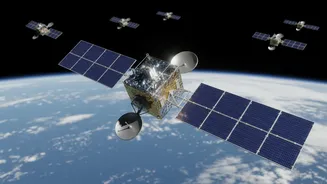
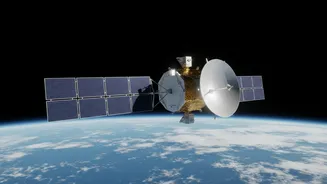
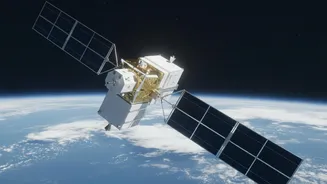
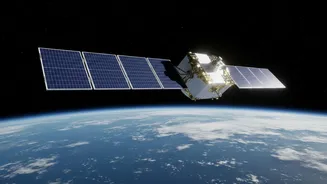
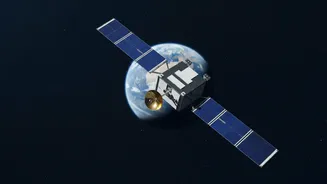
So, what are the “routine decisions” AI is beginning to manage in orbit? Much like the telematics AI used in large trucking fleets on Earth, orbital AI handles the constant, necessary adjustments that keep satellites functioning optimally. This includes tasks like collision avoidance, where AI can autonomously maneuver a satellite to dodge space debris or other spacecraft—a critical function given that some constellations perform tens of thousands of such maneuvers in just a few months. Other duties include optimizing a satellite's orientation to ensure its solar panels capture maximum energy, managing data transmission to send back only the most relevant information, and monitoring the overall health of the spacecraft to predict maintenance needs before they become critical failures.
From Human-in-the-Loop to On-the-Loop
This transition represents a fundamental shift in operational philosophy, moving from a “human-in-the-loop” model to a “human-on-the-loop” approach. Traditionally, a human operator on the ground made nearly every decision, a process that is slow and resource-intensive. Today, AI can handle the high-volume, split-second decisions required for tasks like collision avoidance, where waiting for instructions from Earth isn't an option. This allows human experts to move into a supervisory role. They set the parameters and boundaries, but the AI executes the routine tasks independently. This frees up valuable human capital to focus on more complex strategic problems, mission planning, and handling unexpected anomalies that require creative problem-solving.
A Strategic Imperative for India
For India, embracing AI in space is not just a technological upgrade; it's a strategic necessity. With a rapidly growing number of satellites for communication, Earth observation, navigation (like the NavIC system), and defence, automated management is crucial for efficiency and scalability. As ISRO embarks on ambitious projects like the Gaganyaan human spaceflight mission and plans for the Bhartiya Antariksha Station, the ability to autonomously manage orbital assets becomes paramount. AI-driven operations reduce costs, increase the resilience of our space infrastructure, and ensure India can maintain its strategic autonomy in an increasingly congested and contested orbital environment.
Challenges and the Path Forward
Despite its immense potential, the adoption of orbital AI is gradual and comes with significant challenges. The primary concerns revolve around accountability and security. If an autonomous system makes an error, who is responsible—the operator, the manufacturer, or the software developer? Furthermore, these AI systems present new targets for cyberattacks, requiring incredibly robust security measures. Establishing clear governance frameworks and international standards for AI's authority in space is a complex task that the global community is just beginning to tackle. The inability to easily patch or override an AI system once a satellite is in orbit means that much of this governance must be established before launch.