


The Reusability Game-Changer
For decades, rockets were like disposable cameras: built for one-time use before being discarded in the ocean or burning up in the atmosphere. This made space launches incredibly expensive. The 'Rocket Revolution' is changing that, primarily through reusability.
Companies like SpaceX pioneered rockets whose most expensive parts, the first-stage boosters, can fly back to Earth and land themselves after a mission. These boosters can then be refurbished and flown again, sometimes more than twenty times. This approach drastically cuts the cost of reaching orbit, with some estimates suggesting a tenfold reduction. This isn't just a Western phenomenon; China has also successfully recovered an orbital-class rocket booster, and other companies are close behind, making the technology a global standard.
Small Rockets, Big Opportunities
It’s not only about reusable giants. A parallel revolution is happening with small launch vehicles designed to carry lighter payloads. Previously, a university, startup, or a research institution wanting to launch a small satellite had to 'rideshare', piggybacking on a large rocket's primary mission, which meant long waits and little control over scheduling. Now, a growing number of companies are offering dedicated launches for these smaller clients. This opens the door for more focused scientific experiments, Earth observation projects, and technology demonstrations. It allows students and researchers to get hands-on experience, moving from concept to orbit much faster and more affordably. These small launchers are crucial for deploying large constellations of satellites that provide services like global internet and real-time climate monitoring.
India's Private Sector Takes Flight
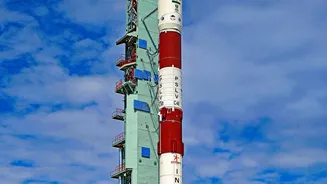
This global revolution has a powerful echo in India. For years, the Indian Space Research Organisation (ISRO) was the sole driver of the nation's space ambitions. But since the sector opened to private participation in 2020, a vibrant ecosystem of startups has emerged. In a landmark achievement, Hyderabad-based Skyroot Aerospace became India's first private company to launch a rocket into orbit in July 2026 with its Vikram-1 vehicle. This made India only the third country where a private firm has achieved this feat. Companies like Skyroot and Chennai's Agnikul Cosmos are developing a new generation of launch vehicles, aiming to provide cost-effective launch services to the world. This private-sector surge, supported by government policies, is set to significantly grow India's share of the global space economy.
ISRO's Push for the Future
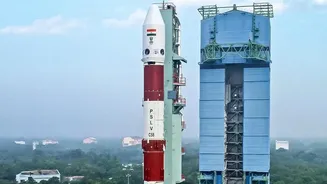
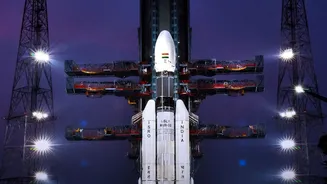
While the private sector blossoms, ISRO is developing its own next-generation technology. Its most ambitious project is the Reusable Launch Vehicle (RLV) program, nicknamed 'Pushpak'. Unlike SpaceX's vertical-landing rockets, Pushpak is a winged vehicle designed to land horizontally on a runway, much like an aircraft. Between 2023 and 2024, ISRO successfully completed a series of autonomous landing experiments, proving the vehicle's capability. The next phase involves an orbital re-entry experiment, a critical step toward developing a fully reusable two-stage orbital launch vehicle. This technology is vital for India's long-term goals, including the Gaganyaan human spaceflight mission and the Bharatiya Antariksh Station, as it will make complex missions more affordable and frequent.
A New Era for Science and Society
The combined impact of cheaper, more frequent launches is transformative. It means more satellites monitoring climate change, tracking natural disasters, and improving agricultural yields. It enables new kinds of manufacturing in zero-gravity and expands global connectivity. For India, this rocket revolution is a key enabler of national ambitions, from strengthening security to providing new opportunities for its scientists and engineers. World Space Week 2026 celebrates this pivotal moment, where rockets are no longer just tools of exploration for a select few, but platforms for innovation accessible to many, inspiring a new generation to 'dream bigger and innovate fearlessly'.